
Grown Colour
Coal waste, bacteria, and the remaking of blue-and-white porcelain
Words on the work of Weixi Kuang
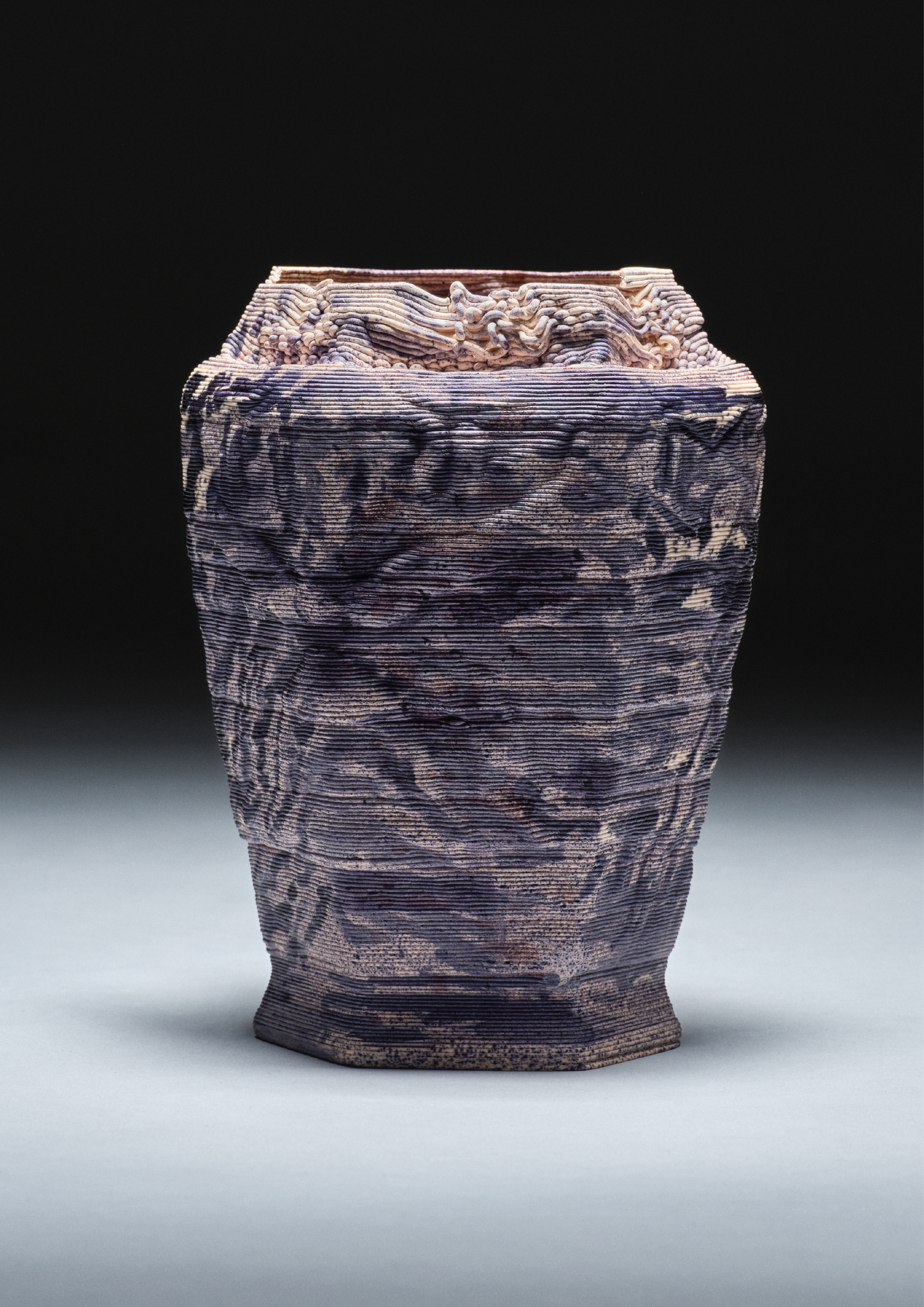
MADE IN CHINA by Weixi Kuang · Photo: Pascal Schönlau
Chenzhou, in Hunan Province, has been a mining region for generations. One of the more visible traces of that history sits in plain view at the edges of its towns: heaps of coal gangue, the mineral waste left over once coal has been extracted and processed. Left outdoors, it weathers, sheds dust, and can occasionally combust on its own. It gets crushed for backfill, burned for whatever energy is left in it, or mixed into construction aggregate. Beyond those uses, it is rarely considered a material worth working with at all.
MADE IN CHINA, an artistic research project by Weixi Kuang, starts by looking at gangue differently. Rather than treating it as an anonymous waste stream, the project treats it as a material that still carries something of where it came from: the labour, the extraction, the environmental cost of the landscape it was pulled out of. Moving it from the mining site into a ceramic studio is not a neutral act. It is the beginning of an argument, one about what a material is allowed to become once it stops being defined only by its origin.
From mountain to mixture
The transformation starts with heat. Raw gangue, dark and carbon-heavy, is calcined at around 1000°C, burning off volatile matter until the colour lifts and the material turns pale grey-white. What began as mining residue starts, at this point, to look something like clay.
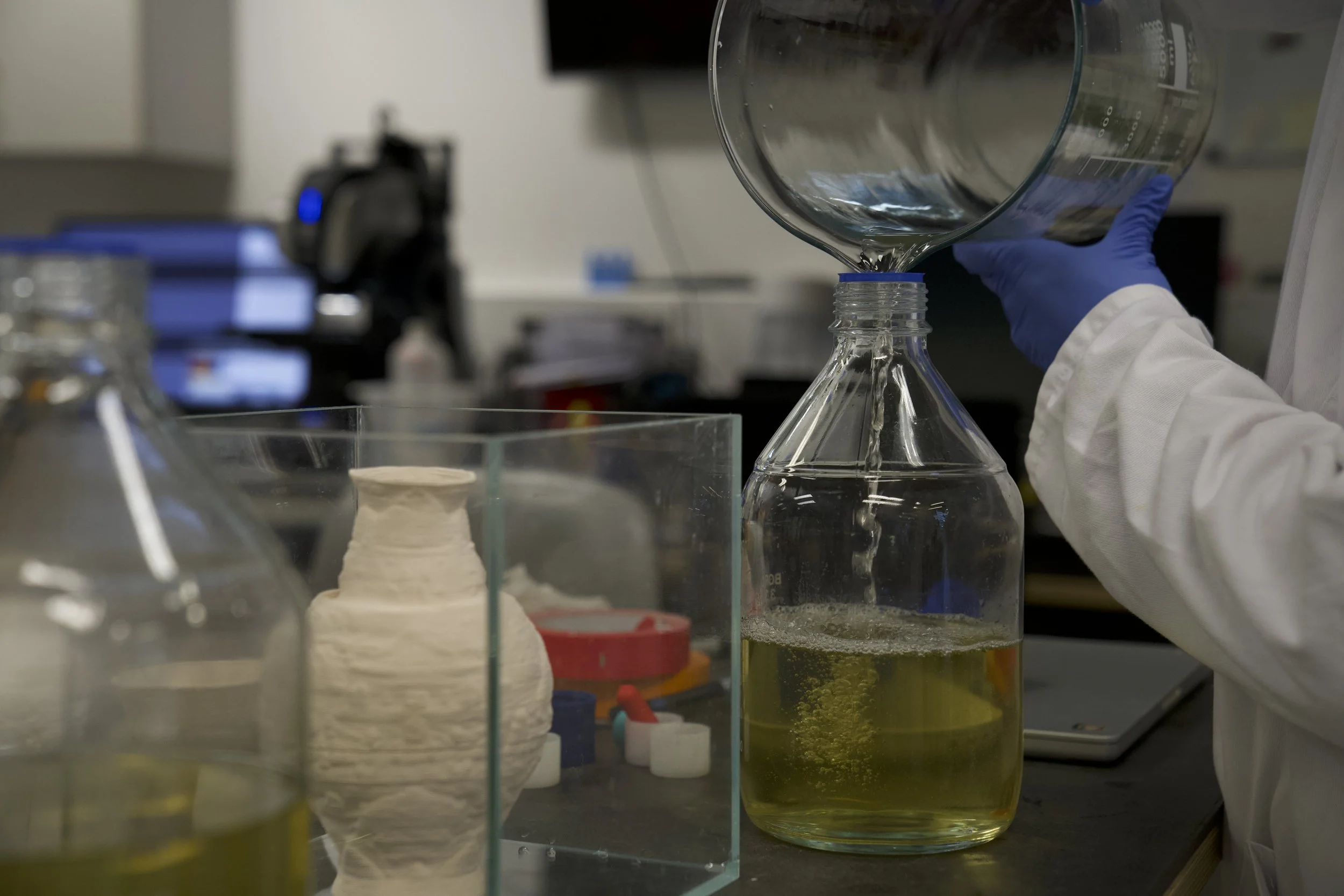
It is then ground to powder, sieved and mixed with water into a paste that can be extruded through a ceramic 3D printer. The forms build layer by layer, and the printer's lines are left visible rather than smoothed away. Ridges, seams and small irregularities are not treated as flaws. They stay, because a rougher surface behaves differently once something else moves in.
An organism as collaborator
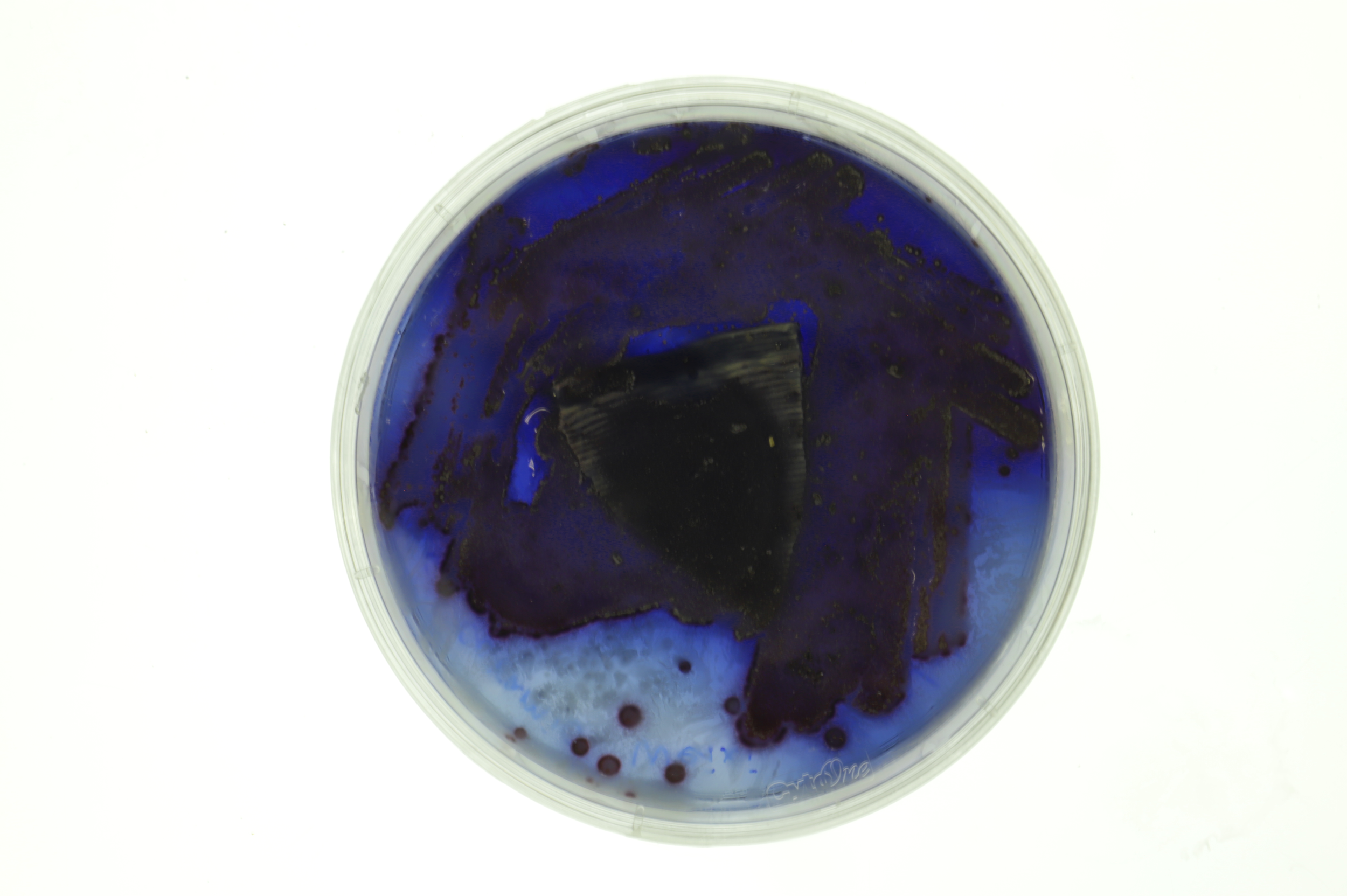
The organism responsible is Streptomyces coelicolor, a bacterium found widely in ordinary soil rather than in the gangue itself. It is known in microbiology for a trait that has little to do with soil chemistry: under the right conditions, it produces actinorhodin, a pigment that shifts with pH and can settle into a deep, saturated blue.
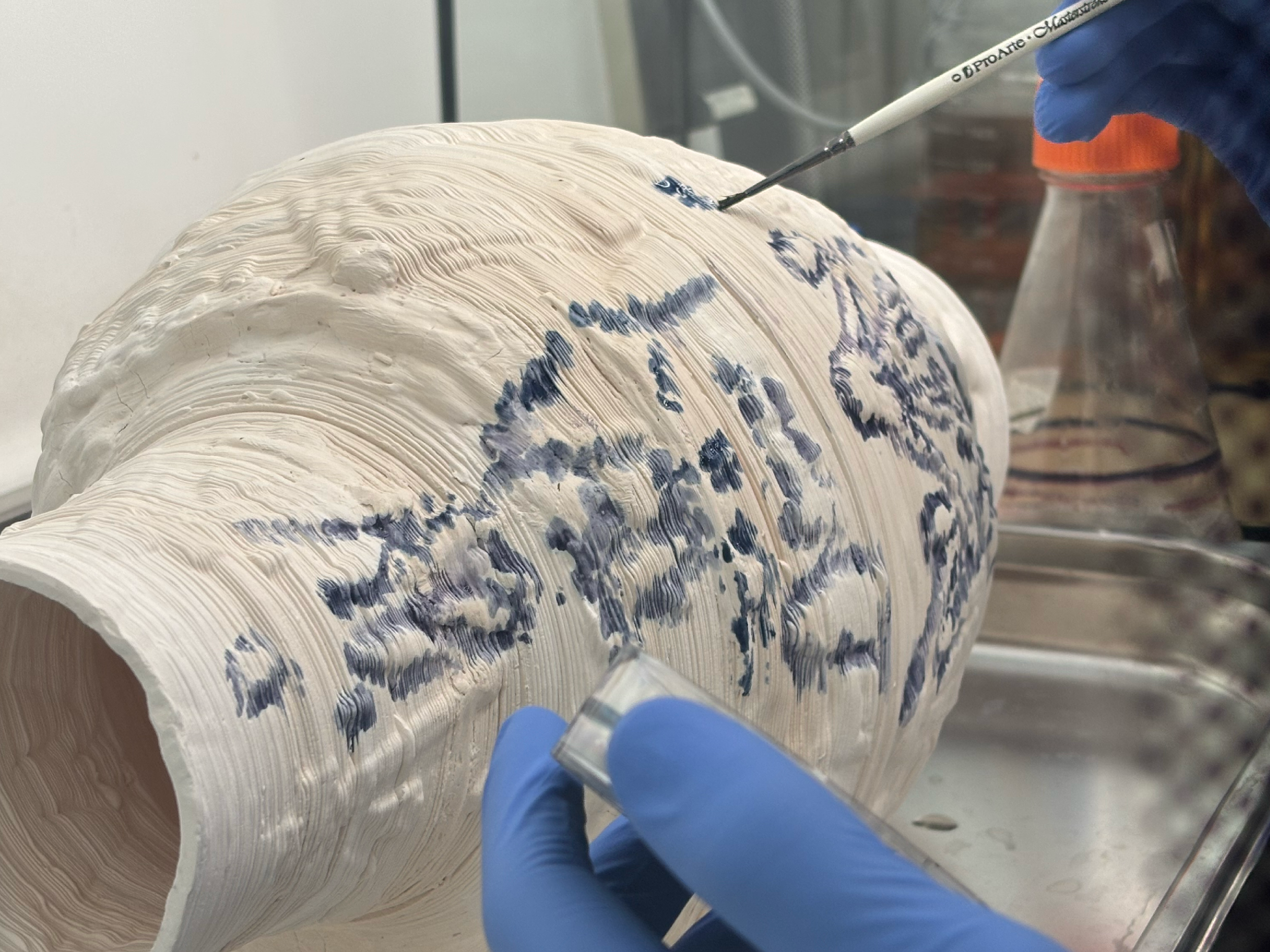
Once the printed and fired pieces are ready, they go into a controlled cultivation environment with the bacterium. What follows isn't decoration in the usual sense. The ceramic becomes closer to a habitat, its porosity and moisture and texture shaping where the organism takes hold and where its pigment builds up. The ridges kept from the printing process turn into small pockets of difference, each nudging the growth one way or another.
The resulting pattern isn't something the maker fully controls. It comes out of a back-and-forth between the clay's structure and the bacterium's own behaviour, worked out on its own terms. Only once the colour has developed are the objects sterilised, leaving the visual trace of a living process behind without the living process itself.
Talking back to blue-and-white
Running through all of this is a reference to blue-and-white porcelain, Qīng huā cí, one of the most widely circulated and imitated ceramic traditions in the world, built on centuries of hand-painted cobalt decoration refined at the kilns of Jingdezhen. Its identity rests on a familiar pairing: a pale, refined body set against a deep cobalt blue. That pairing travelled the world through centuries of trade, and came to stand, for many, as shorthand for Chinese craft itself.
MADE IN CHINA takes that visual language and rebuilds it from different sources. The pale body no longer comes from fine porcelain clay but from mining waste. The blue is no longer painted on but grown, produced by an organism responding to whatever conditions it has been given. The surface stops being a passive ground waiting for a painter's hand and becomes an active site instead, one where colour shows up on its own schedule.
Three timescales, one object
Each finished piece holds three timescales at once: the geological time locked into the mineral waste, the industrial time of its extraction and processing, and the shorter biological time of the microbial growth that marks the surface.
For Kuang, the designer's role shifts with it. Rather than controlling every visible detail, the work becomes about setting conditions — a topography of ridges, moisture and mineral — and then letting another organism answer back. What gets made is shared rather than singly authored.
What the objects hold
The finished pieces are durable, meant to be exhibited or kept rather than to decay or return to use. The project positions itself as a critical proposition rather than an environmental fix: firing clay at high temperature takes energy, and cultivating bacteria demands its own laboratory resources. What it offers instead is a way of making the legacy of extraction visible, and of testing what happens when waste, craft, and living systems sit in the same room.
What sits underneath the finished objects is a fairly long stretch of testing that never makes it onto the shelf. Different growth media, different pH levels, different ceramic substrates, each combination pushing the bacterium toward a slightly different result. Some surfaces held pigment well and others let it thin out or drift. Some conditions produced a strong, even blue and others produced patchiness, or barely any colour at all. None of that variability is a flaw in the method. It is the method: a material system built specifically to be responsive rather than fixed, where the recipe is not a formula to be repeated exactly but a set of conditions to be tuned.
That is arguably where the project's real contribution sits, less in the finished vessels than in the working method behind them. Treating an industrial waste stream as a substrate for microbial life, rather than as an input for backfill or aggregate, opens up a category of material research that mining by-products rarely get access to: aesthetic and cultural interpretation, not just functional reuse. It suggests a different question for anyone working with waste materials. Not only what can this be turned into, but what could grow on it, and what might that growth be allowed to mean.
MADE IN CHINA by Weixi Kuang · Photo: Pascal Schönlau
MADE IN CHINA by Weixi Kuang · Photo: Pascal Schönlau
MADE IN CHINA by Weixi Kuang · Photo: Pascal Schönlau
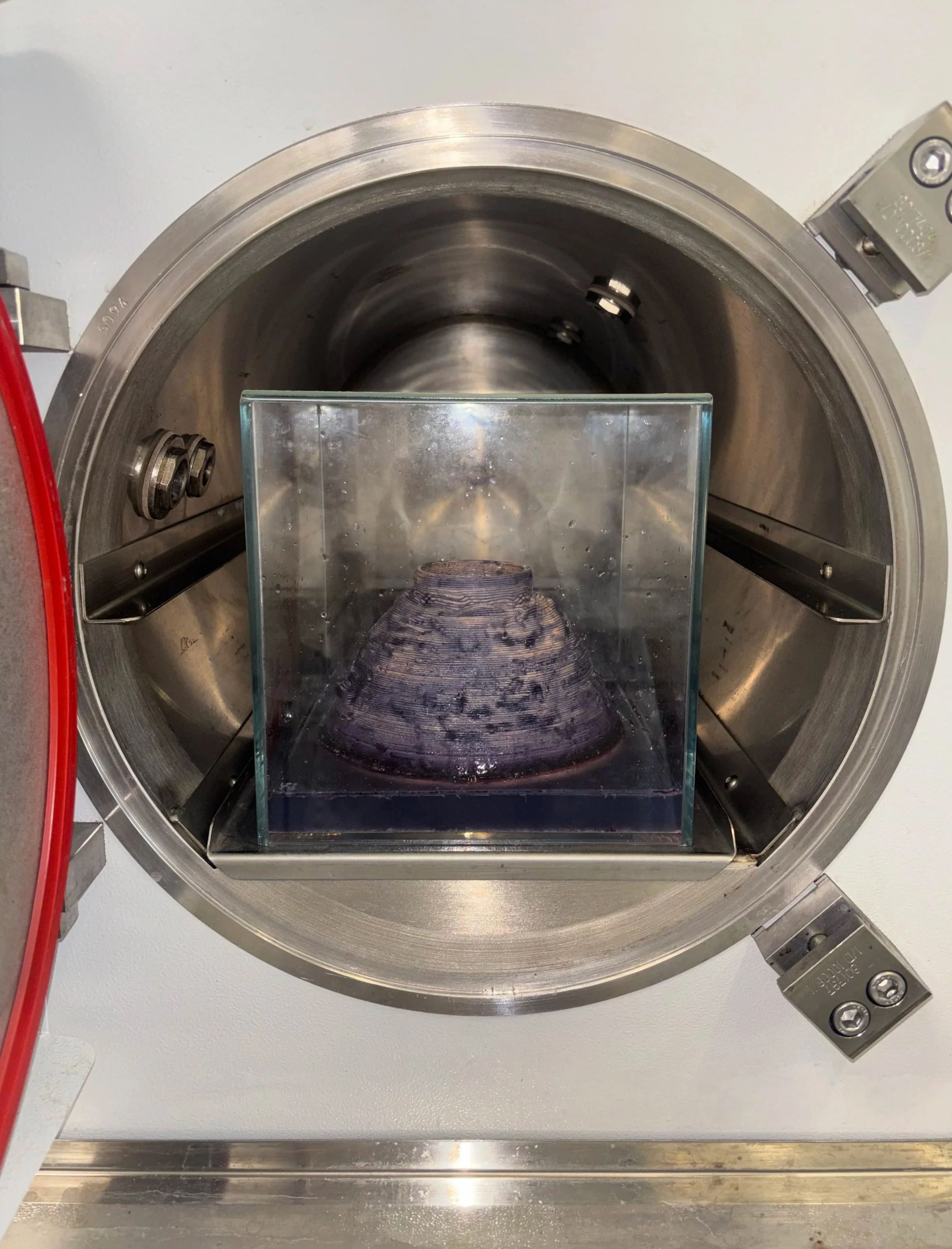
MADE IN CHINA by Weixi Kuang · Photo: Pascal Schönlau
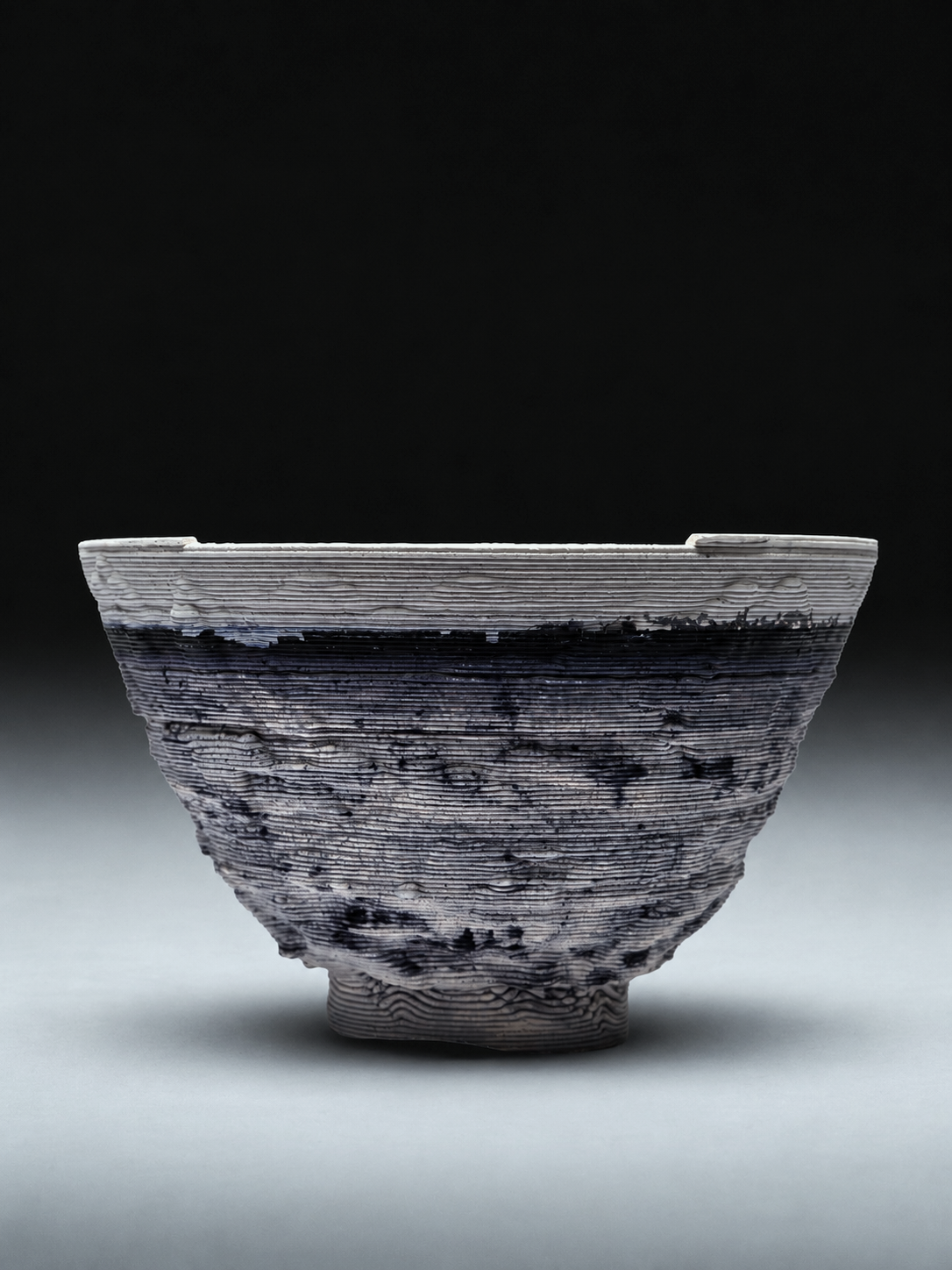
MADE IN CHINA by Weixi Kuang · Photo: Pascal Schönlau
Featured practiceWeixi Kuang
Instagram @kuangweixi
Photography
Further reading
A short review of the sustainable utilization of coal gangue in environmental applications
In Living Color: Bacterial Pigments as an Untapped Resource, PLOS Biology
Chinese blue-and-white ceramics, Victoria and Albert Museum
Words
Nina Zulian, with the revision of Claude.ai