
A Thousand Layers of Stomach
A.A. Murakami
Curatorial Issue 01 | Beyond Territory
A Thousand Layers of Stomach Tapestry by A.A. Murakami
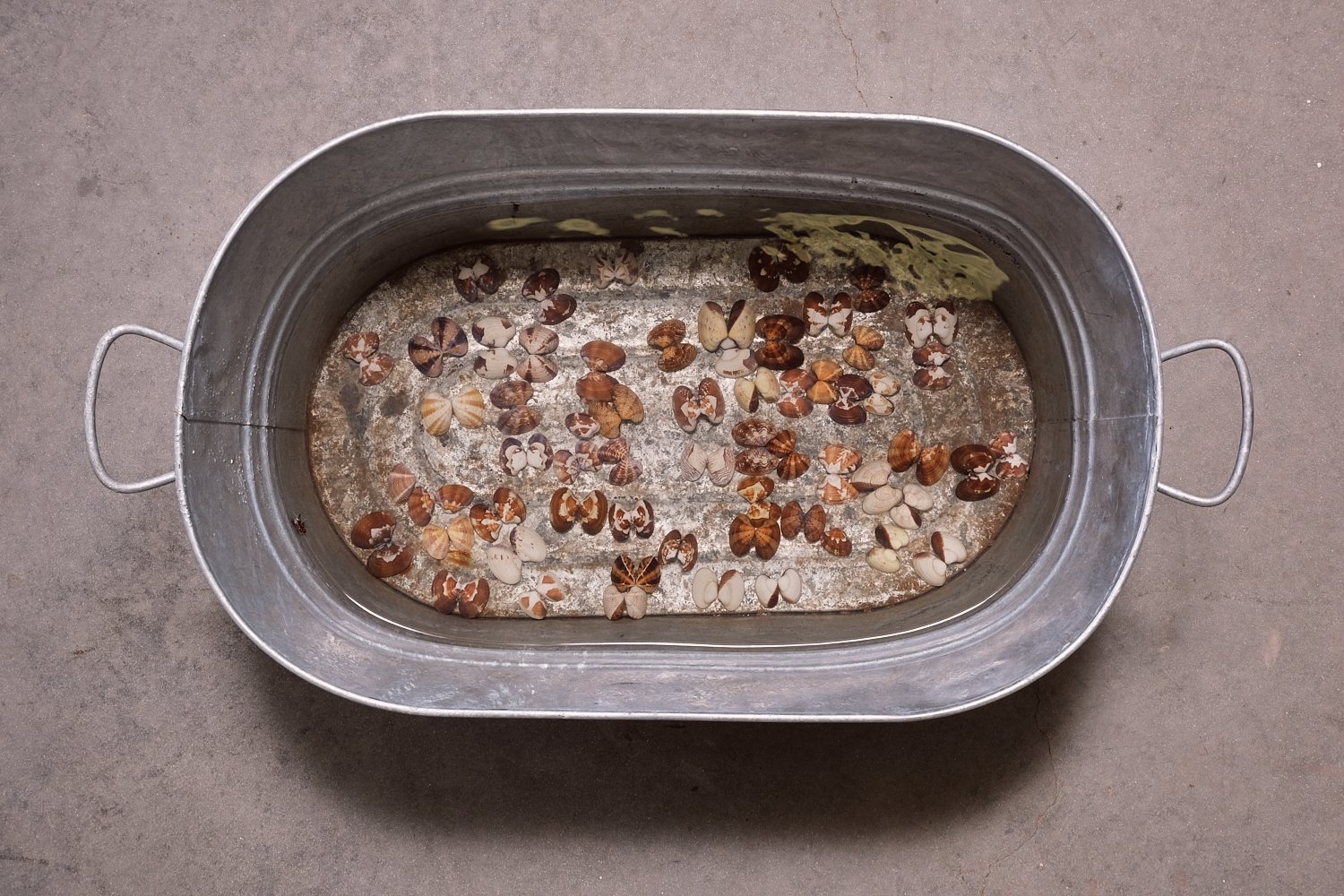
It all began at the table, over a bowl of miso soup. The broth was still settling when the clam's shell caught the light, its surface marked with fine, irregular lines, each one slightly different from the last.
Behind the work are A.A. Murakami, a duo based in London and Tokyo, consisting of Azusa Murakami and Alexander Groves. Their practice lies at the intersection of art, design, science and technology, exploring how natural systems can be translated into material environments.
The Asari clam descends from bivalves that first appeared over 500 million years ago, and its shell still carries that history, one line at a time. As the clam feeds, it filters calcium from seawater and converts it into calcium carbonate, the same mineral found in chalk and coral. This substance builds up along the shell's edge in continuous ridges; each ridge marks roughly a year of the clam's life, and its width tells its own small story: a warmer season, a lean one, or a time of abundance. The pattern is not designed; it is simply what growth looks like when it occurs slowly enough to leave a trace.
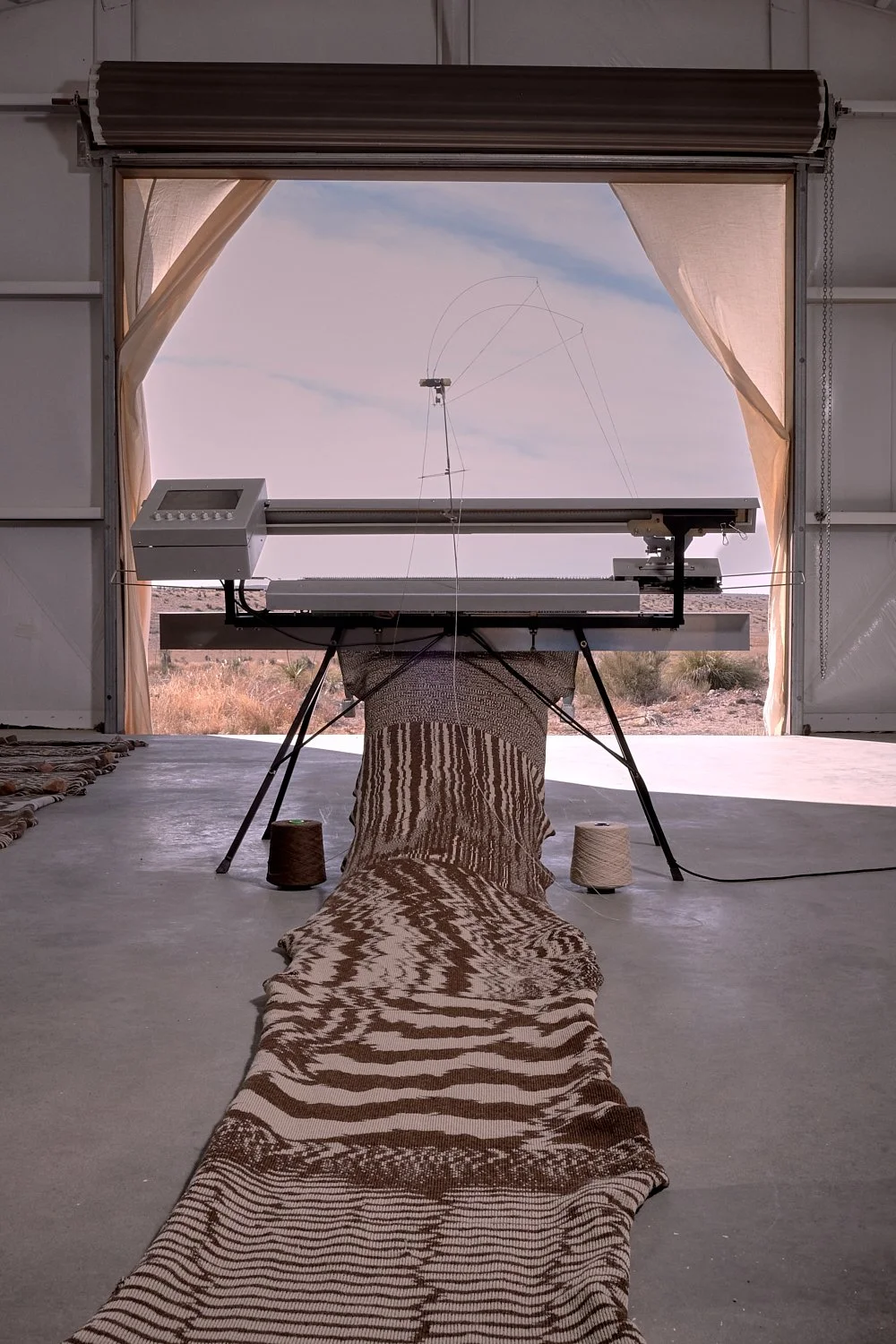
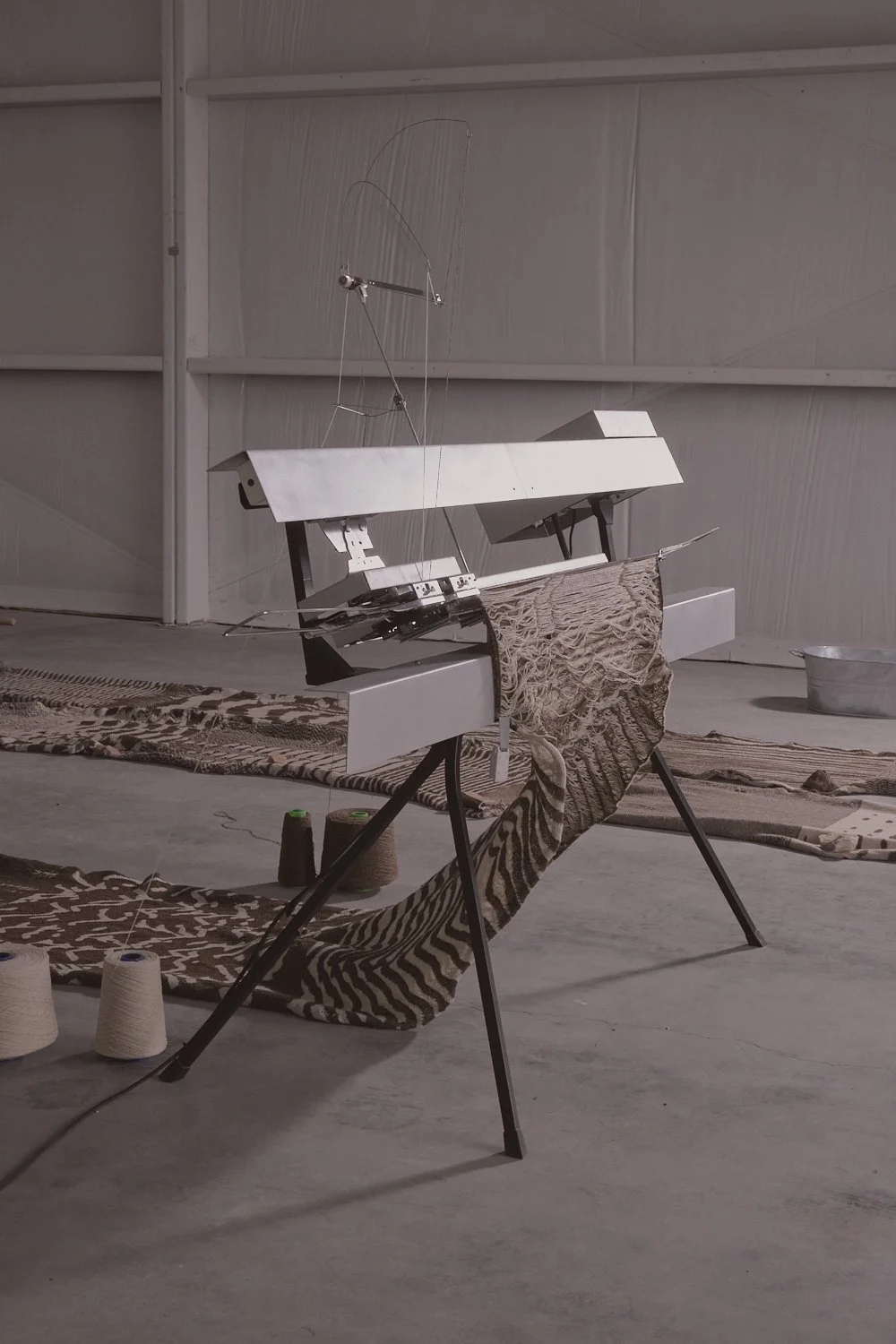
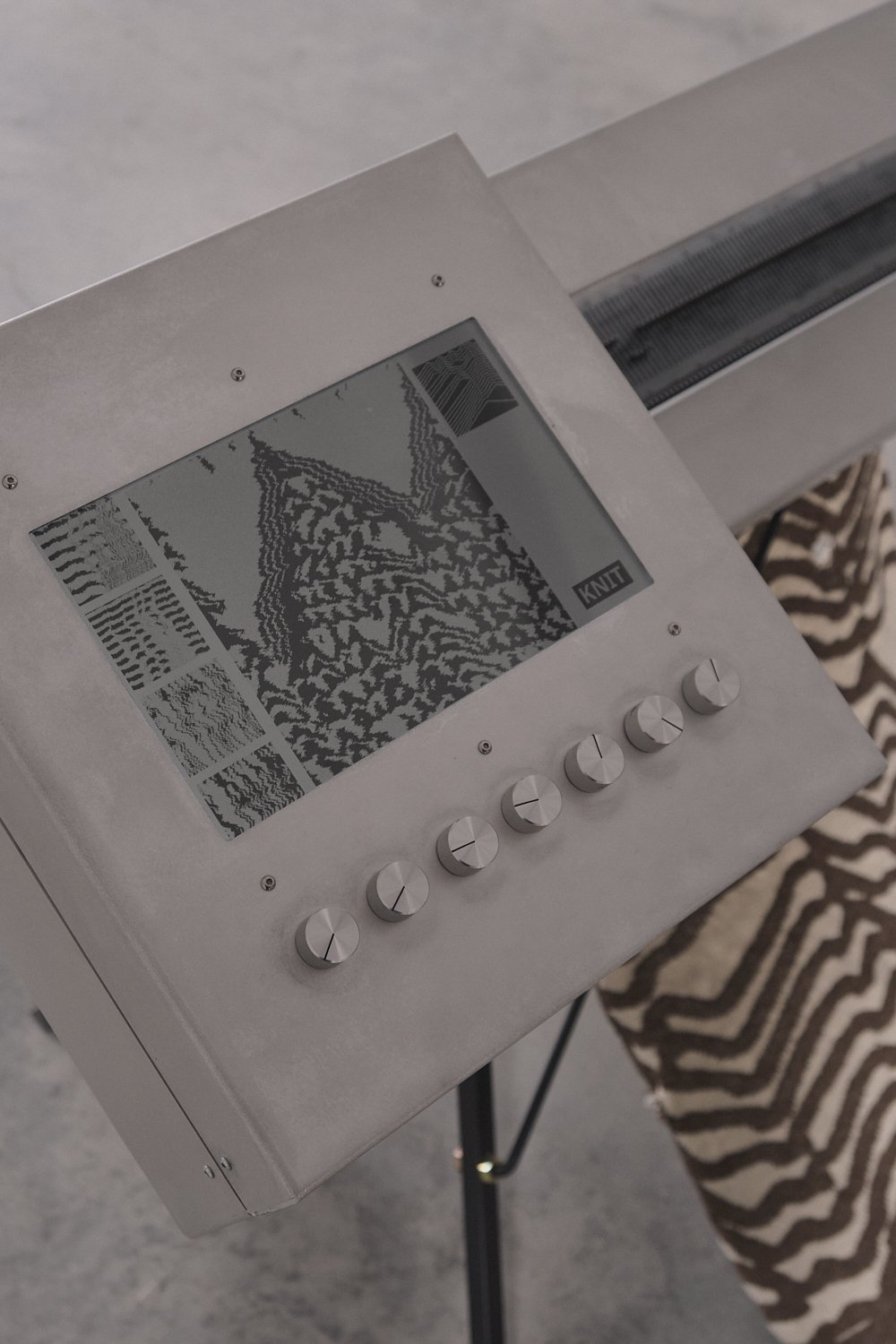
Instead of replicating the shell's appearance, A.A. Murakami created a computational model based on the logic of this growth. They began with cellular automata, a pattern-generating method developed in the 1950s, but found it too neat and rule-bound to capture the clam's irregularities. Working with a programmer, they adapted the method to respond to changing conditions as the clam does, then linked the code to a custom knitting machine. Yarn replaces calcium carbonate, and each stitch represents a growth line. The output is not a fixed textile but an open system: every activation of the machine adds a new panel to a single continuous tapestry, growing towards a planned length of one thousand, authored collectively rather than by a single hand.
The title of the piece comes from a mistranslation of a tripe dish on a Chinese restaurant menu. Murakami and Groves kept the title because it embodies both the earthy and the sublime, which is the essence of the piece.
Watching the machine work is a little like watching the tide. It doesn't answer where life comes from, or whether mathematics was already written into matter before we arrived to name it. It just makes both questions feel a little nearer.
A Thousand Layers of Stomach Tapestry by A.A. Murakami

A Thousand Layers of Stomach Tapestry by A.A. Murakami | NOMAD exhibit in Abu Dhabi
A Thousand Layers of Stomach Tapestry by A.A. Murakami
A Thousand Layers of Stomach Tapestry by A.A. Murakami
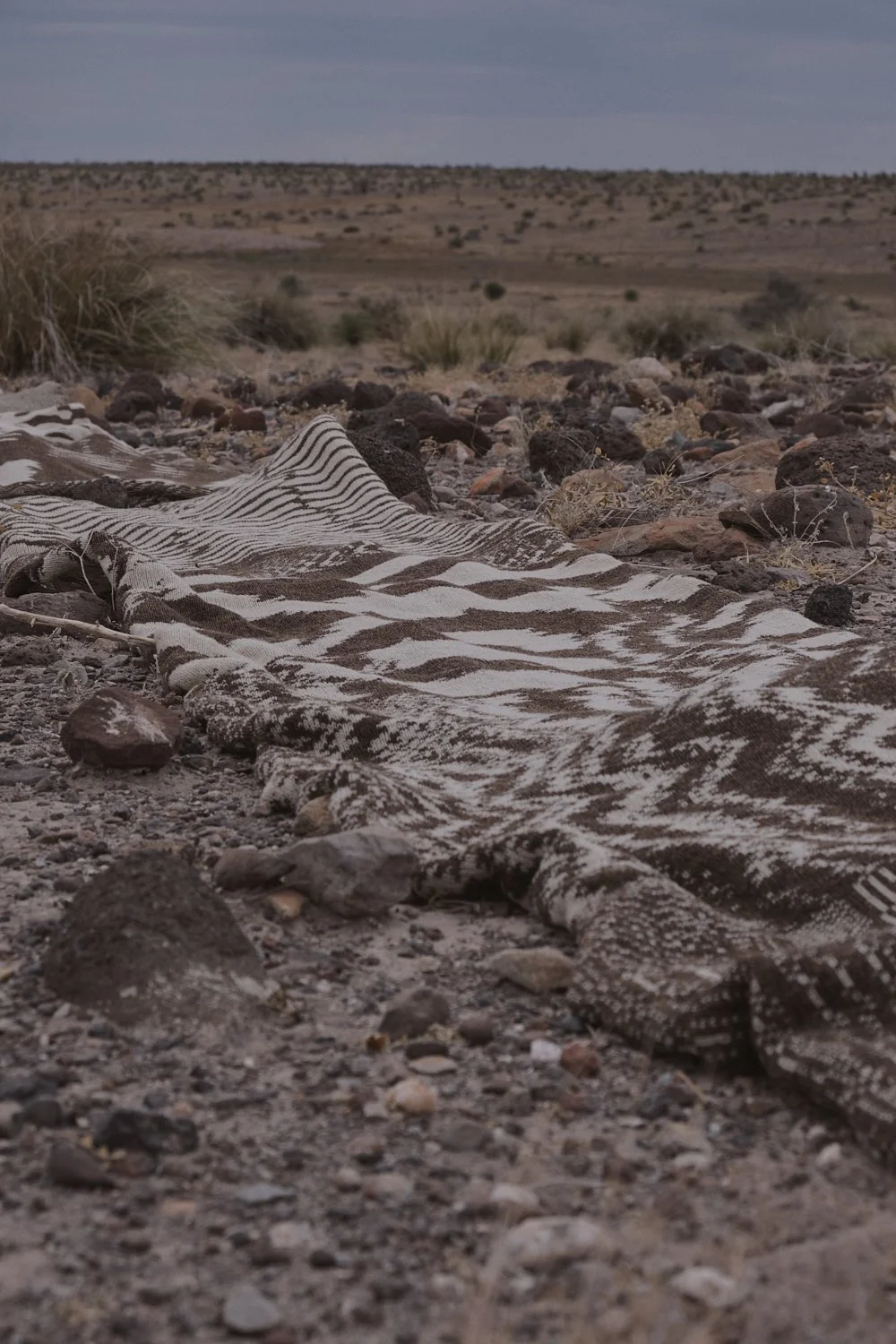
A Thousand Layers of Stomach Tapestry by A.A. Murakami
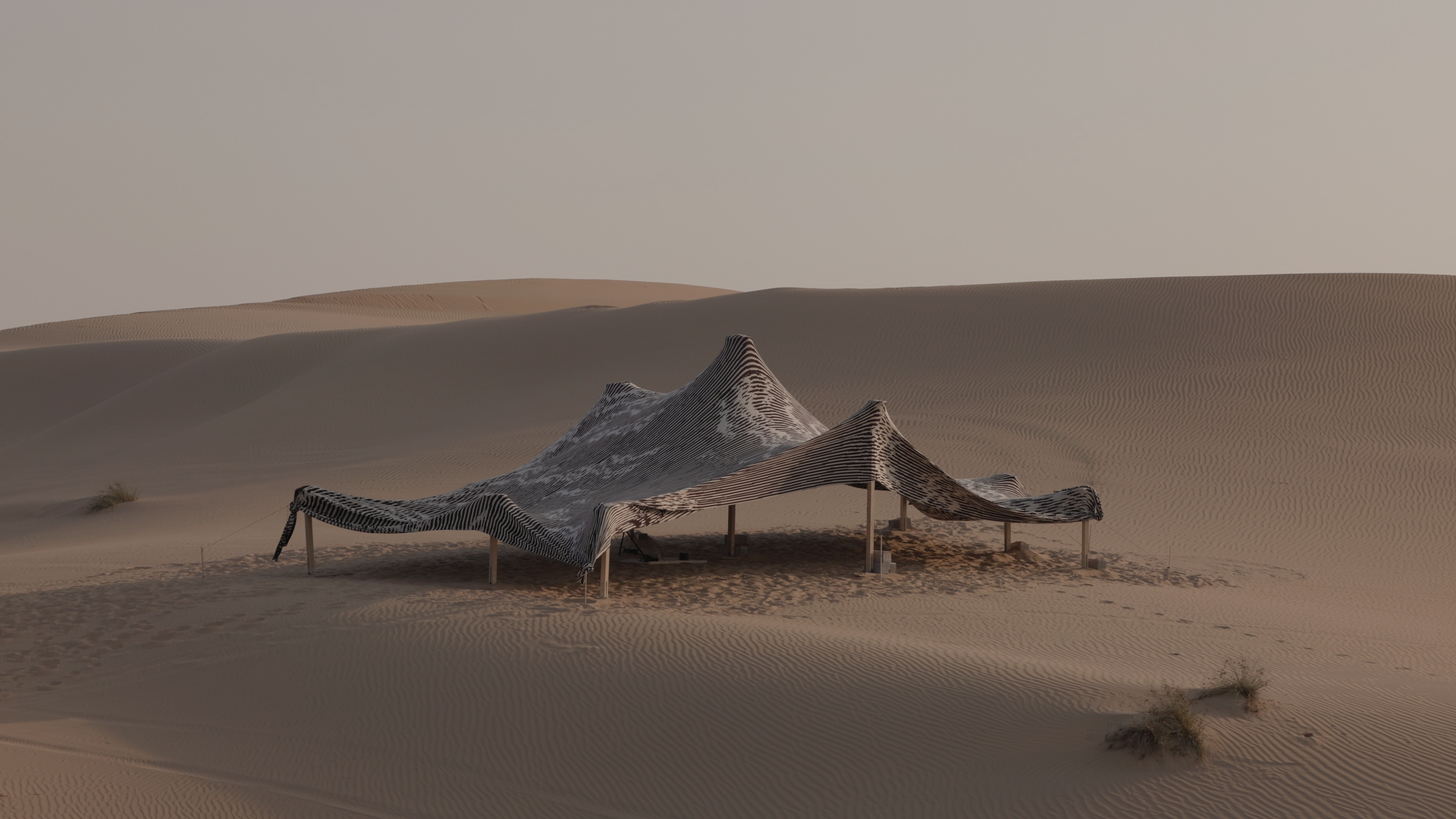
A Thousand Layers of Stomach Tapestry by A.A. Murakami | NOMAD exhibit in Abu Dhabi
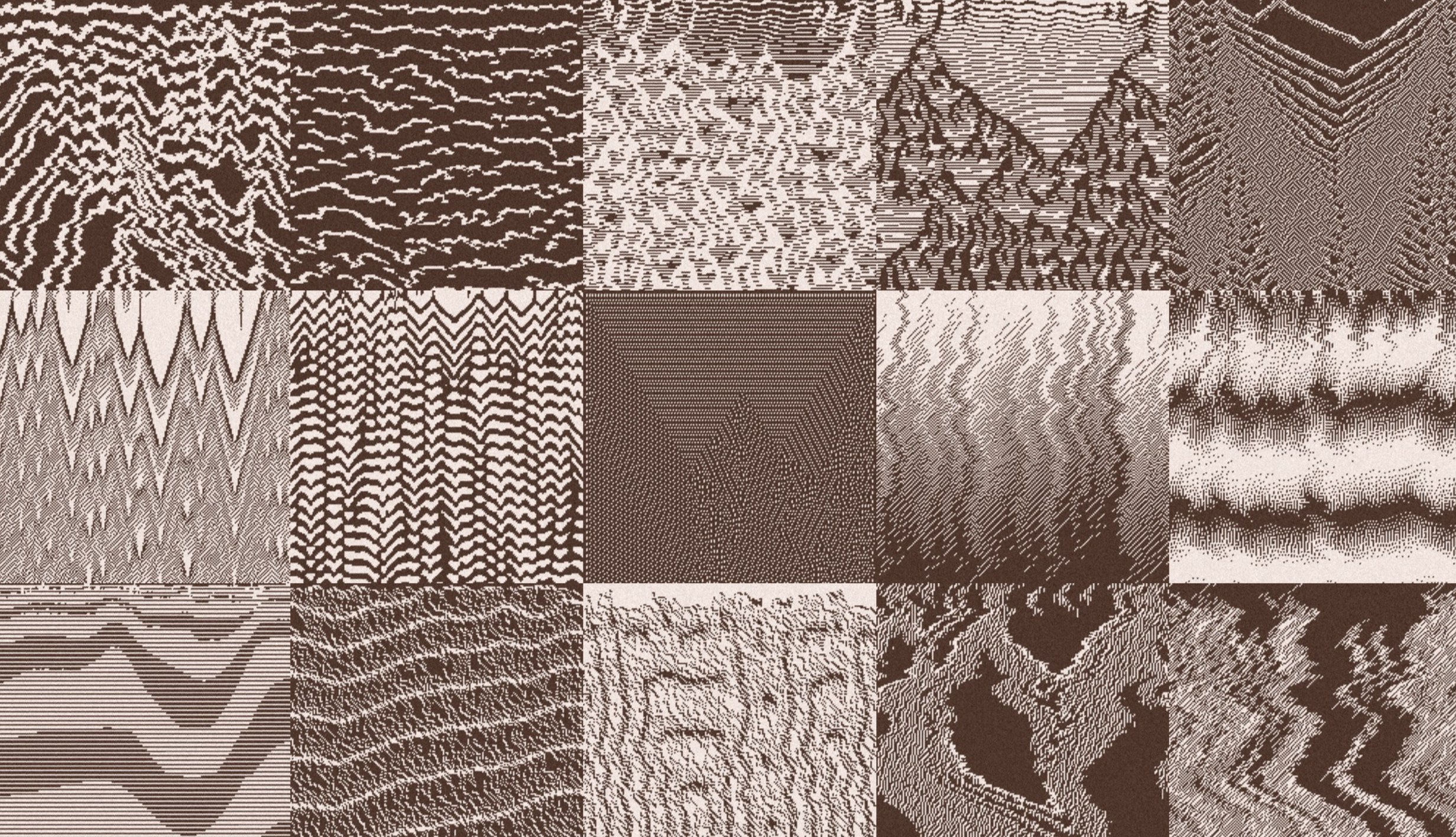
A Thousand Layers of Stomach Tapestry by A.A. Murakami