
Woven from Memory
Doreen Jinggarrabarra and Stephanie Ali
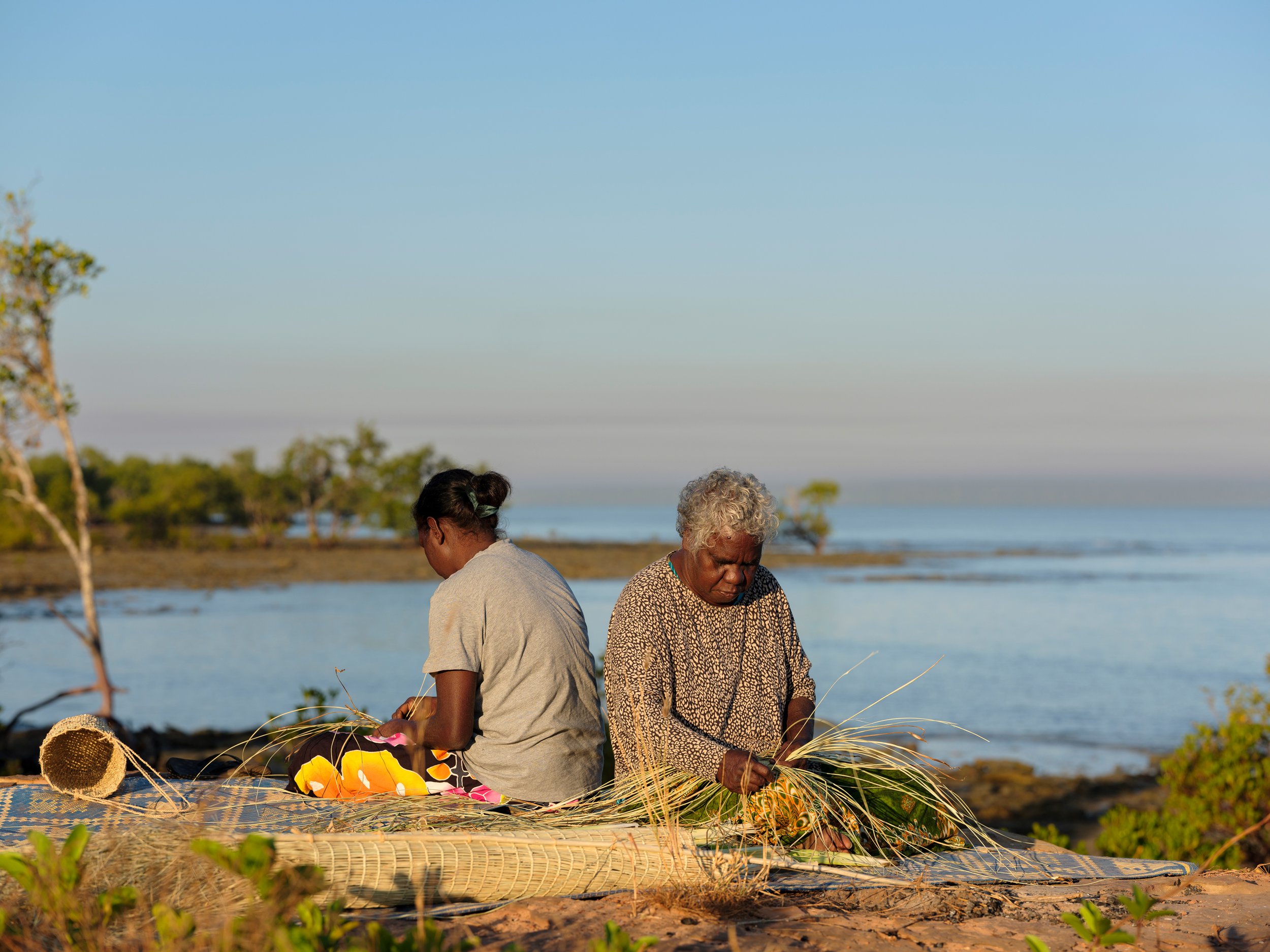
Doreen Jinggarrabarra, Burarra (mentor) and Stephanie Ali, Burarra (artist) for the FUTURE COUNTRY: Country Road + NGV First Nations - Commissions 2026 on display at The Ian Potter Centre: NGV Australia, Melbourne Photo: Alana Holmberg
Maningrida is an Aboriginal community on the Arnhem Land coast in Australia's Northern Territory, at the mouth of the Liverpool River where it meets the Blythe, about 500 kilometres east of Darwin. It's home to Doreen Jinggarrabarra, who has spent her life weaving pandanus, a spiky, palm-like plant that grows wild along the tidal flats there, into fish traps, fences, bags and mats, the way her mother did before her. Here, pandanus has fed and clothed families for generations.
"The old people had knowledge," she says. "They pass it to us, and now we're passing down to young generation, to generation, to generation."
Her skin name, part of the kinship system shared across her community, is Gamanyjan, and she speaks Burarra and Nakara. She spent years simply watching her mother, Elizabeth Mipilanggurr, before she ever picked up pandanus herself. She finished her first mat in her early twenties, and once she found the rhythm she'd spent years watching her mother work, it came together at once.
She's now among Maningrida's most respected fibre artists, working pandanus, kurrajong, mirlarl (jungle vine) and sedge grass into conical dilly bags (burlupurr), fish traps, fences and mats, almost always left undyed so the plant's own colour does the work. In 2023 she was one of thirteen women who spent two years building Mun-dirra (Maningrida fish fence), a 100-metre installation for the NGV Triennial. Her own section took 424 days, which she counted, and finishing it helped her grieve her sister, a fellow weaver who had died that year, weaving alongside her memory until she felt at peace.
It was beside that same fence net that she began teaching her daughter, Stephanie Ali, in earnest. "So I told her to come," Doreen remembers. "Steph, come along and sit beside me. You will see my hand when I weave, you have to be behind me and start weaving together."
Weaving here isn't taught from a book. It's absorbed over years, by sitting close enough to watch someone else's hands, the way Doreen taught Stephanie beside that fence net. That relationship is what the NGV drew on when it invited Doreen to mentor for FUTURE COUNTRY.
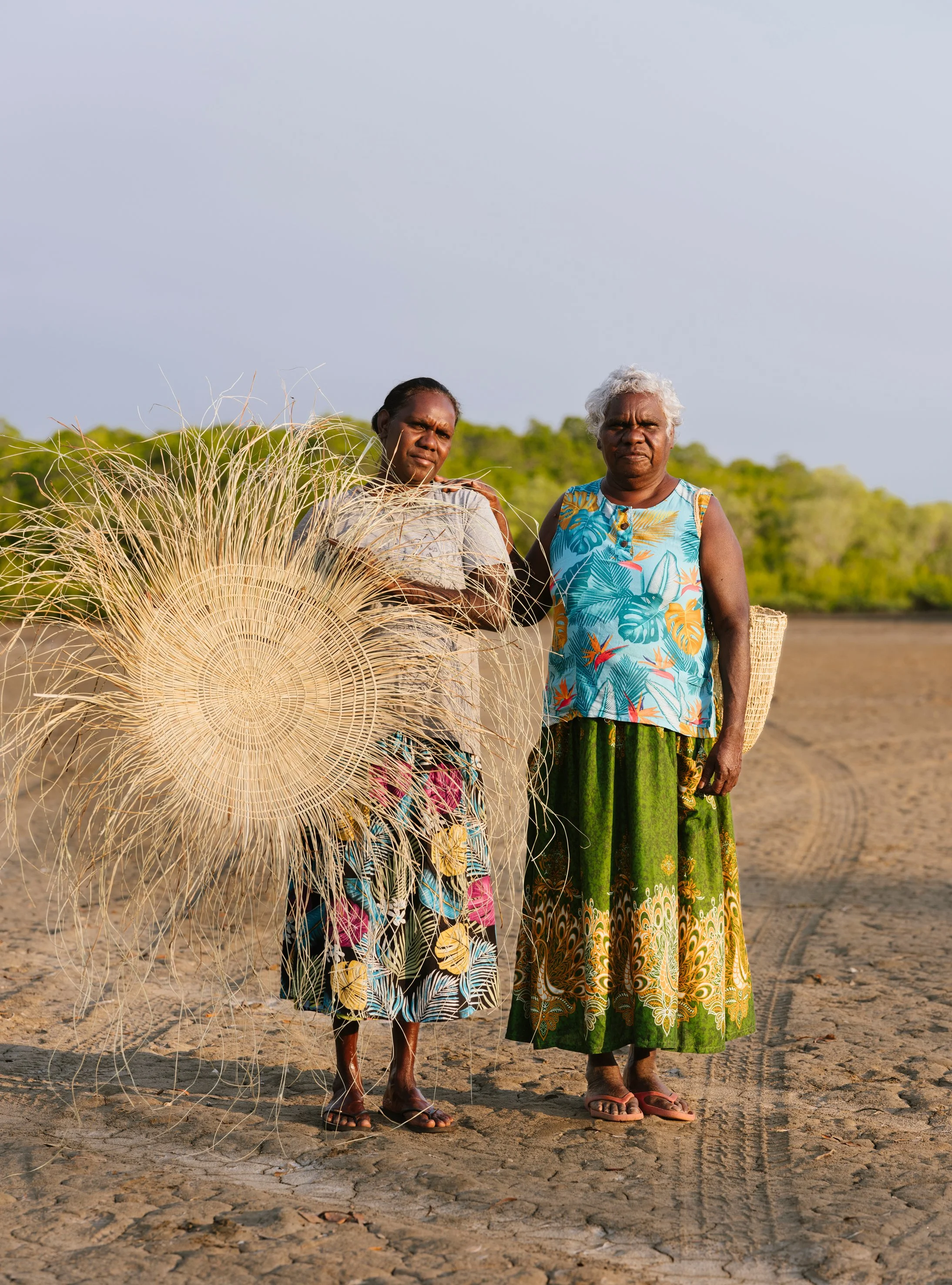
“The old people had knowledge. They pass it to us, and now we’re passing down to young generation, to generation, to generation.”
FUTURE COUNTRY: a mentorship built for this moment
Now in its second iteration, FUTURE COUNTRY: Country Road + NGV First Nations Commissions is a biennial program on at The Ian Potter Centre: NGV Australia. It pairs an emerging First Nations artist from each state and territory with an established mentor from their own community, backing each pair to make the most ambitious work of their career; every finished piece enters the NGV Collection.
Dr Jessica Clark, NGV Senior Curator of First Nations Art, has described the commission as inviting artists to look to the future while still acknowledging the past.
From Country to the Gallery
Stephanie's process mirrors her mother's: pandanus stripped and dried in the sun before it's woven into jin-gubardabiya,bamagora, fish traps, burlupurr and mun-dirra, objects passed to her from Doreen's hands and, before that, from her grandmother, Elizabeth Mipilanggurr.
There's real weight underneath that ease. The fish trap is Doreen's totem, hers alone to authorise, so teaching Stephanie to weave one was an act of trust. "Fish trap, that's my totem," Doreen says. "And I had to tell my daughter to make a fish trap, by her own."
The result, Jin-gapala, jin-mirrkajarriya, jin-merdawa (senior women, young mothers and girls), hangs suspended in the Gallery, its forms also worked in beach hibiscus.
What Survives
What FUTURE COUNTRY preserves, in the end, isn't just an object for a collection. It's a practice that could easily have stopped with one generation, and didn't: pandanus still cut from the same bush, still dried in the same sun, still shaped by hands that learned the way hands have always learned here, one person sitting close enough to watch another. Every object in Jin-gapala, jin-mirrkajarriya, jin-merdawa is proof that the knowledge held, and that it will keep being taught, because Doreen made sure of it long before any gallery asked.
It remains on view in the final weeks of FUTURE COUNTRY at The Ian Potter Centre: NGV Australia, until 13 September 2026.
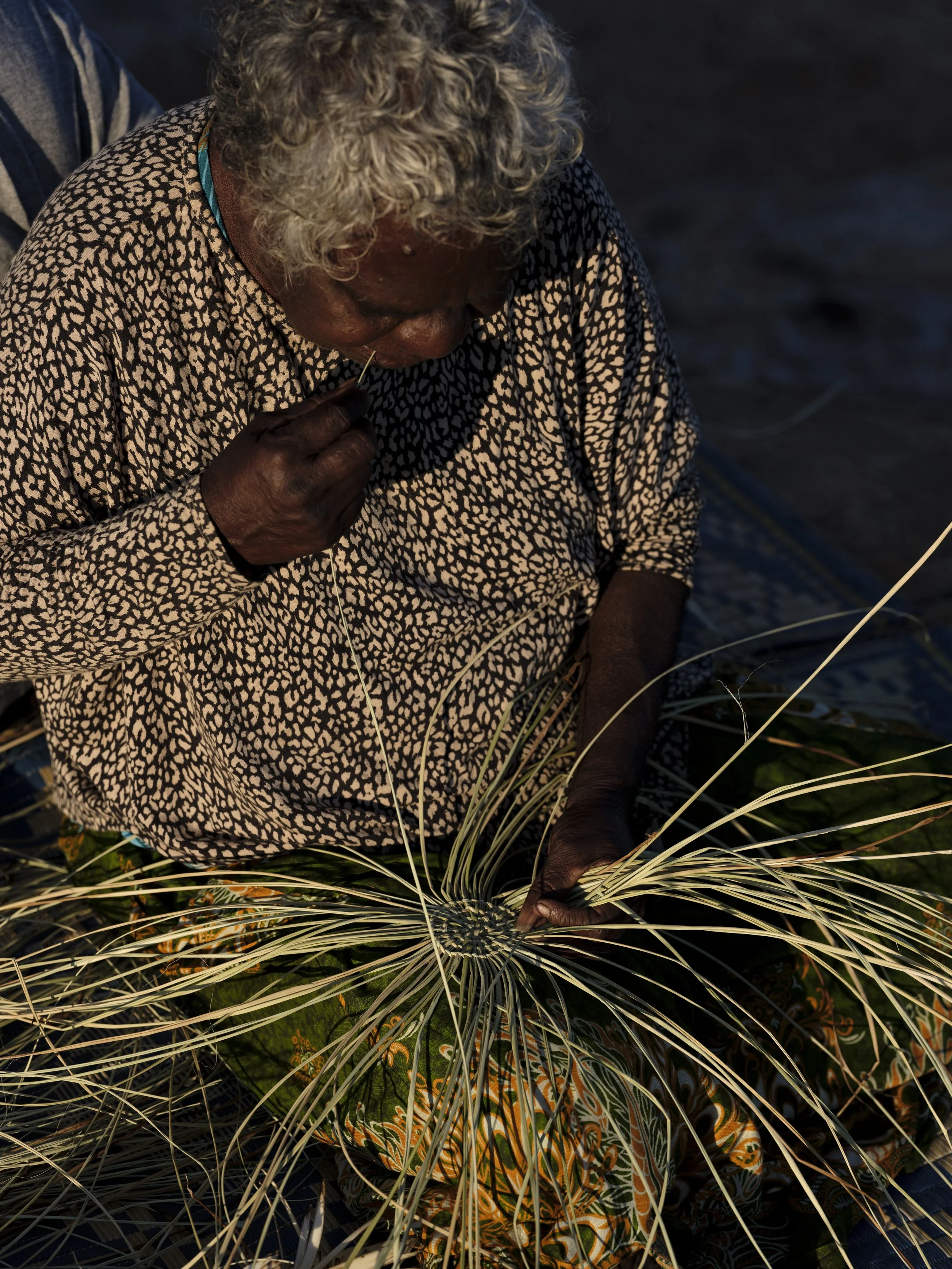
Doreen Jinggarrabarra, Burarra (mentor) for the FUTURE COUNTRY: Country Road + NGV First Nations - Commissions 2026 on display at The Ian Potter Centre: NGV Australia, Melbourne Photo: Alana Holmberg
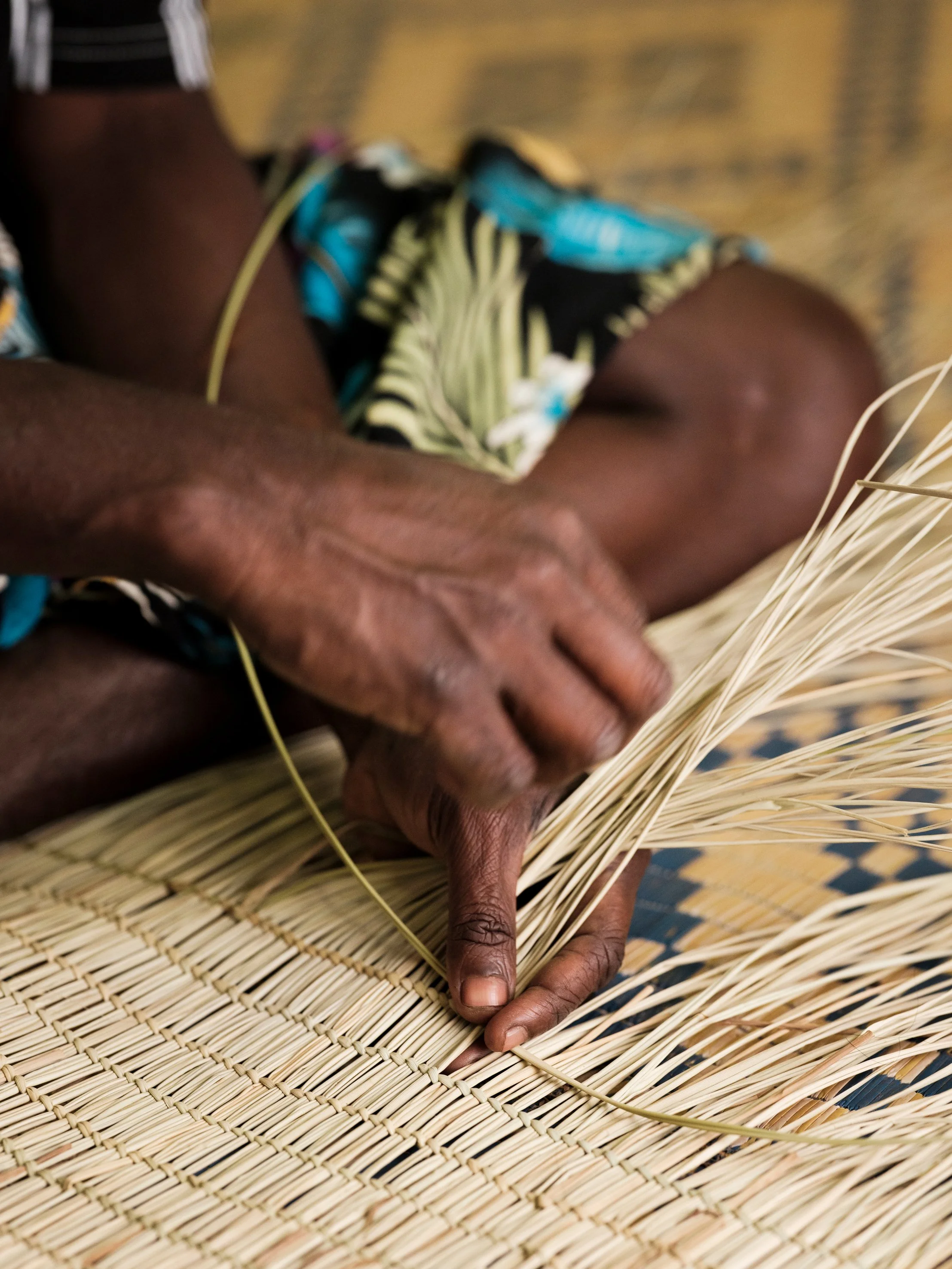
Stephanie Ali, Burarra (artist) for the FUTURE COUNTRY: Country Road + NGV First Nations Commissions 2026 on display at The Ian Potter Centre: NGV Australia, Melbourne Photo: Alana Holmberg
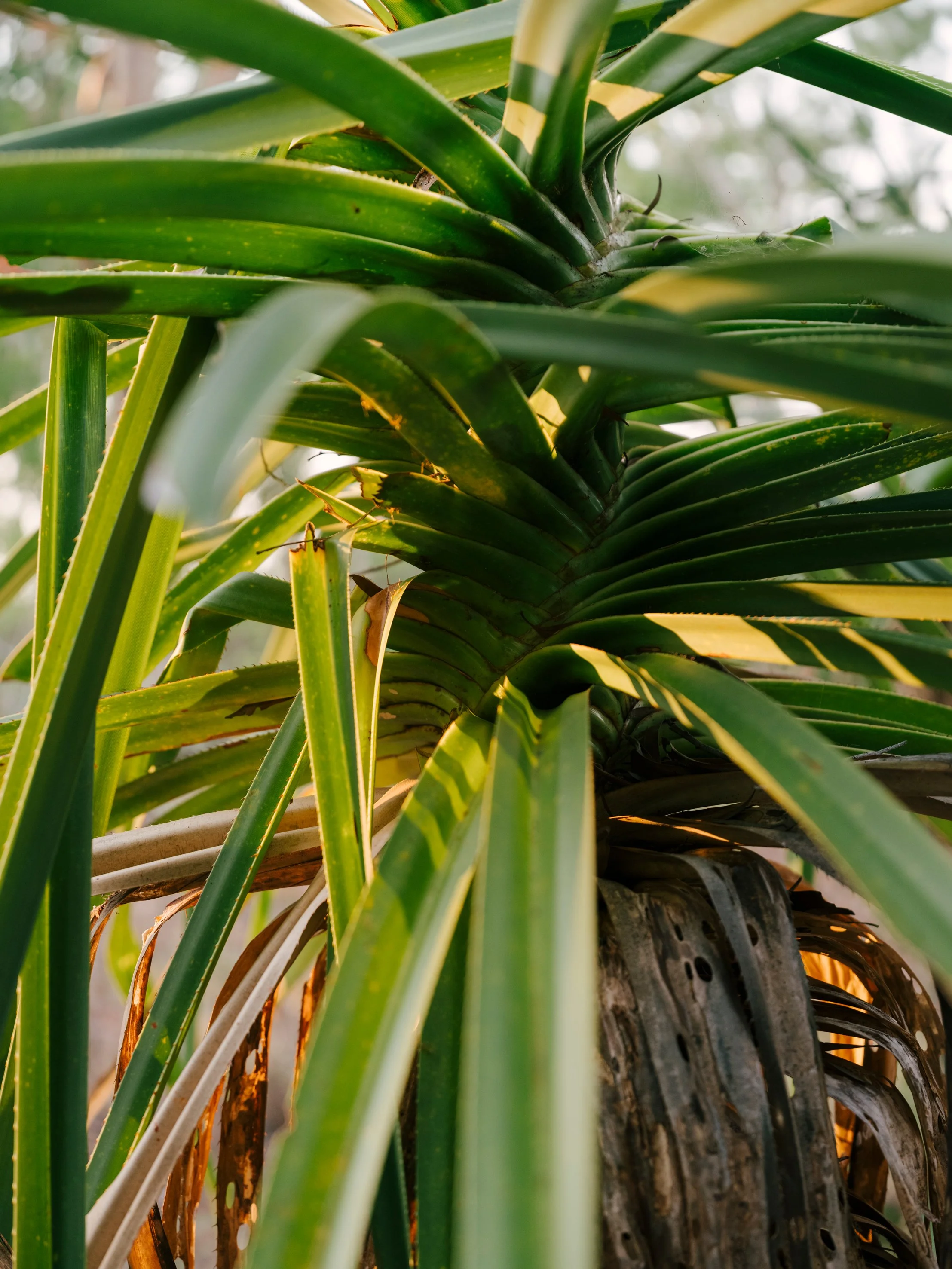
Pandanus is a genus of monocots. They are palm-like, dioecious trees and shrubs native to the tropics and subtropics.
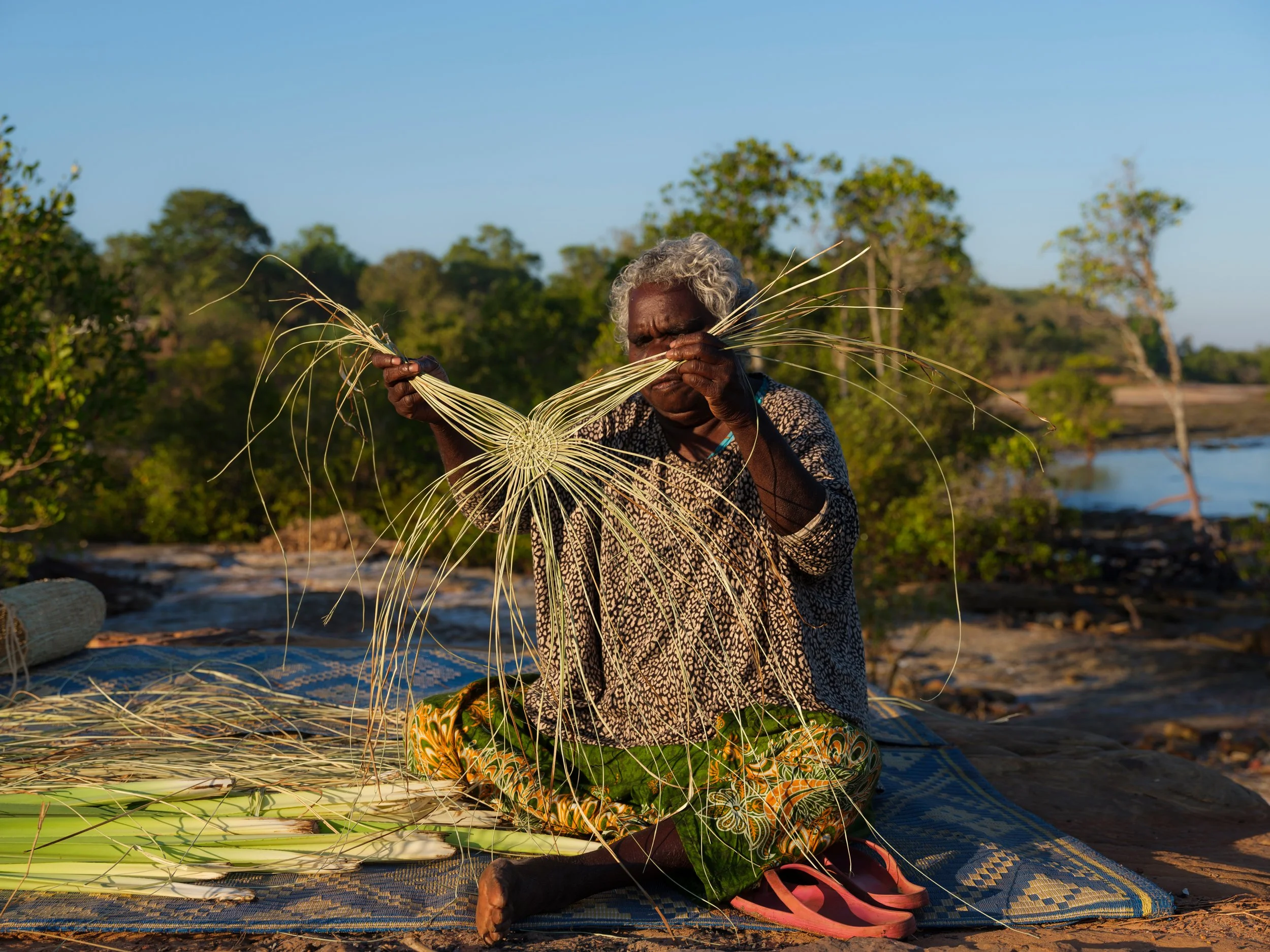
Doreen Jinggarrabarra, Burarra (mentor) for the FUTURE COUNTRY: Country Road + NGV First Nations
Commissions 2026 on display at The Ian Potter Centre: NGV Australia, Melbourne Photo: Alana Holmberg
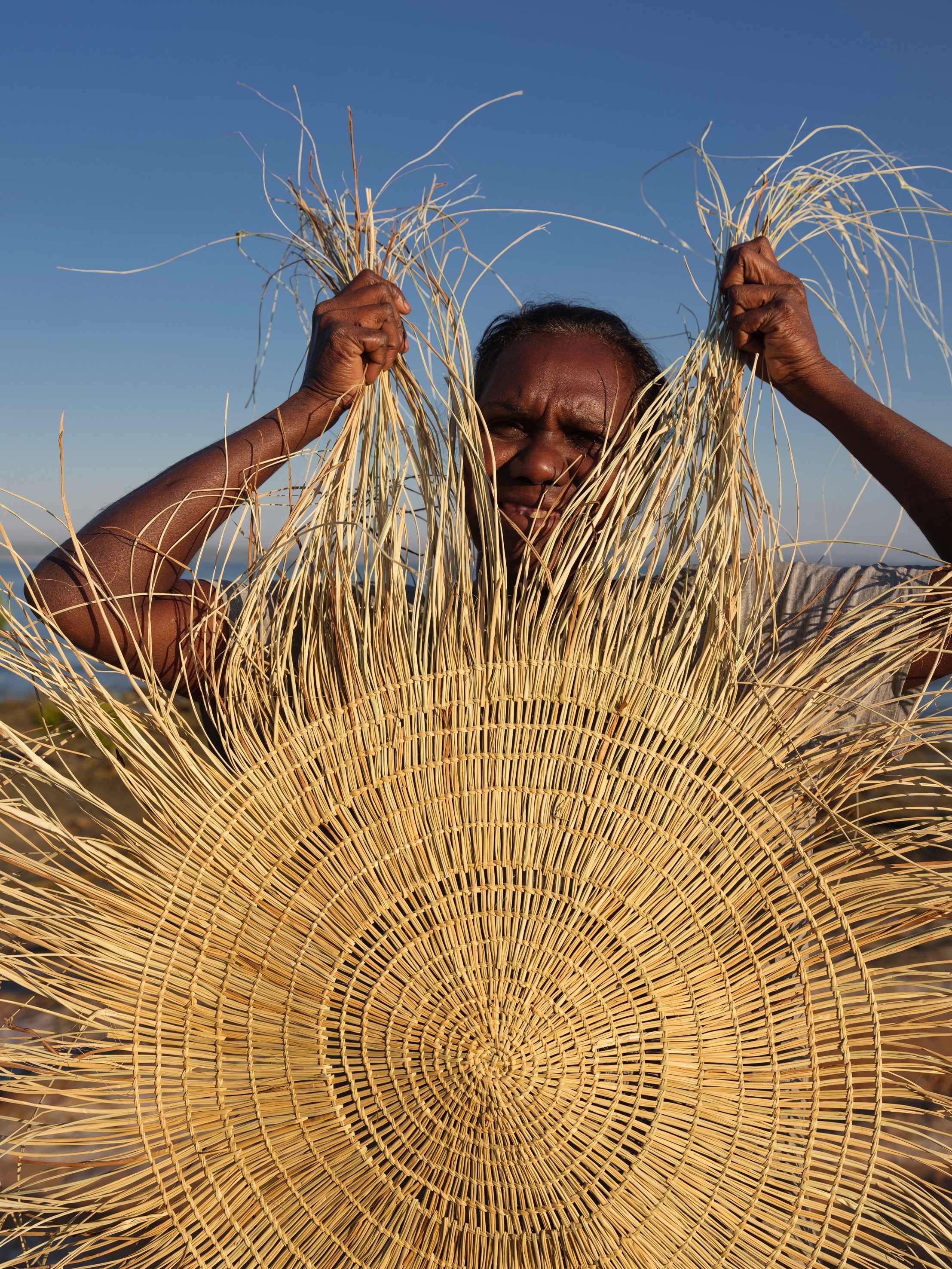
Stephanie Ali, Burarra (artist) for the FUTURE COUNTRY: Country Road + NGV First Nations Commissions 2026 on display at The Ian Potter Centre: NGV Australia, Melbourne Photo: Alana Holmberg
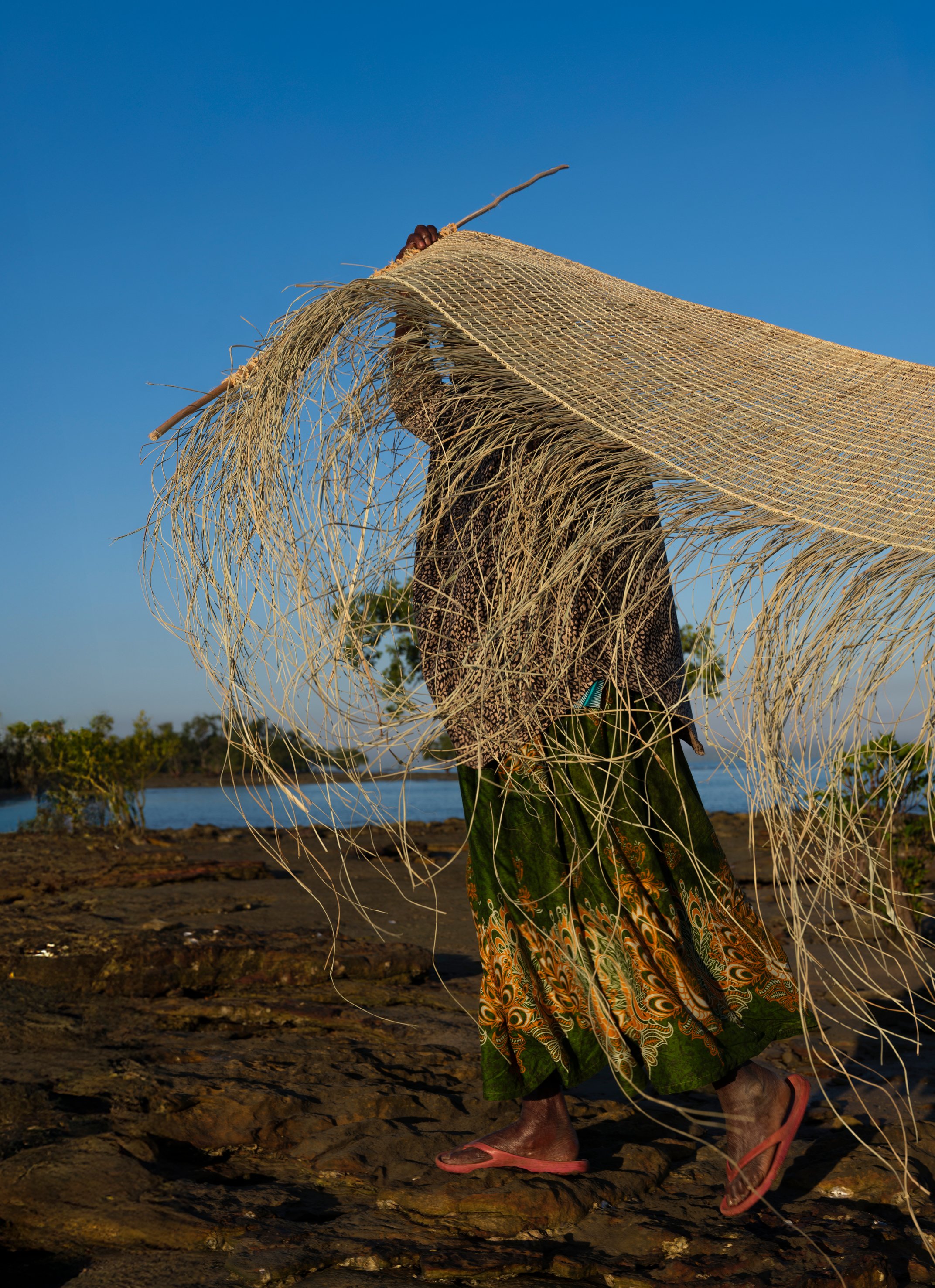
Doreen Jinggarrabarra, Burarra (mentor) for the FUTURE COUNTRY: Country Road + NGV First Nations Commissions 2026 on display at The Ian Potter Centre: NGV Australia, Melbourne Photo: Alana Holmberg
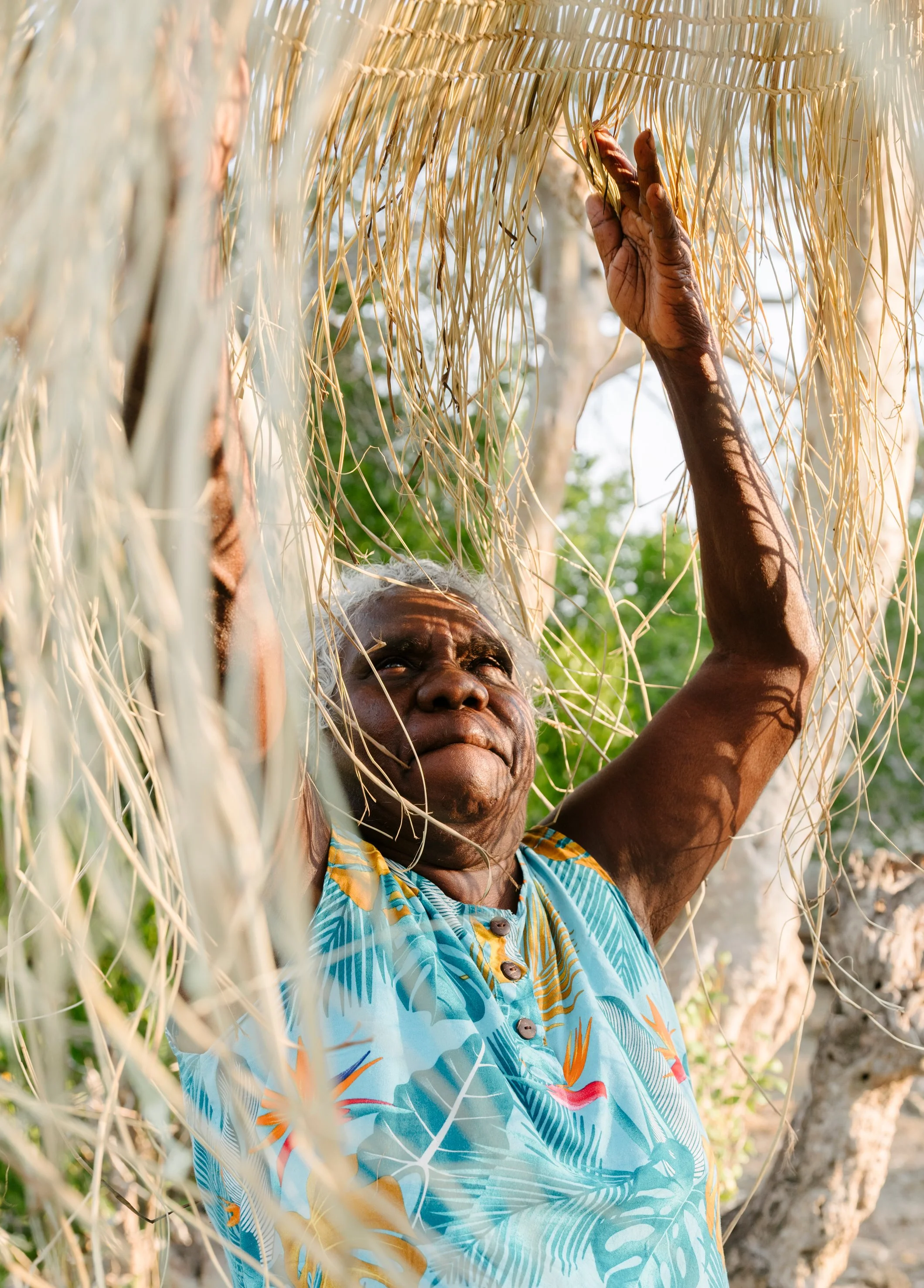
Doreen Jinggarrabarra, Burarra (mentor) for the FUTURE COUNTRY: Country Road + NGV First Nations Commissions 2026 on display at The Ian Potter Centre: NGV Australia, Melbourne Photo: Alana Holmberg
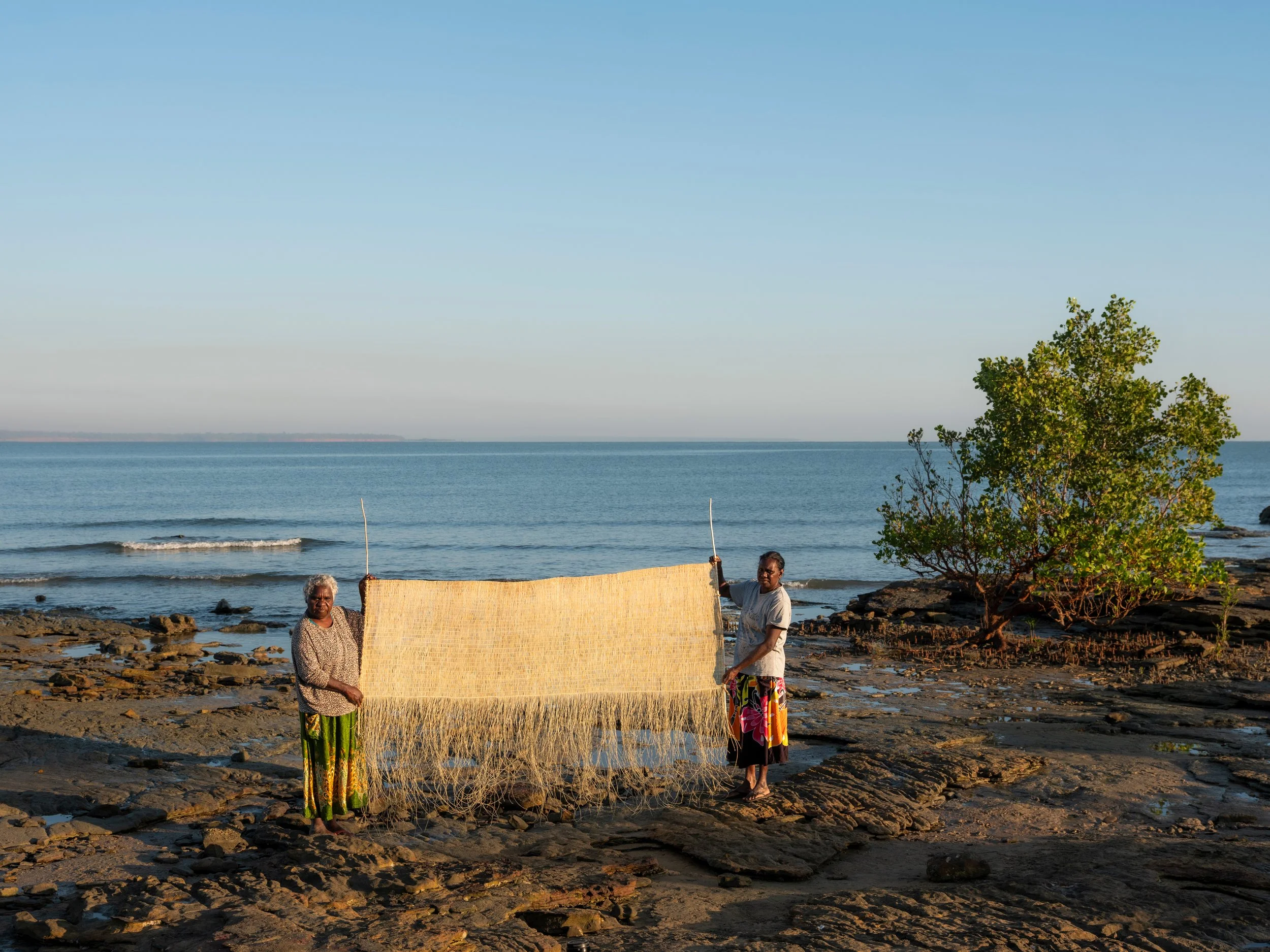
Doreen Jinggarrabarra, Burarra (mentor) and Stephanie Ali, Burarra (artist) for the FUTURE COUNTRY: Country Road + NGV First Nations - Commissions 2026 on display at The Ian Potter Centre: NGV Australia, Melbourne Photo: Alana Holmberg
Featured practice Doreen Jinggarrabarra & Stephanie Ali
Photography Alana Holmberg
Exhibition. FUTURE COUNTRY: Country Road + NGV First Nations Commissions, NGV Australia
Further reading Doreen Jinggarrabarra, Maningrida Arts & CultureThirteen women, two years and 35,000 threads: How Australia's largest woven sculpture was made, ABC NewsFuture Country: First Nations artists explore ancestral memories and alternate realities, SBS NITVFUTURE COUNTRY: Country Road + NGV First Nations Commissions, media release, NGV
Words Nina Zulian, with the revision of Claude.ai