
What to see at Dutch Design Week 2026
BioArt Laboratories, Strijp T+R
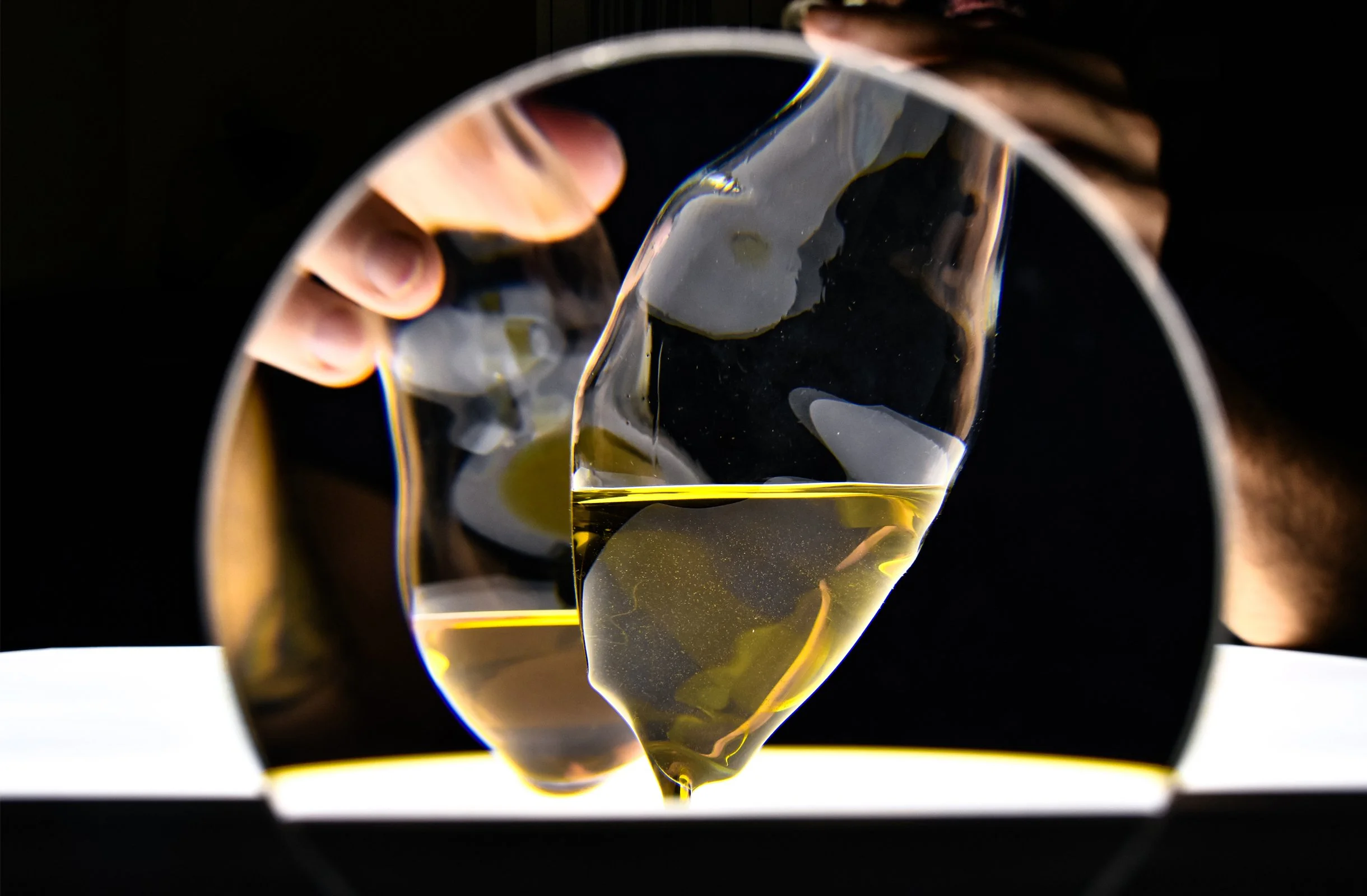
The Smelling Brain by Andrea Mammarella | Image: Mario Antoniazzi
Dutch Design Week takes place in Eindhoven from 17 to 25 October 2026. This year's theme, R.A.W. (Rebel, Authentic, Worth), turns attention to work in progress: experiments, prototypes and research that remain open-ended.
This attention to process is close to Plural's own approach. We follow independent designers and research-led practice where ecology, materials, craft and science meet. From the hundreds of projects across the city, we have selected those that question how we make things, with what, and at what cost to people and the planet.
We begin at BioArt Laboratories, where six of our picks are gathered in one place.
BioArt Laboratories, Strijp T+R
Away from the industrial halls of Strijp-S, BioArt Laboratories occupies a historic military complex set in woodland at the green heart of Eindhoven. During Dutch Design Week, its buildings and grounds host more than twenty exhibitions, indoors and outdoors, dedicated to working with living systems and biological matter.
We chose these six because they sit squarely within Plural's lens: design where ecology, materials, craft and science meet. Several come from emerging designers, including a Design Academy Eindhoven student and a recent TU Delft graduate, whose research deserves a wider audience at an early stage.
Many of them also return to traditional knowledge and reinterpret it for new materials, from plant dyeing and natural fibres to salt crystallisation and fired clay. And almost all are shown in process rather than as finished products, with samples, tests and failures on display. That openness about how material work really happens is what we value most, and it suits this year's R.A.W. theme.
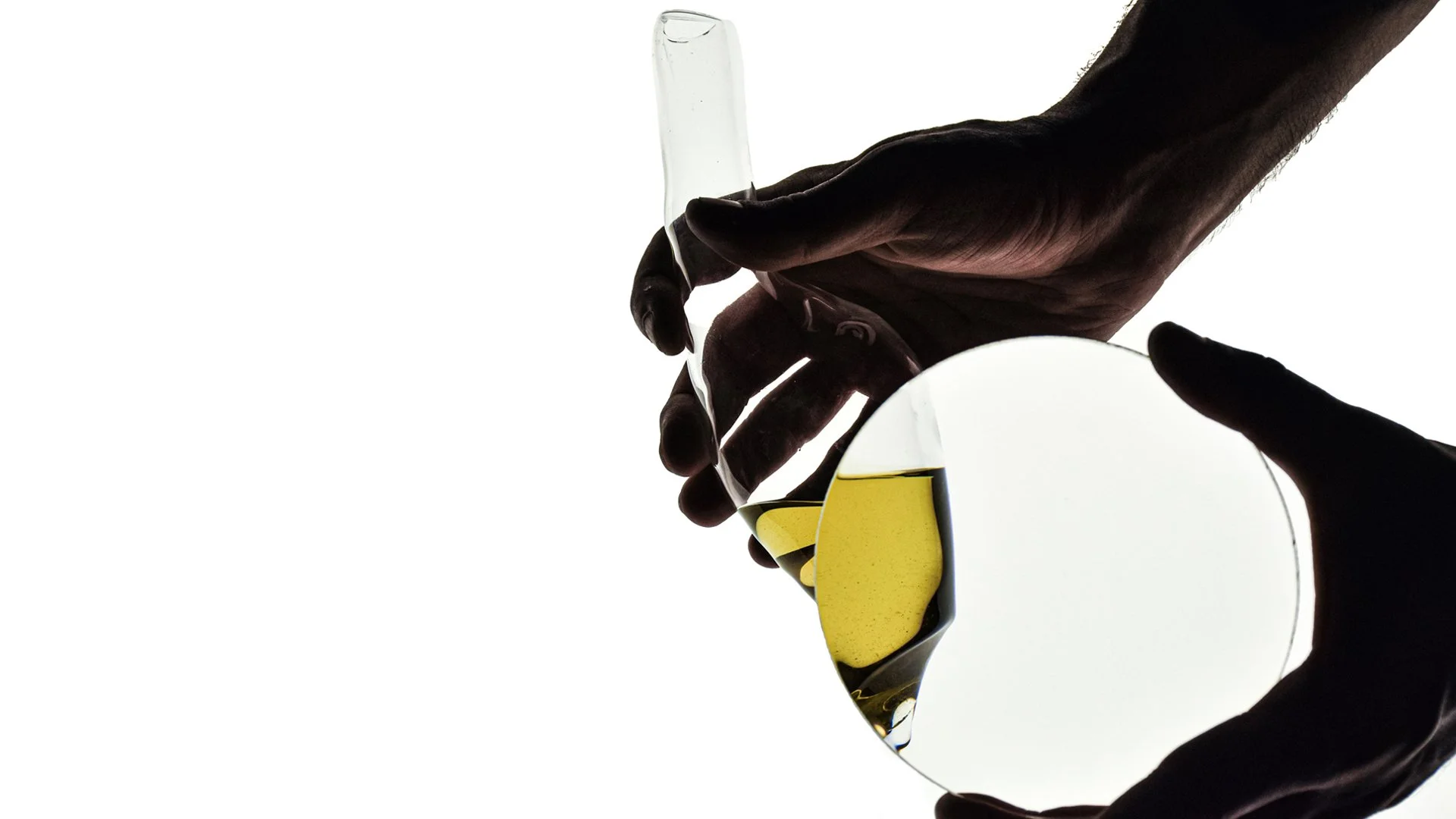
The Smelling Brain by Andrea Mammarella | Photography Mario Antoniazzi
The Smelling Brain by Andrea Mammarella
Italian olfactory designer and natural perfumer Andrea Mammarella starts from a sensory loss already under way: pollution and synthetic saturation are gradually eroding our sense of smell. Drawing on anatomical research and speculative design, The Smelling Brain proposes an alternative anatomy for olfaction, a set of new organs that extend the human senses. Each one corresponds to a perceptual state and its functions in the brain and body, giving physical form to processes of smelling that are normally invisible.
The organs are paired with experimental compositions made through natural perfumery, each tuned to one of three states: memory, attraction and flavour. The aim is to reactivate dormant sensory associations, with natural materials acting as carriers that preserve olfactory information which might otherwise be lost.
The third layer is a series of glass apparatus developed with glass artist Serim Kwack. Organic glass vessels sit within supporting structures and instruments, each calibrated to its organ and perceptual state, to form a direct passage between perfume, nose and brain. For designers and researchers, the work sits in an unusual space between organ, instrument and prosthesis, and asks how design might respond when a sense is no longer entirely our own.
Image: Mario Antoniazzi
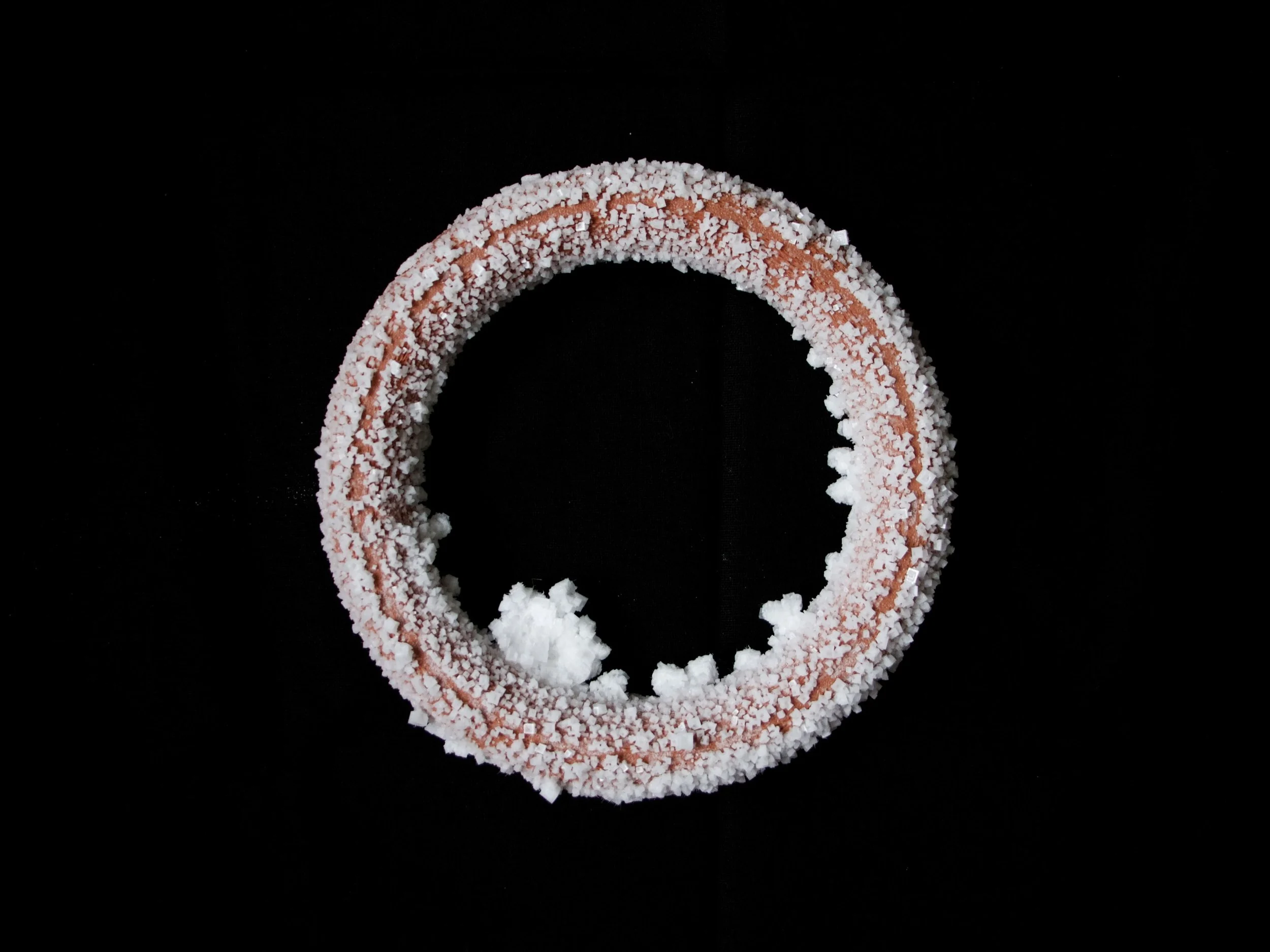
Llàgrima Salta by Mathias Blanc | Image: Mathias Blanc
Llàgrima Salta by Mathias Blanc
The title is Catalan for 'salt tear', a reminder that every tear we cry holds a little salt. The salt itself is a regional resource from the South of France, where Blanc comes from. He scales the method up into a speculative stage set imagined for Cirque du Soleil, an open-air circus for salt marshes, using the same immersion process for the model. For researchers, the project raises open questions worth asking at the stand: how toolpath geometry steers crystal growth, how the encrusted forms behave over time, and whether the process could work at architectural scale.
Design Academy Eindhoven student Mathias Blanc combines digital fabrication with mineral self-assembly. He 3D-prints scaffolds and submerges them in hot, salt-saturated baths. As the water cools and slowly evaporates, sodium chloride crystallises into cubic forms on the printed surfaces, and the crystals keep growing for as long as the pieces stay in the bath.
The design work happens in the toolpath. Blanc programmes organic printing trajectories to improve crystal adhesion to the scaffold walls, and after a few weeks the forms are fully encrusted. The result is a hybrid object in which designed curves meet the rigid geometry of the crystal. The designer sets the conditions, but the final surface is grown rather than made.
Image: Mathias Blanc
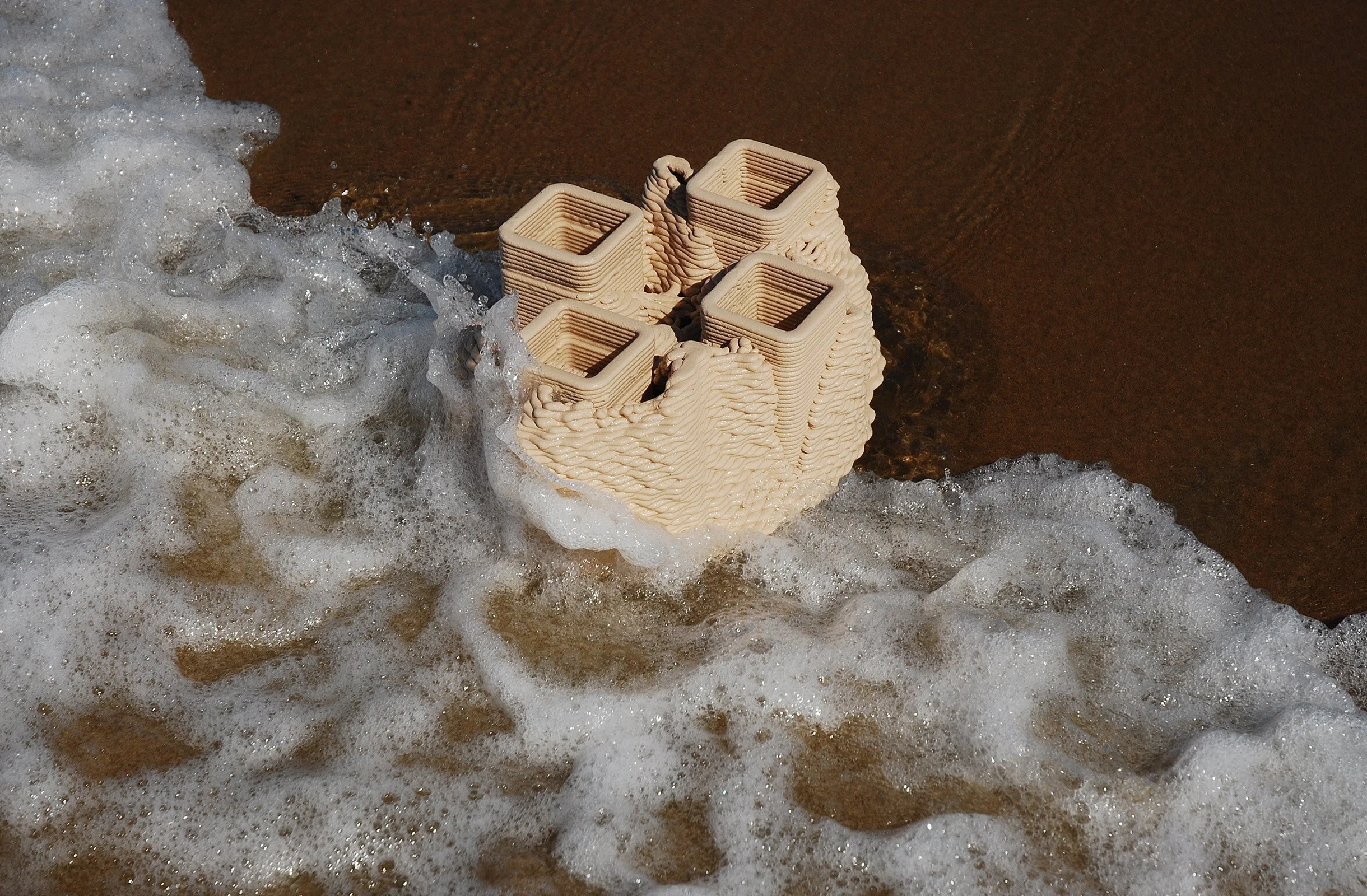
Alveo by Sven van Leeuwen | Image: Sven van Leeuwen
Alveo by Sven van Leeuwen
Reef-building worms have disappeared from parts of the Wadden Sea as a result of human activity. For his MSc graduation project in Integrated Product Design at TU Delft, developed with the marine research institute NIOZ, Sven van Leeuwen designed Alveo, a system of clay reef modules for placement in the intertidal zone.
Rather than imposing a generic form, the design translates the biology of the honeycomb worm, Sabellaria alveolata, into the structure of each module. At the base, a subdivided anchor passively traps sediment to keep the module stable over time, while a narrow neck limits scouring, the erosion of sediment around it. The surface texture is written directly into the G-code to increase the area where larvae can settle, and the overall habitat geometry follows the creased patterns of natural Sabellaria reefs.
The modules are designed to connect, so they can be assembled into larger structures that spread the load. Each is 3D-printed in Tonmasse clay and fired at 1050°C, with a density matched to natural reef and sediment so that it is both structurally sound and compatible with marine life.
For designers, Alveo shows how fabrication parameters, from toolpath to firing temperature, can be tuned to the needs of another species. The project was supervised by Conny Bakker and Mehmet Özdemir at TU Delft and Max Burgoon at NIOZ.
Image: Sven van Leeuwen
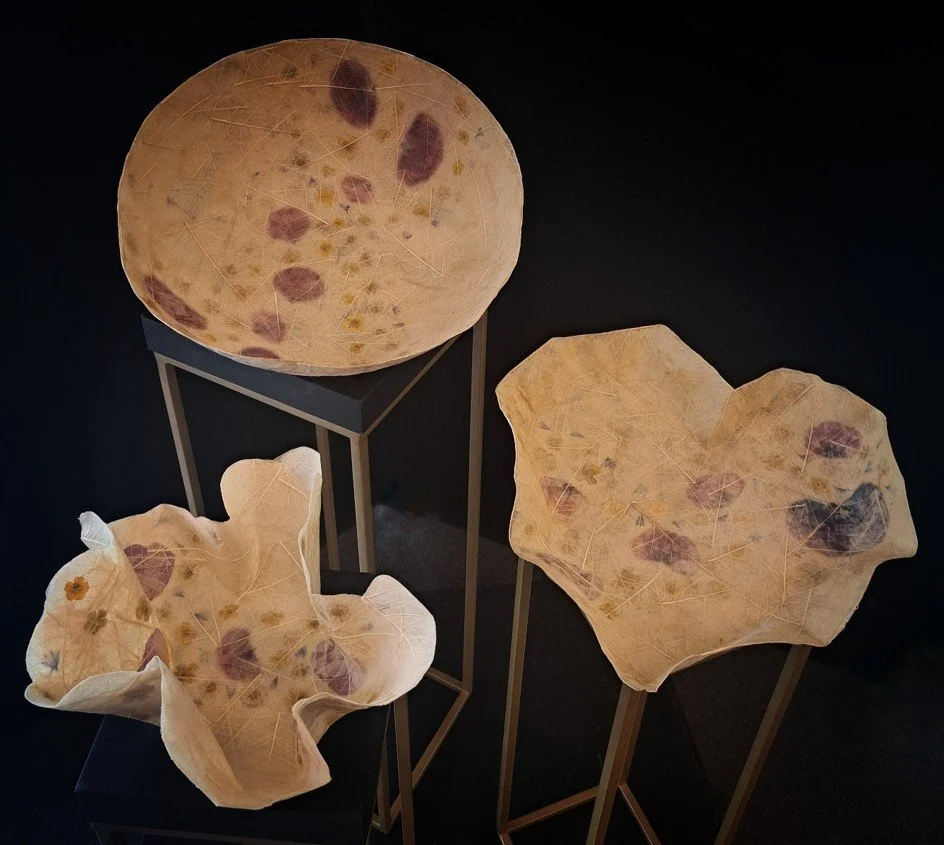
Without a Trace / Zonder spoor by Jennifer Helmink | Image: Jennifer Helmink
Reclaimed Botanical Art by The First Generation Botanical Artists
This collective of five brings together three graduates and two lecturers from the plant-based design programme (Plantaardige vormgeving) at Aeres University of Applied Sciences Wageningen. Their aim is to reclaim botanical art from its usual role as illustration and return it to its roots, where science and aesthetics meet.
Working from the principle of reciprocity, the group treats the plant as a source, a teacher and a companion in design, not only as a material or tool.
Merel Elise Mentz, Vezels van stilte / Fibres of Silence, a handmade work in natural fibres on farewell and grief
Jennifer Helmink, Without a Trace / Zonder spoor, a temporary, floating, biodegradable memorial object
Rienk Abe Steunebrink, this 'may' contain hope
Erik van Heijst (lecturer), Vorm aan nemen / Take Shape
Janneke Camps (lecturer), Florasomatics / Florasomatiek
Image: Jennifer Helmink
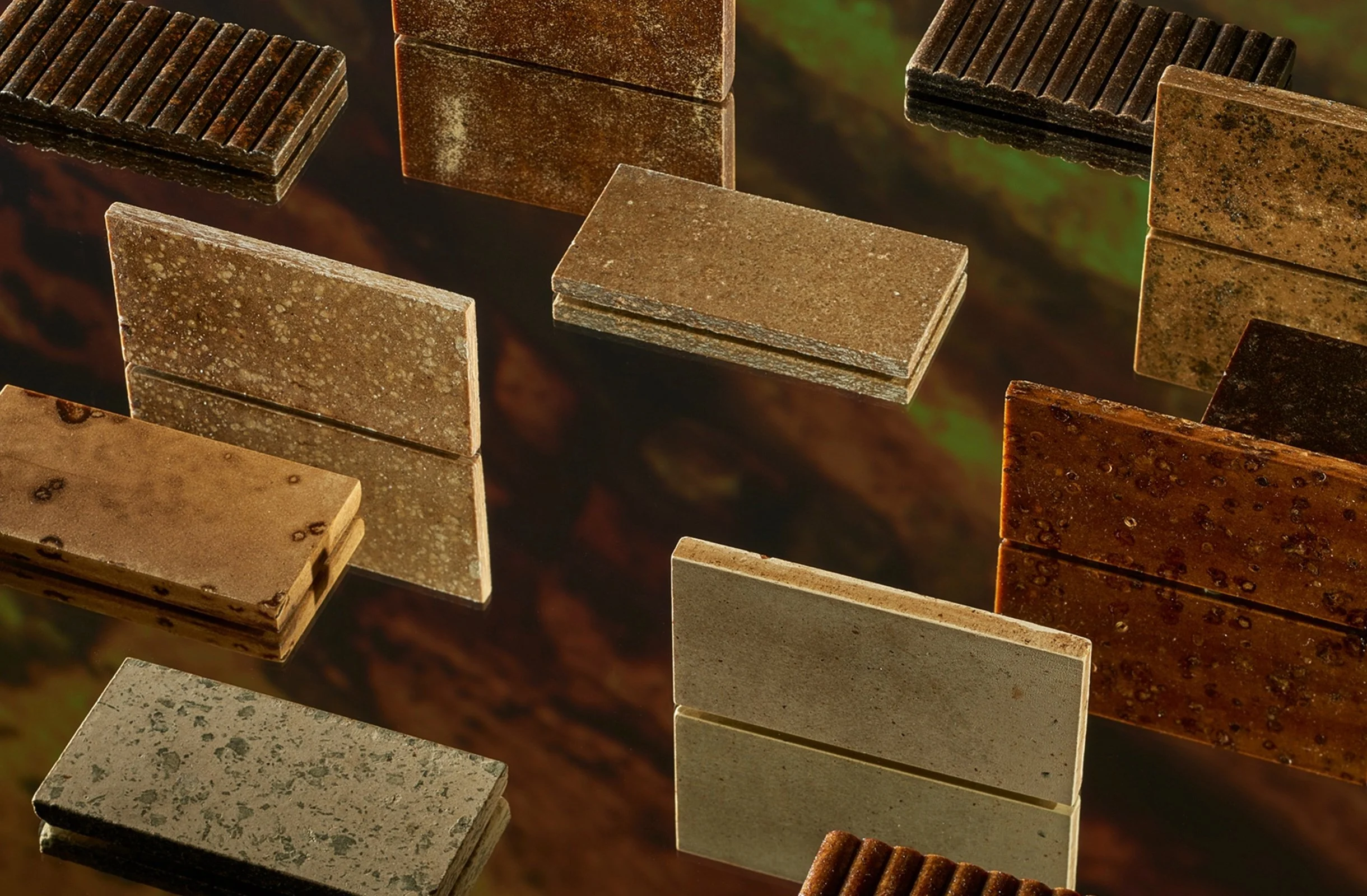
Agnė Kučerenkaitė's Amber Waste is Bliss | Image: Agnė Kučerenkaitė
Biomaterials Library: Lithuanian & Baltic Creators
Vilnius-based research platform Biomaterials Library, founded and curated by Austėja Platūkytė, brings a selection of samples, prototypes and objects by Lithuanian and Baltic designers. The materials draw on agricultural, food and industrial by-products, as well as mycelium, algae and natural fibres.
Rather than showing only finished results, the collection includes early tests and failures, so visitors can compare processes by colour, texture and smell. Works include Agnė Kučerenkaitė's Amber Waste is Bliss, Sarmite Polakova's Pine Skins and Waste Matters Studio's Coffee Waste Tiles.
Image: Agnė Kučerenkaitė
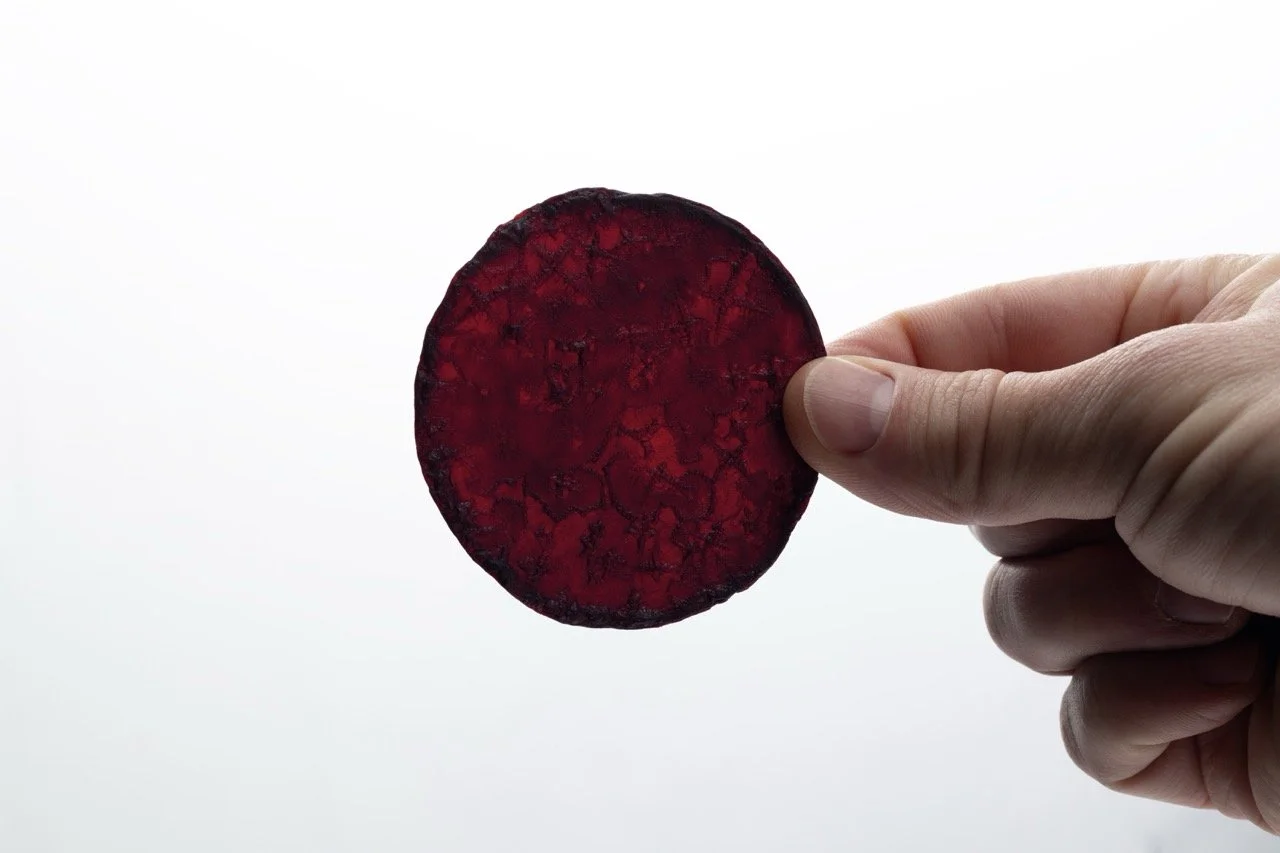
The Beauty of the Urbild by Huiling Wang | Images: Huiling Wang; KISD Photo Lab
The Beauty of the Urbild by Huiling Wang
Cologne-based designer Huiling (Iris) Wang takes Goethe's ideas of the Urbild and Urpflanze, the archetypal image and the archetypal plant, as a starting point for bio-based material research. Her method breaks traditional plant dyeing into reusable steps, such as soaking, fermenting and coating, that can be recombined into new experiments.
Three projects test the approach: urban foraging and seasonal dyeing on cotton, kombucha bio-leather dyed with fermented indigo, and natural-dye prints based on close observation of the human iris. Throughout, Wang treats beauty as something that emerges through change, imperfection and care rather than uniformity.
Images: Huiling Wang; KISD Photo Lab
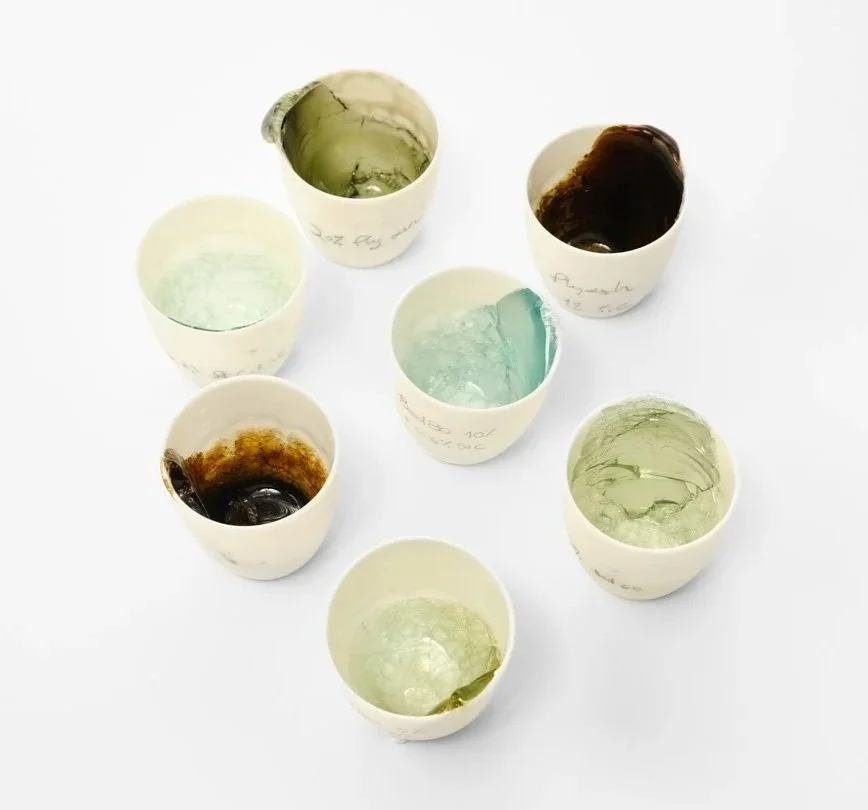
Liquid Relic by Studio Billie van Katwijk | Image: Abel Minnée
Liquid Relic by Studio Billie van Katwijk
Glass made with residues from wastewater treatment.
Wastewater treatment does not make unwanted materials disappear: once the water has been cleaned, residues remain. Liquid Relic investigates what these overlooked materials can become.
Amsterdam-based designer Billie van Katwijk incorporates the residues into glass, where they influence its colour and texture. Through experiments with fusing, slumping and lampworking, the research has grown into a material archive, alongside a series of objects and jewellery.
Image: Abel Minnée
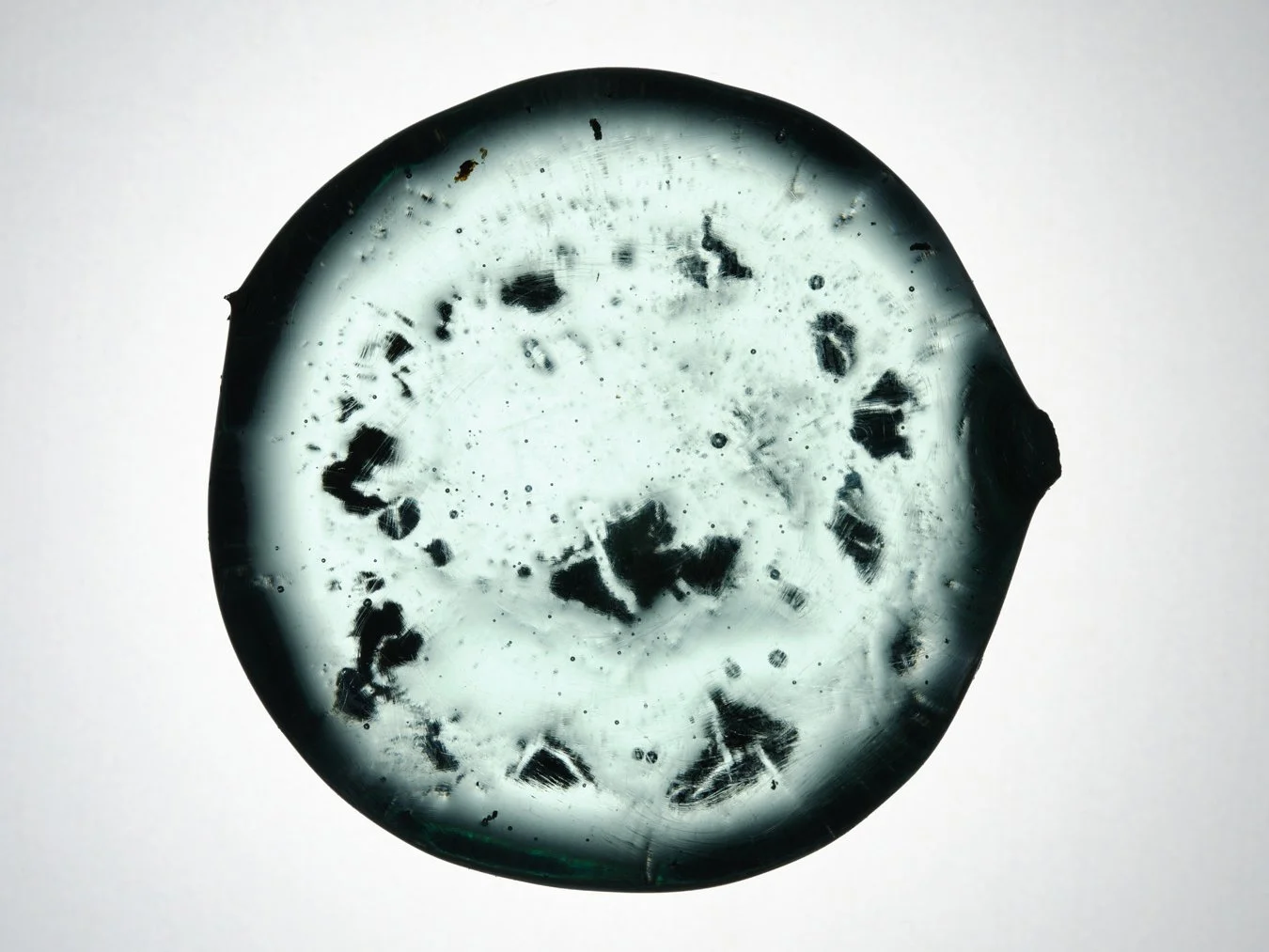
Liquid Relic by Studio Billie van Katwijk | Image: Abel Minnée
BioArt Laboratories, Strijp T+R
Entry to the whole site is free. The site is about 12 minutes by bike or 35 minutes on foot from Strijp-S, so it is worth setting aside a morning or afternoon for it. All six exhibitions are open daily from 11:00 to 18:00.
Oirschotsedijk 14-10, 5651 GC Eindhoven