
Material in Transition
Helena Elston’s Mycelium Textiles
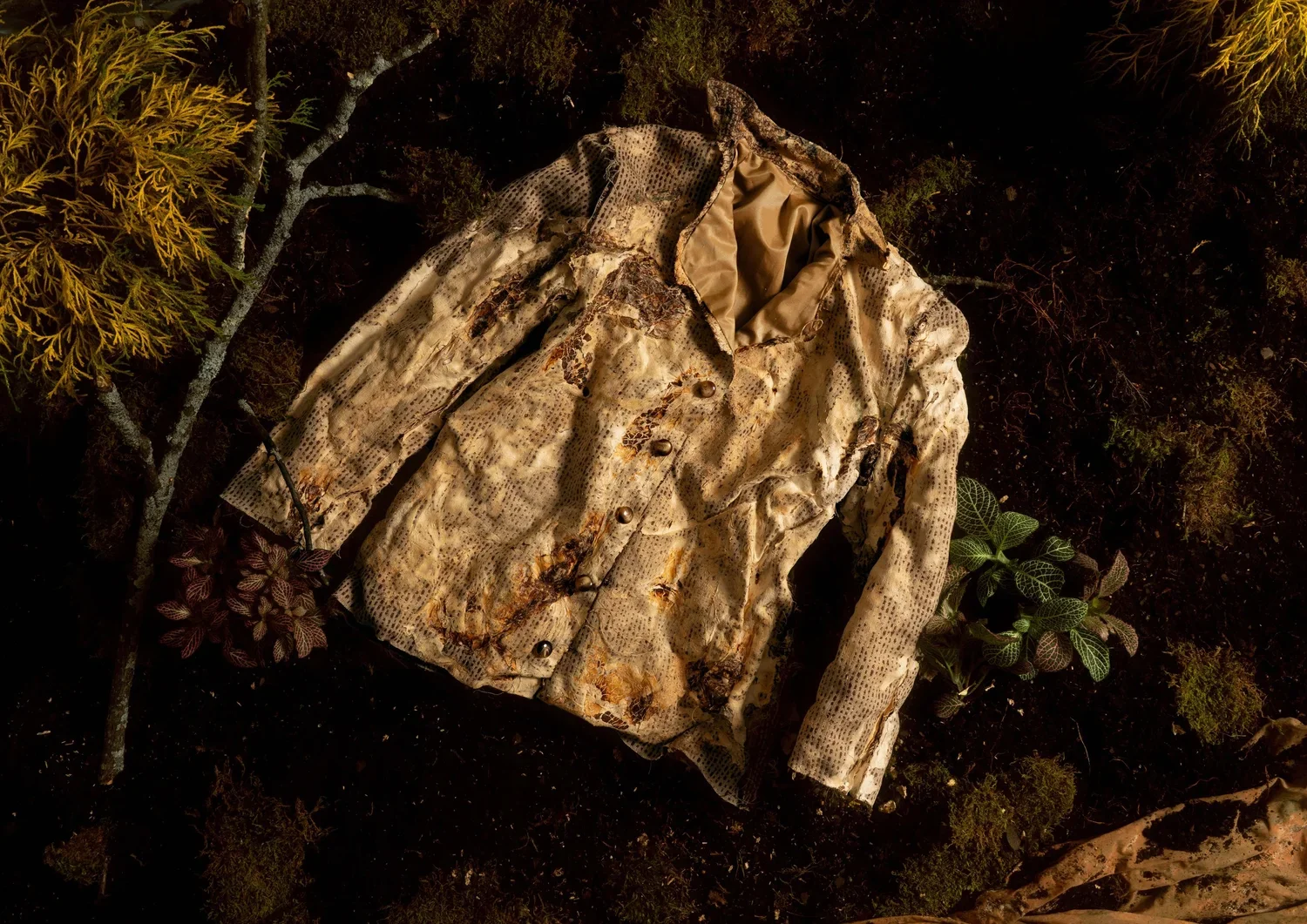
Beneath the forest floor, mycelium performs quiet, essential work. It breaks down fallen matter, binds soil, and moves nutrients through the earth, ensuring that almost nothing in a healthy ecosystem goes to waste. This endless cycle of building and decomposing is precisely what draws designers and artists to mycelium as a material: it grows into form, then returns to the earth.
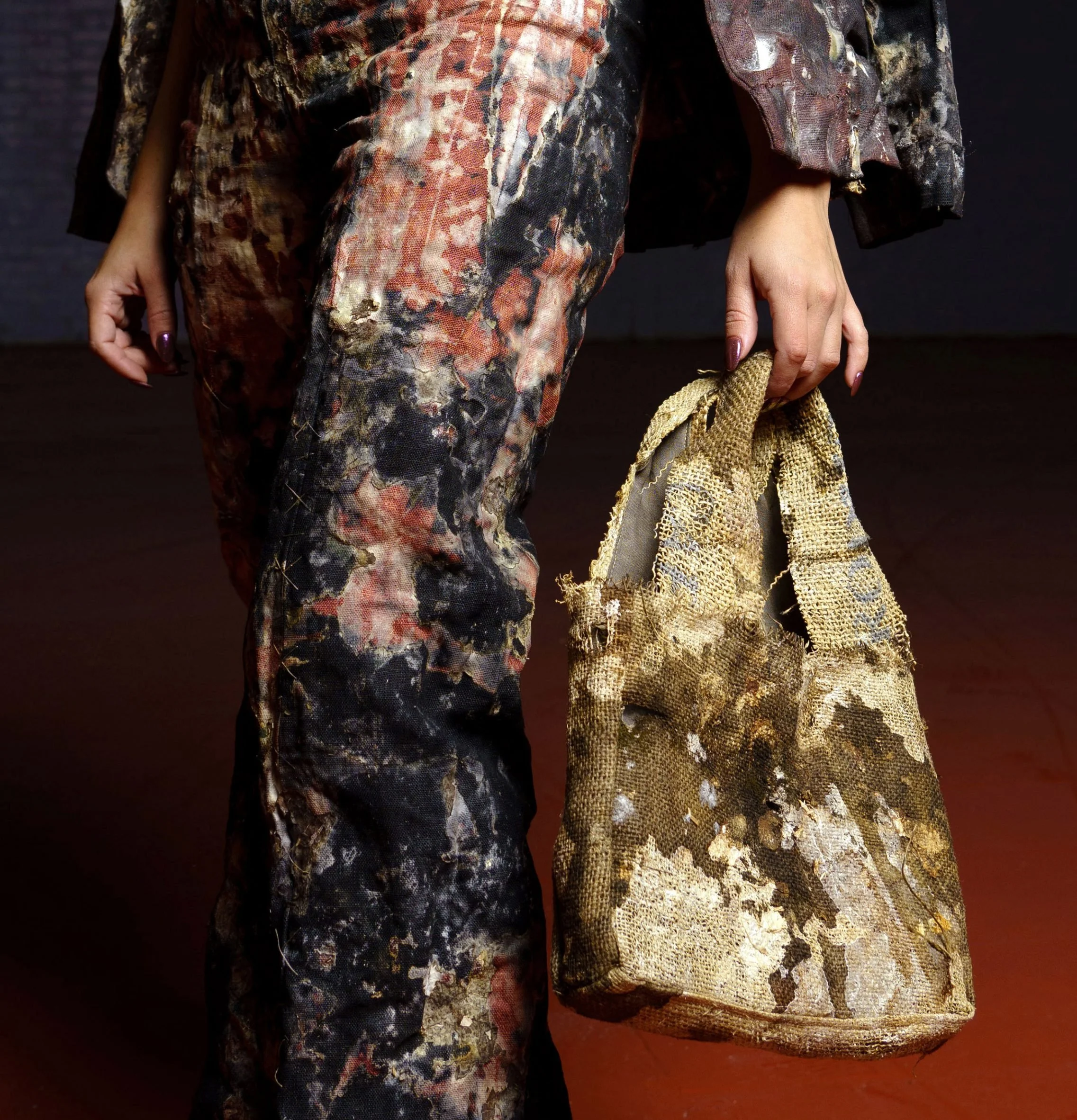
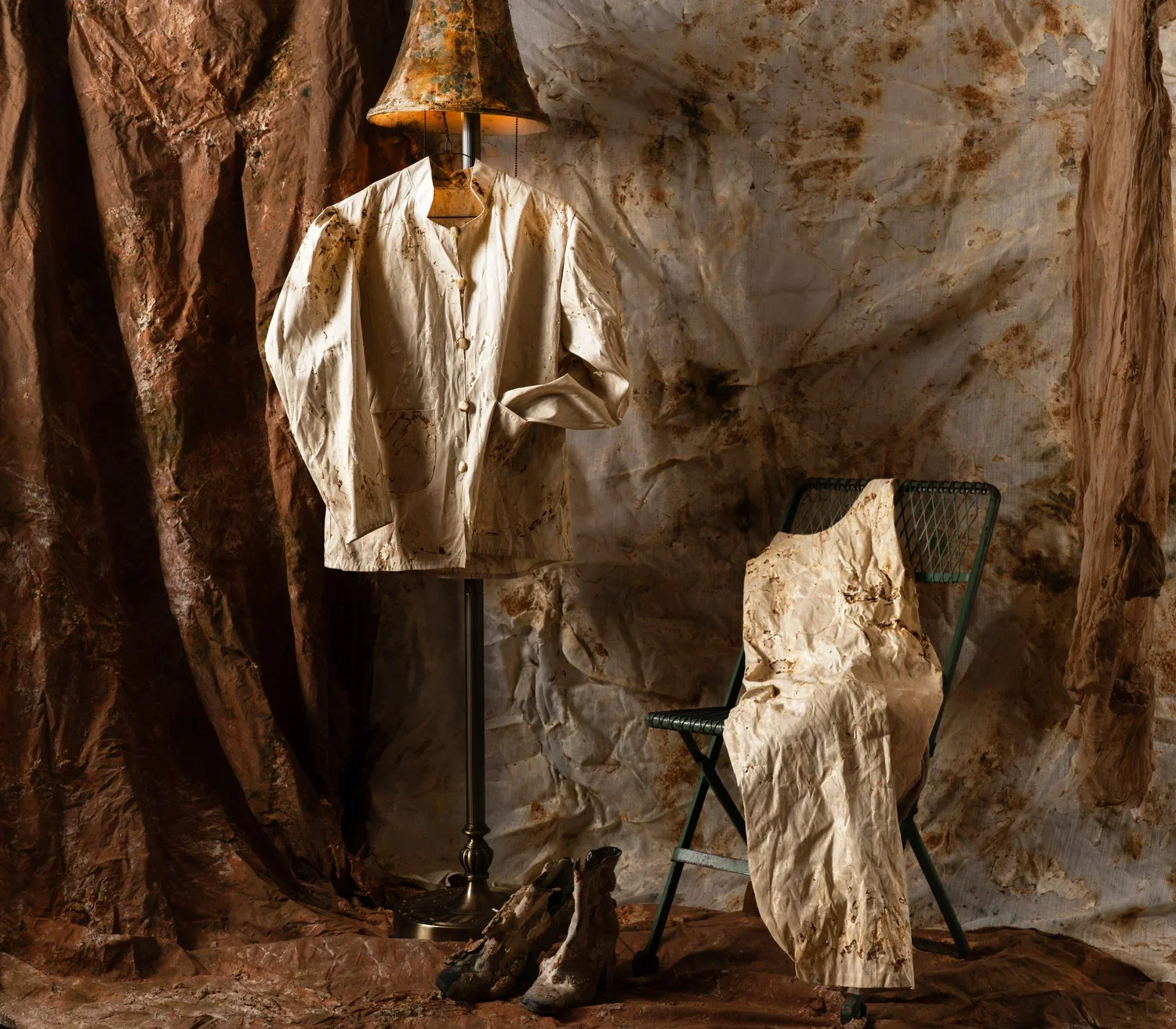
Helena Elston’s creative process begins where most textile design ends: with unwanted cloth. She calls mycelium “a physical thread that sews life together”, and in her studio, founded in London in 2021 and now based in New York, it lives up to that description. Her raw materials, deadstock and textile waste, are the fabrics the industry finds most difficult to repurpose. Elston works this cloth into pieces, then introduces mycelium, which spreads across the surface, binding the fabric and slowly breaking it down. The result is a hybrid: part textile, part fungal growth, each piece preserving the story of both. For the maker, authorship shifts. The fungus is no mere coating or filler, but a collaborator, working its way into the fabric and requiring Elston to leave space for what it does.
That shift transforms the designer’s role. Fungi operate on their own timetable and never create identical results, so each piece bears the imprint of its growing conditions. Elston sets the stage, then steps back and waits. The final form is negotiated rather than dictated, which sits awkwardly with conventional design practice, where uniformity is often prized above all else. The method is also open: she has taught it in a public workshop, where participants inoculated a sample and took it home to grow.
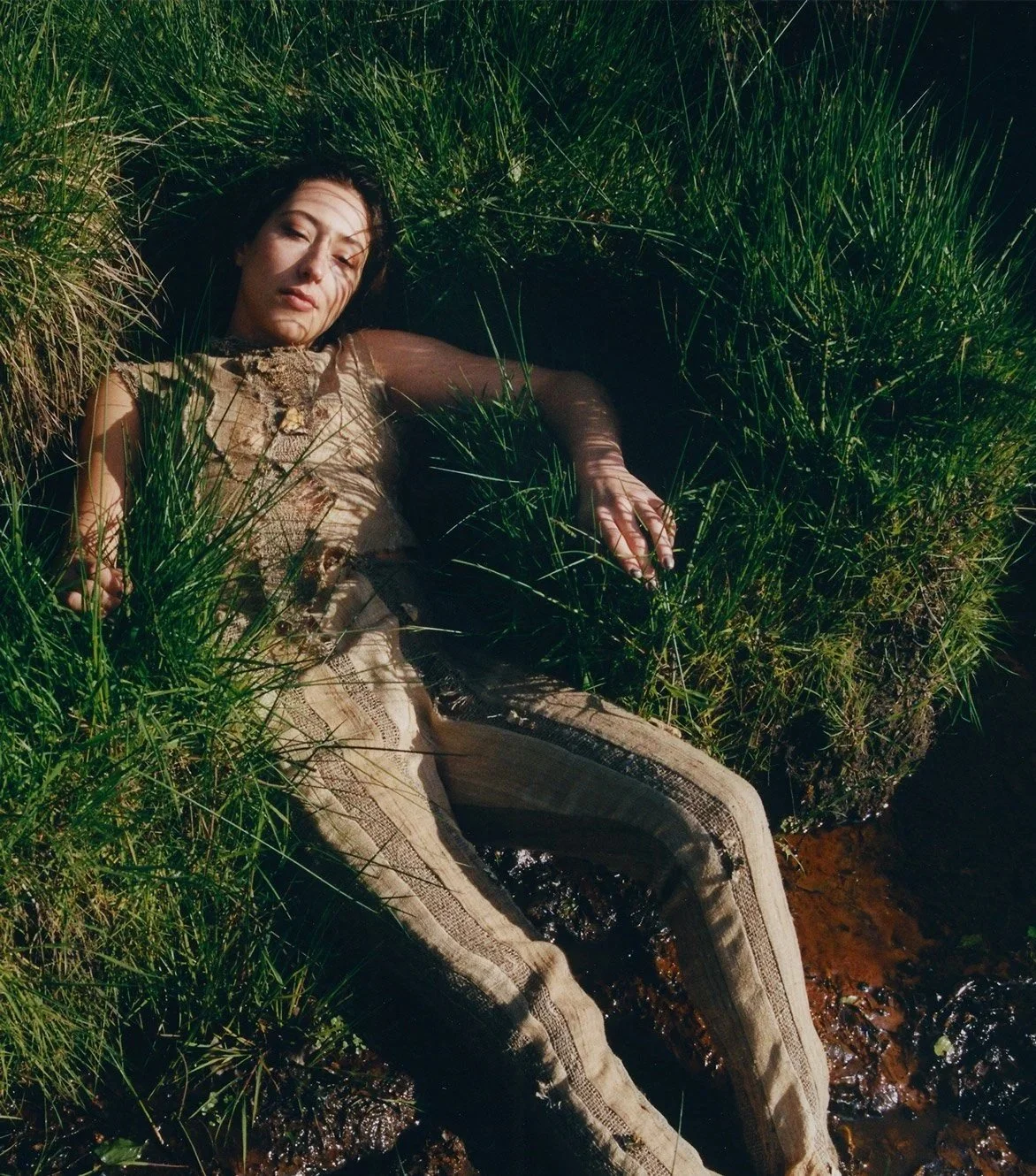
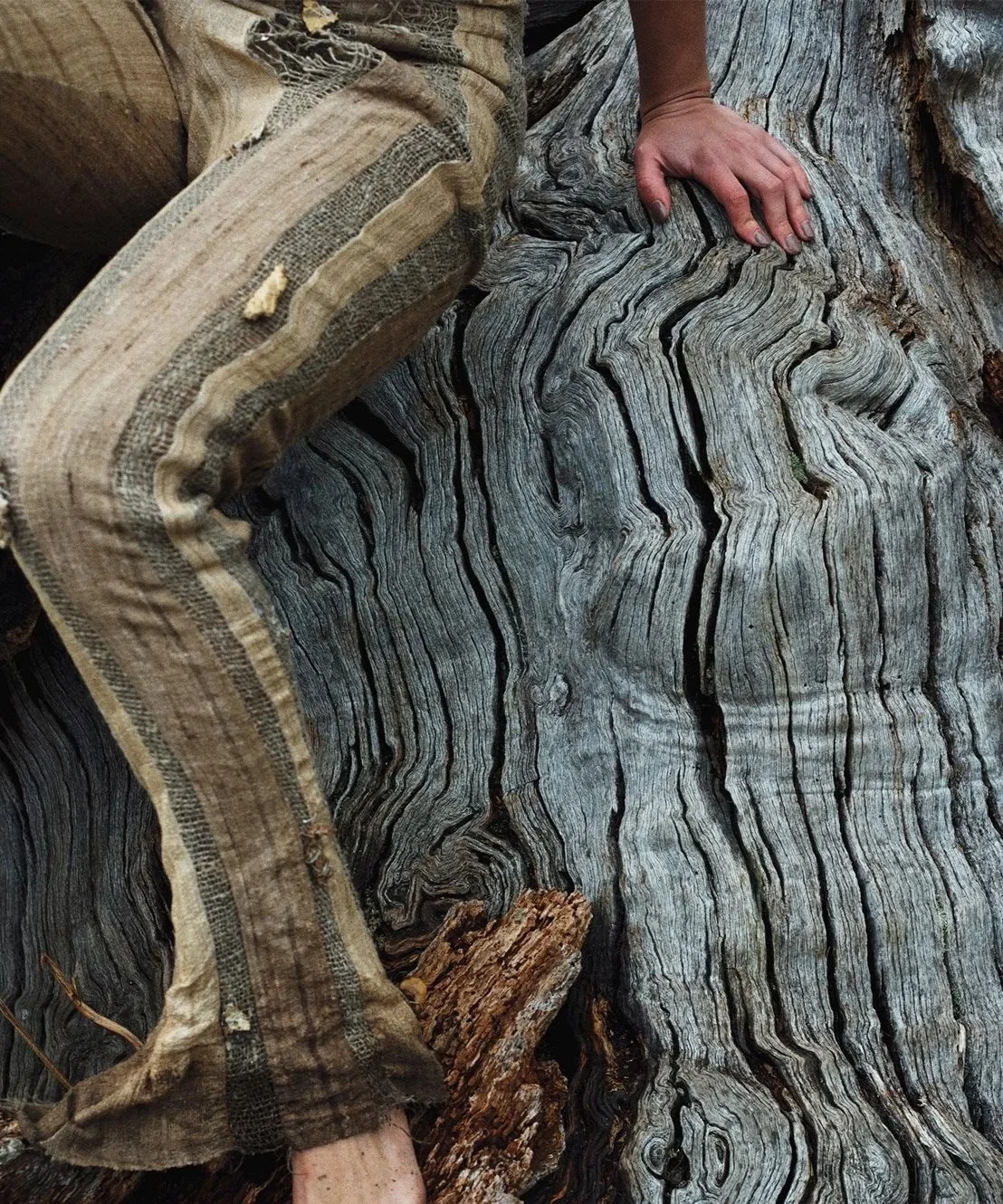
This approach also redefines the purpose of a garment. In FI (Fungal Integrated), a project she developed while based in London, Elston transformed discarded textiles and coffee sacks into clothing designed to return to the earth when it is no longer in use. In practice, she has said, these garments could be composted at home or buried in a garden, where soil organisms would complete the cycle. She has been candid about how far the work has travelled, describing it as “a speculative and cyclical design process, but still very plausible”.
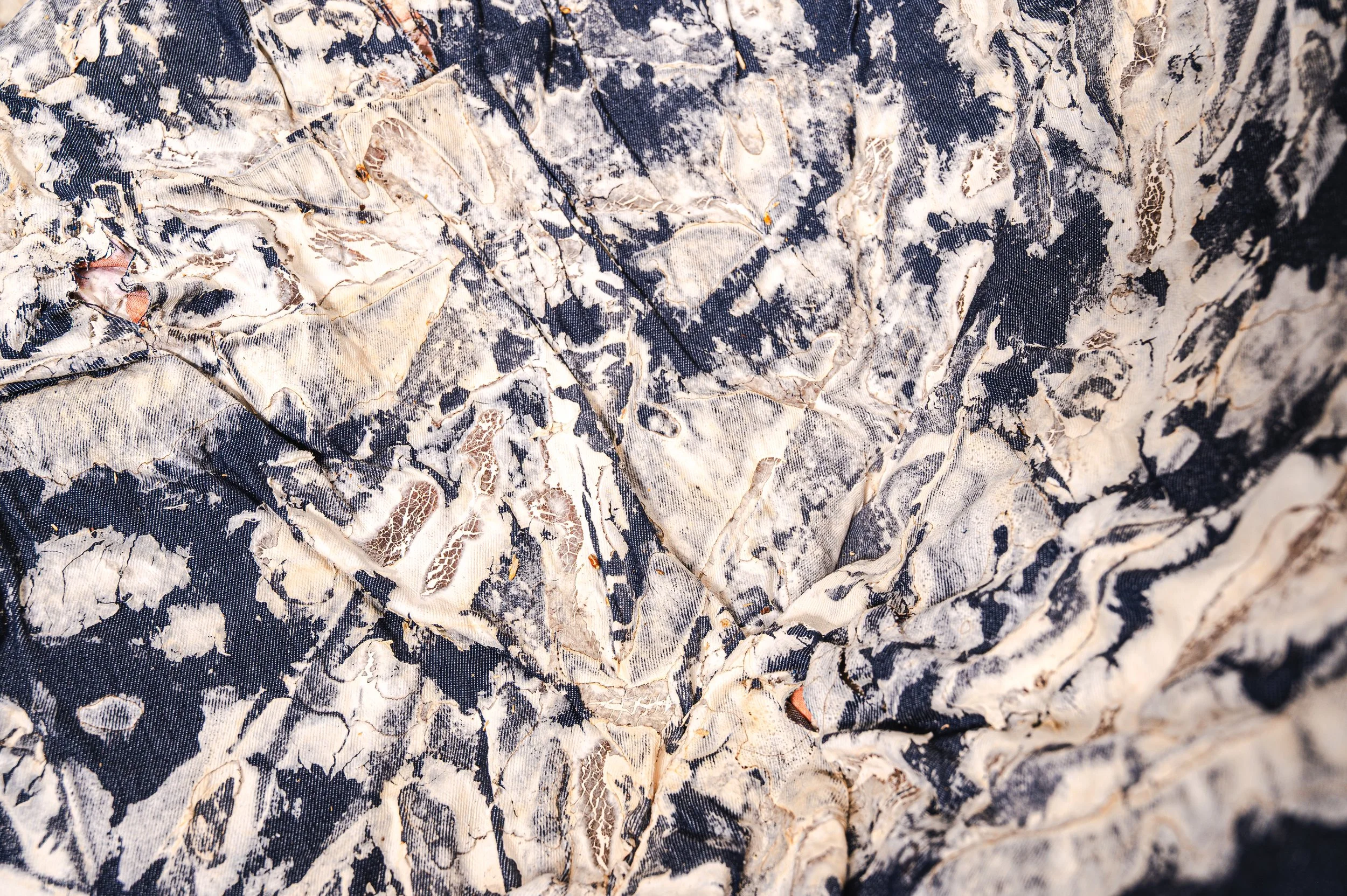
The question reaches well beyond clothing. Less than 1 per cent of the material used to make clothing is recycled into new clothing, according to the Ellen MacArthur Foundation, and textile waste also sits in sofas, curtains and cushions. Elston has followed it indoors. Two Eames chairs she reupholstered feature a fabric made from discarded denim and polyester, spliced with mycelium. The silhouette is among the best-known in twentieth-century design, and it keeps its familiar form. Only the skin changes. Reupholstery normally hides an old object under something new. Here the new surface is made from what was thrown away, and it was grown rather than manufactured. For anyone who works with design history, it is a quiet argument that an icon can be kept in use and updated without being copied or discarded.
She describes her practice as rooted in “materials in transition: growing, breaking down, and reforming”. Whether mycelium can handle textile waste at any meaningful scale remains an open question, though Elston herself is optimistic about what the material can do. The work matters to designers and artists for a smaller and more immediate reason. It shows what changes when the material is treated as a collaborator: who counts as the maker, how long a piece takes, and what happens to it when its use is over.
Design & Research
Helena Elston
@helenaelston_studio
Photography
Studio Helena Elston
Words
Nina Zulian with Claude (Anthropic)