
A Multispecies Dialogue
What to see at Dutch Design Week 2026: Ori Orisun Merhav
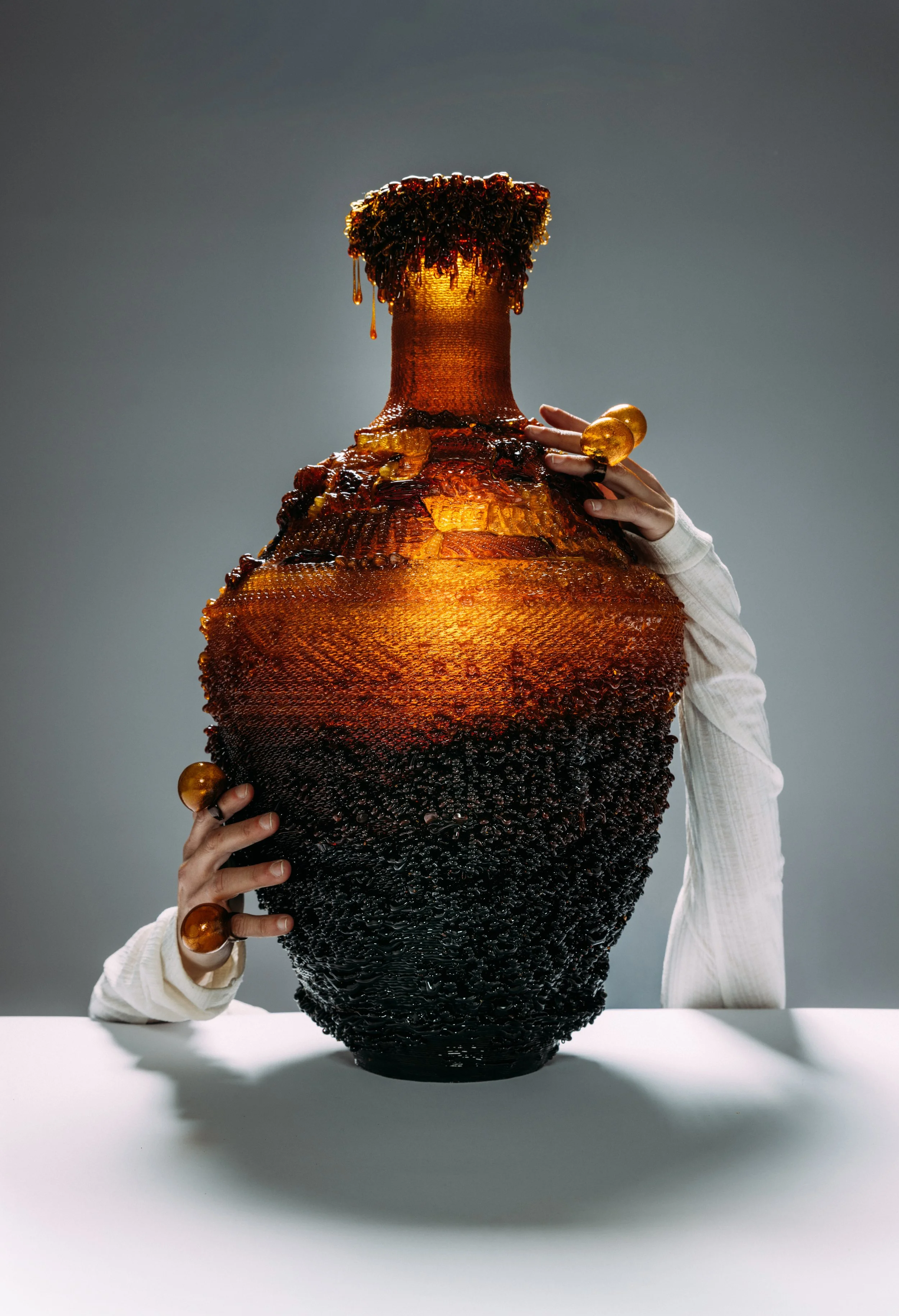
Morphogenesis by Ori Orisun Merhav | Photography by Studio Mimesis. Courtesy Centre Pompidou.
What forms emerge when humans, insects, plants and land enter into dialogue? This is the question at the heart of Woven Landscapes, the new installation by Ori Orisun Merhav, one of the fifteen designers nominated for the Emerging Talent Award at the Dutch Design Awards 2026. Bringing together naturally woven palm textiles and lac, a resin produced by insects, the work proposes a hybrid material language in which protection, transformation and the memory of living landscapes take physical shape.
A polymer made by insects
Merhav's practice begins with a small insect. Female Kerria lacca scales, which live on the branches of host trees, transform tree sugars into a resinous polymer known as lac. Used for centuries in varnishes, dyes and coatings, the material has largely slipped out of contemporary design culture. For the past several years, Merhav has worked to return it to view.
Her research began in Thailand, where she spent time in the fields with local communities, studying the insects in their natural habitat. It was there that she encountered the principle of mutualism. "I was moved by the insects' ability to consume just enough to survive without disrupting the tree's ecosystem," she recalls. "The idea of two species coexisting without harming one another inspired me to further explore bio-inclusivity."
That encounter shaped Made by Insects, the research and artistic practice she founded in Brussels around the time of her graduation from Design Academy Eindhoven in 2022. The studio develops new approaches to the polymer, from blowing it like glass to 3D printing it. In 2023 she launched the first 3D-printed objects in lac, in collaboration with Ginger Additive, Reflexlab and Aeditto. A year later she was appointed associated researcher at the Bio-Polymer Lab of Avans University of Applied Sciences in Breda, and she continues to work with lac-producing communities in India and Thailand.
Research first, objects after
Although her pieces are collected and exhibited internationally, Merhav is clear about where the weight of her practice lies. "The main practice of the studio is research," she says. "The sculptures are the leftovers, segments of the time and journey of our research."
This inversion matters. Materials, in her approach, are not passive resources but participants in the process of making. Her work follows a chain of transformations carried out by insects, trees, humans, craft and technology, and asks how those relationships might suggest other ways of producing, inhabiting and understanding the world. Her objects often imitate the way insects build their cocoons, combining several materials so that they appear grown rather than assembled. They move between fiction and function, between possible futures and lived realities.
Two material lineages
The installation presented this year extends that inquiry by pairing lac with a second, much older technology: woven palm. Drawing on the ancestral knowledge embedded in naturally woven palm textiles, Merhav merges the two into a new composite, joined through weaving, binding, coating and transformation.
At its centre sits a totemic seat that appears to grow out of a tapestry of fibres, described by the studio as a nourishing force embedded within the landscape. Here the palm takes on the role of the cocoon: a site of transformation and a living architecture, shaped by and for life.
The work asks whether materials formed by living organisms might carry the memory of the lives, labour and landscapes that produced them. Palm fibre and insect resin become vessels for ecological knowledge and embodied histories, connecting human and other-than-human processes. The resulting forms sit somewhere between body and habitat, artefact and organism, the made and the grown.
Designing with more-than-human life
In Made by Insects, making begins as a relationship between species. Lac does not exist without the insect, nor the insect without its host tree; the resin is the physical trace of that relationship. Paired with woven palm, another material shaped by long collaboration between people and plants, the installation distributes authorship across insects, trees, landscapes, makers and technologies, with the designer as one voice among many.
At the heart of that relationship is mutualism, the ecological term for an interaction in which two or more species each benefit. It was in the lac fields of Thailand that Merhav first encountered the idea, moved by insects that take only what they need from their host. Biologists would describe the bond between lac insect and tree more cautiously: the insects feed on sap and the tree gains little in return, so their coexistence rests less on exchange than on restraint. Clearer mutualisms surround them. Scale insects, lac insects among them, are often tended by ants that feed on their sugary secretions and protect them in return, and lac farming adds a human partner, as farmers carry brood from tree to tree and keep host trees standing. Read this way, mutualism in Merhav's work is less a fixed biological fact than a model of relationship: a way of asking how species, humans included, might live from one another without depleting what sustains them.
In an interview with the Financial Times, Merhav described harvesting lac by hand alongside small-scale farmers in northern Thailand, for whom it is a sideline to growing vegetables, scraping the resin from the branches where the insects live. What happens to the insects in that process is less often discussed, and the restraint she observed belongs to the insect's relationship with its tree rather than to its encounter with human harvest. Her work does not resolve this question, but it keeps it in view, and her call to take no more from the tree than it can give reads as an aspiration for makers as much as a description of the insects.
Materials as participants
Much of the conversation around new materials in design centres on replacement: a bio-based alternative to plastic, a natural fibre in place of a synthetic one. Merhav's work takes a different path. Lac is not presented as a replacement for plastic, nor palm as a stand-in for industrial textiles. Instead, both are treated as the outcome of relationships: between insect and tree, weaver and plant, producer and landscape. The installation invites visitors to read materials not as matter to be extracted but as participants in an ongoing multispecies dialogue.
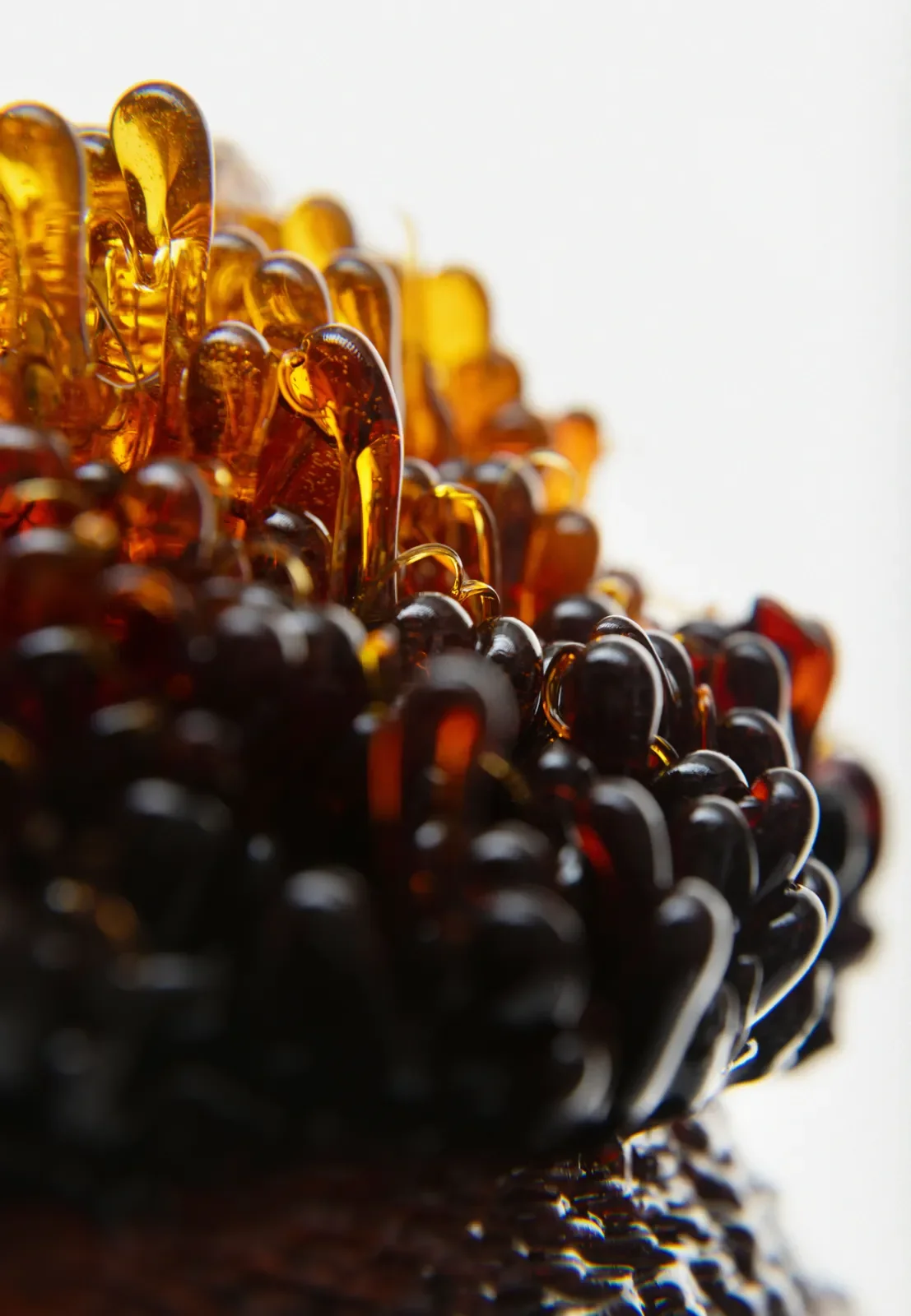
Morphogenesis, 2026 by Ori Orisun Merhav | Photography Sarah Myerscough Gallery
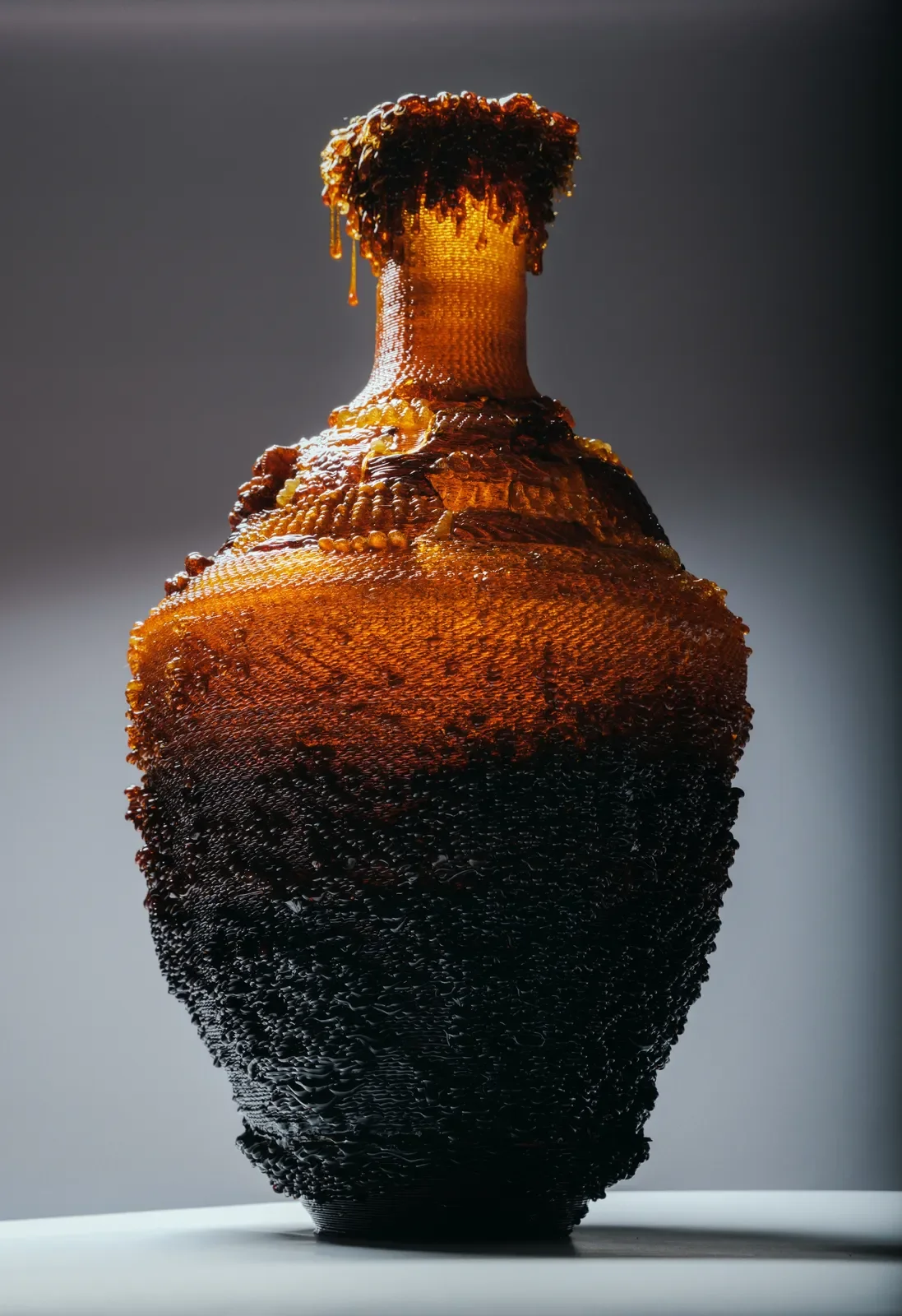
Morphogenesis, 2026 by Ori Orisun Merhav | Photography Sarah Myerscough Gallery
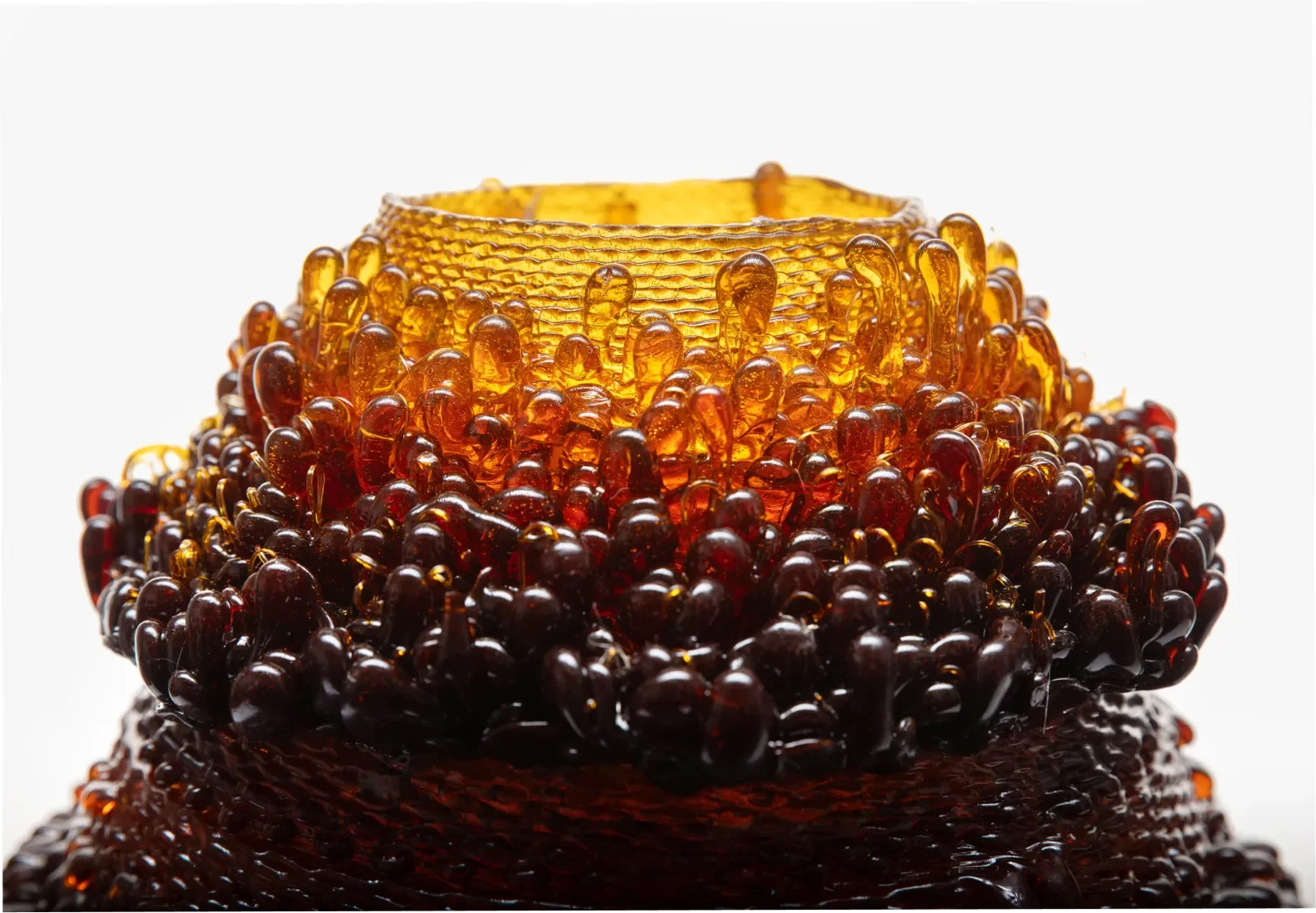
Morphogenesis, 2026 by Ori Orisun Merhav | Photography Sarah Myerscough Gallery
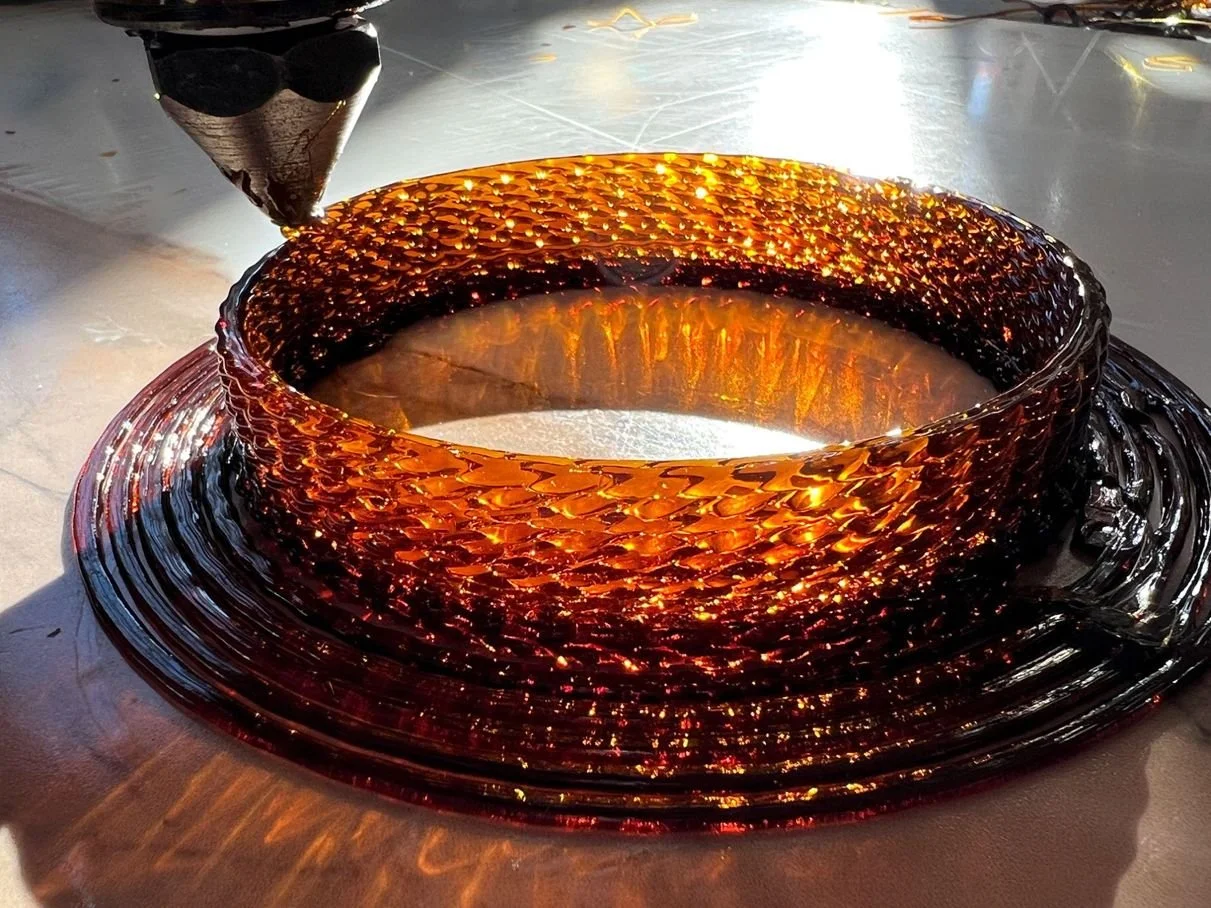
Shellac 3D printing, experimenting at Ginger Additive’s Lab (2023). Photo: Ori Orisun Merhav.
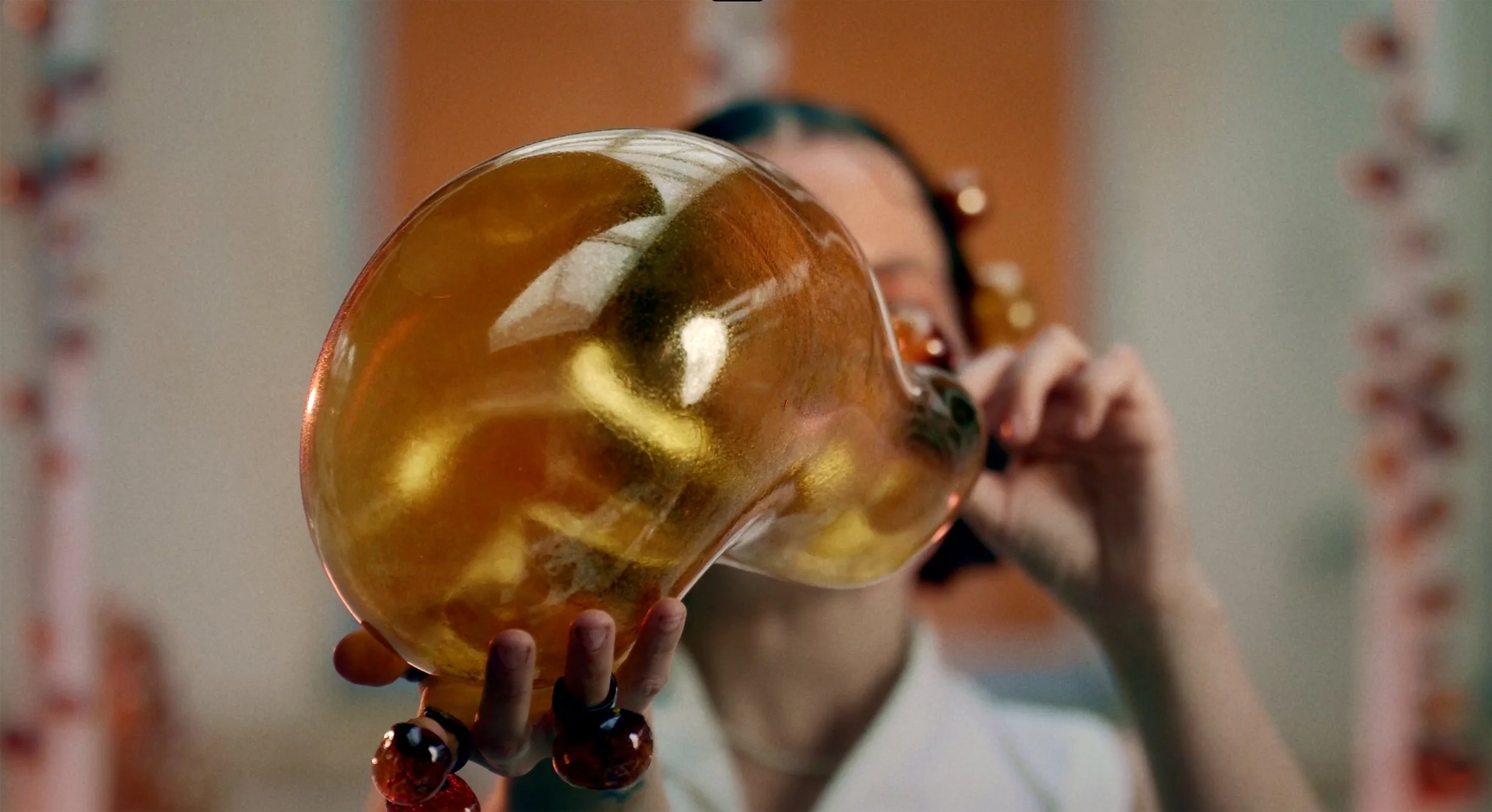
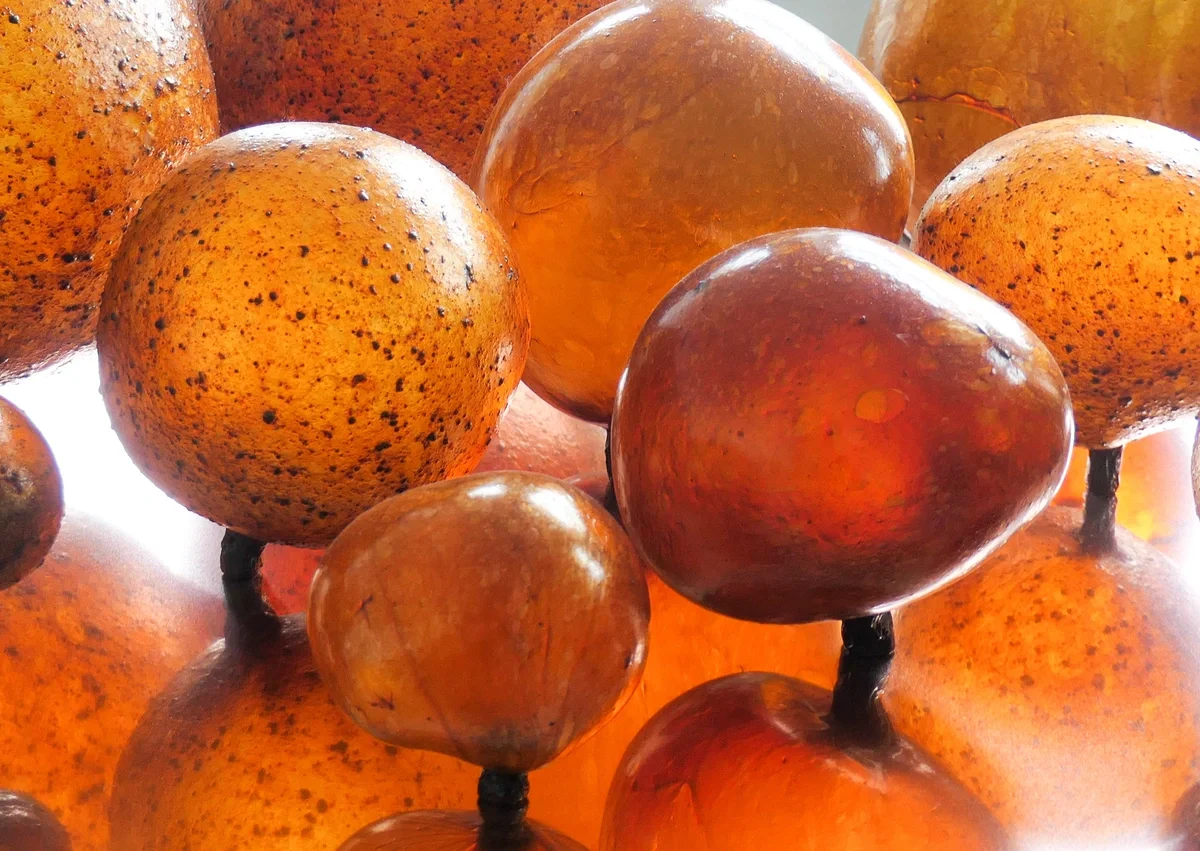
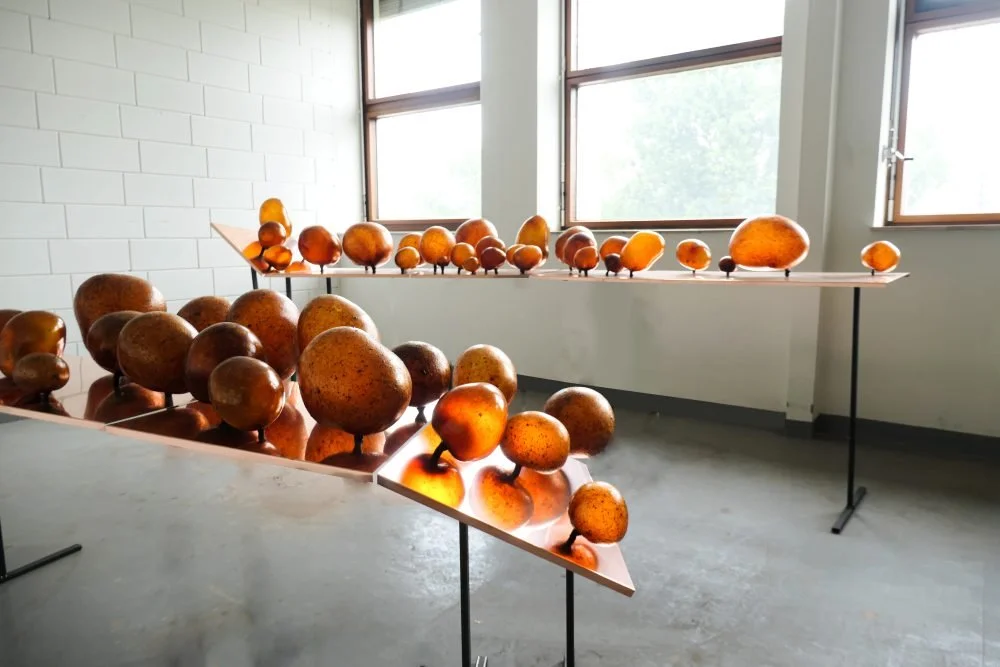
The Lac Lab Open Source by Ori Orisun Merhav | Design Academy, Graduation Project, Photography Iris Rijskamp
Design & Research
Ori Orisun Merhav, Made by Insects
@ori_orisun
Exhibition
Woven Landscapes, Dutch Design Week 2026
Klokgebouw (B4), Klokgebouw 50, 5617 AB Eindhoven, Strijp-S
17 to 25 October, daily 11:00 to 18:00, DDW ticket required
Also on view
Portal Into The Multi-Species
Sarah Myerscough Gallery, London
14 October to 7 November 2026
Photography
Courtesy of Sarah Myerscough Gallery
Installation views: Gareth Hacker
Morphogenesis: Studio Mimesis
Film still: Fitzbrien
The Lac Lab Open Source: Iris Rijskamp, Design Academy Eindhoven
Words
Nina Zulian with Claude (Anthropic)