
Towards a decolonial design practice
studio samayam's engagement with Indian craft communities interrogates what decolonising design actually requires: structurally, epistemologically, and in practice
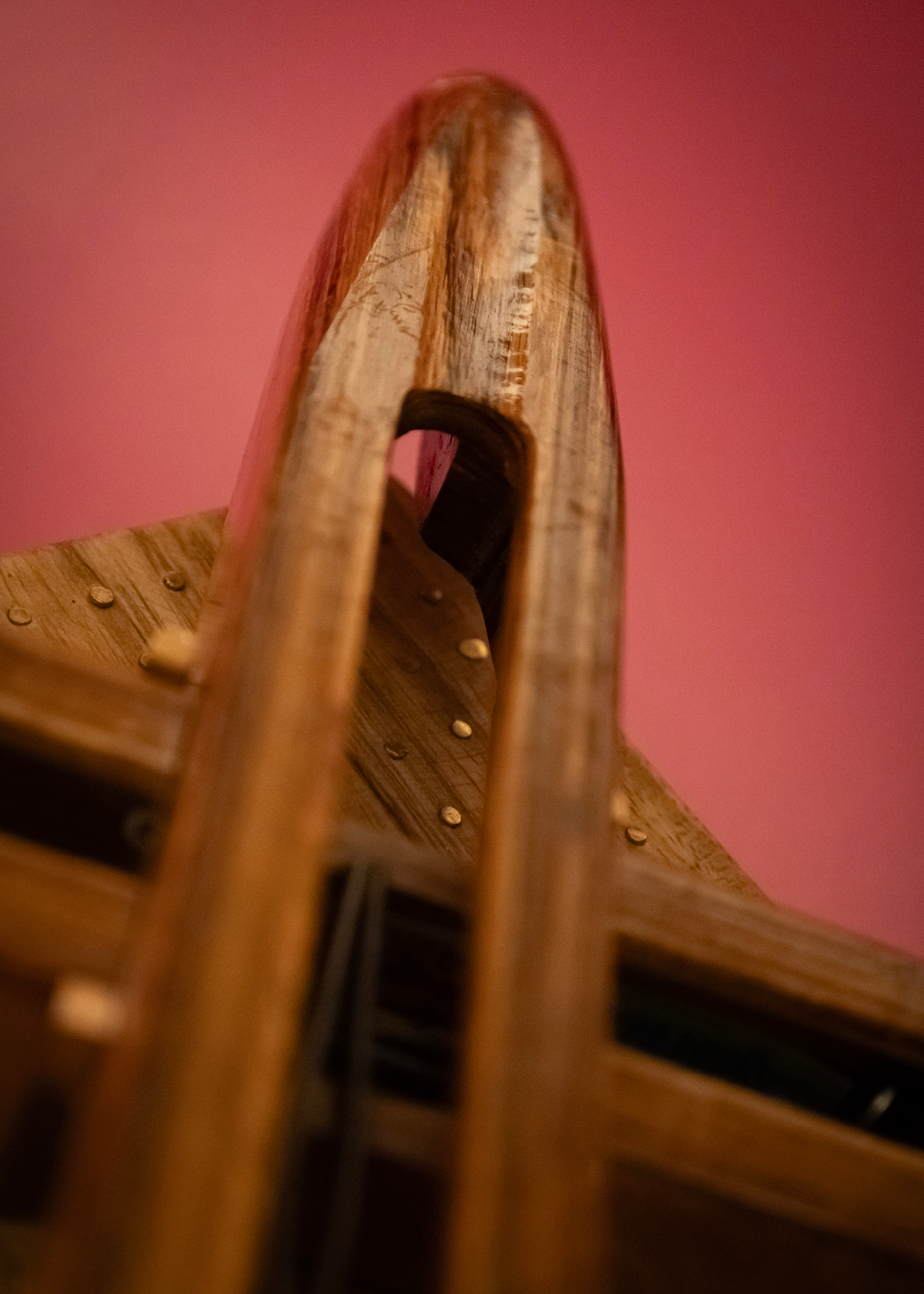
shuttle — thefoundededit collection by studio samayam. A shuttle is the tool that carries yarn through a handloom to weave Ikat sarees in Pochampalli, Telangana. When broken, it is discarded. What is thrown away becomes the lamp.
The act of making is inherently political, whether or not it is perceived as such. Choices regarding materials, form, and intended audience are not solely aesthetic; they are historically situated decisions. The critical issue is whether this history is actively interrogated or passively perpetuated.
The hierarchy is so built into design that it rarely gets questioned: the designer thinks, the maker executes. Concept is valued over labour; intellectual work over manual work. These distinctions feel natural, like they simply reflect how making organises itself. They don't. They were constructed, institutionalised through law and economics, then globalised through colonial power.
Initiating the decolonisation of design requires first acknowledging its ongoing colonial characteristics and specifying the mechanisms that sustain them. Coloniality is not merely a historical phenomenon. It remains active in contemporary curricula, recognition systems, and the valuation of knowledge within the design discipline. Decolonial practice is inherently complex, because colonialism affected not only territories but epistemologies: ways of knowing, ways of making, and fundamental understandings of what making is for. As Elizabeth (Dori) Tunstall argues in Decolonizing Design, colonial values in design have been so thoroughly naturalised that they no longer present themselves as values at all. They present as standards, as excellence, as the way things are done.
In practice, however, decolonial design is frequently limited to questions of representation: which aesthetics are showcased, whose identities are visible, which visual cultures are referenced. Structural issues receive insufficient attention, including the ownership and attribution of knowledge, the distribution of economic benefit, and the historical devaluation of production methods that do not conform to the discipline's inherited hierarchies. Changing what design looks like is not the same as changing how it is organised, whose knowledge it builds upon, or whom it serves.
A more fundamental inquiry concerns whose epistemologies are recognised as legitimate knowledge and whose have been relegated to subordinate categories. Terms such as tradition, craft, and heritage evoke both appreciation and marginalisation, a proximity to value that stops short of authority.
India provides a particularly salient context for this inquiry, because the transformation of its craft and production economies was the result of intentional disruption rather than gradual change. Prior to British colonial rule, India possessed highly sophisticated industries, including textiles, ceramics, metalwork, woodwork, and lacquerware, rooted in community-based, intergenerational knowledge systems that were central to regional economies. Historian Prasannan Parthasarathi, in Why Europe Grew Rich and Asia Did Not, contends that these were not pre-modern systems awaiting improvement but highly developed ones, systematically undermined by colonial policy. The imposition of heavy tariffs on Indian exports and the forced opening of Indian markets to British manufactured goods rendered entire industries economically unviable. It was deliberate.
The damage went deeper than economics. Ashis Nandy, in The Intimate Enemy, argues that colonial rule didn't just dismantle industries; it reshaped how colonised people understood themselves. Their work was reclassified as mere labour, positioned beneath design, skill, and intellect as the colonial order defined them. This wasn't just a shift in perception. It was institutionalised, exported globally, and treated as common sense. The design field inherited that hierarchy and has largely left it unexamined.
The Swadeshi movement, initiated in 1905, recognised what was actually at stake. The boycott of foreign goods was not merely a trade strategy. It was a reclamation of the right to produce, sustain, and define Indian life through indigenous materials and methods, across cloth, ceramic, wood, and every material colonial rule had sought to replace. Through khadi and gramodyog societies, production returned to households and communities across the country. The movement rejected not only the imported object but the colonial logic that had rendered Indian craftsmanship inadequate and obsolete. Making, in all its forms, was reaffirmed as central to economic and cultural life, not peripheral to it.
That reaffirmation did not persist into the design field that followed. Hierarchies and canonical references remained entrenched. Designer Shiva Nallaperumal, in a Dezeen interview, noted that his design education excluded Indian work entirely, focusing instead on figures such as Paul Rand and Massimo Vignelli, whose contributions had no direct cultural or technical relevance to the Indian context. This omission was not merely curricular. It functioned as an implicit determination of which traditions constituted legitimate design and which did not, a determination still embedded in most design institutions today.
From theory to studio
Poorvi Garag and A. Shree Tej met at Srishti Institute of Art, Design and Technology as design students in their undergraduate degrees in 2018. While Poorvi left to study at Design Academy Eindhoven in the Netherlands and went on to build her own decolonial design practice, Shree quit his industrial design job and travelled in the interiors of India, building his craft-oriented design practice. They realised they were working towards the same goal but through different languages, languages of design and languages of research. In January 2025, they convened at Sagar Tea House in Mumbai, over more chais than either could count, and studio samayam took shape.
Their inaugural collection, thefoundededit, debuted at Dutch Design Week in October 2025. Five lamps, each constructed around a found object from a distinct Indian craft community, objects already shaped by generations of use and meaning before the studio encountered them.
The collection engages directly with the designer-maker hierarchy described above. studio samayam positions itself as a bridge, expressing a preference for transferring authorship and ownership to the artisans rather than claiming it. The flower lamp, for instance, emerged from forms developed by Etikoppaka artisans during a workshop Shree led, an example of what design can look like when the maker is genuinely at the centre.
Building a decolonial practice has no finish line. It is not a methodology to be mastered or a certification to be achieved. Every decision reopens the question. studio samayam has put structural commitments in place: a self-imposed annual sales cap of 150 products, a mandatory craft fund, and full autonomy for artisans to work with other designers and studios. These are not complete answers, but they are deliberate choices that have to be actively defended. The studio understands decoloniality as a process, not a destination. Every project carries room for improvement, and they are open about that; transparency is as central to their practice as any structural commitment. The design market pulls constantly in the opposite direction: towards visibility, growth, and scale. Resisting that is not a one-time decision. It has to be remade continuously.
There is also the instability of the language itself. The more "decolonial design" circulates as a term, the more available it becomes as positioning, absorbed into the very market logic it was developed to challenge. A studio can use the vocabulary of decoloniality while reproducing the hierarchies it names. studio samayam is aware of this risk, which is precisely why their public position insists on process over arrival, on ongoing examination rather than declared achievement.
The geographic and functional division within the studio also warrants consideration. Poorvi operates from Amsterdam, engaging simultaneously with the global design market and academic research networks. Shree works from within craft communities across India. These are not simply complementary roles; they represent different proximities to the problem and different relationships to both market and community. Both Poorvi and Shree also maintain their individual practices to prevent relying fully on a social business for income, which would risk pushing the studio towards unsustainable growth and the very extractive dynamics they are working against.
The broader context is one in which the design industry has adopted decolonial rhetoric without enacting substantive structural change. Artisan credits have increased. Heritage-inflected collections have multiplied. Craft has become a recurring subject of festival programming. None of this has meaningfully challenged the foundational separations, designer from maker, concept from labour, intellectual from manual work, that the decolonial design literature identifies as central to the problem. Unless these divisions are interrogated within educational institutions, recognition frameworks, and market valuation processes, decolonial discourse risks functioning as positioning rather than practice.
"The day we don't need a company like studio samayam anymore," they write, "is the day that we feel we have achieved our goal." That is what a decolonial practice looks like in honest terms: not a destination, but a direction. And the willingness to keep moving in it.

shuttle — thefoundededit collection by studio samayam.
The collection
thefoundededit consists of five lamps, each built around a found object from a distinct Indian craft community. The objects came first — already shaped by generations of use, knowledge, and meaning before the studio encountered them.

Artisan Varkala Venkatesh Garu on his 40 year old loom creating a ikkat saree in Pochampalli, Telangana, India.
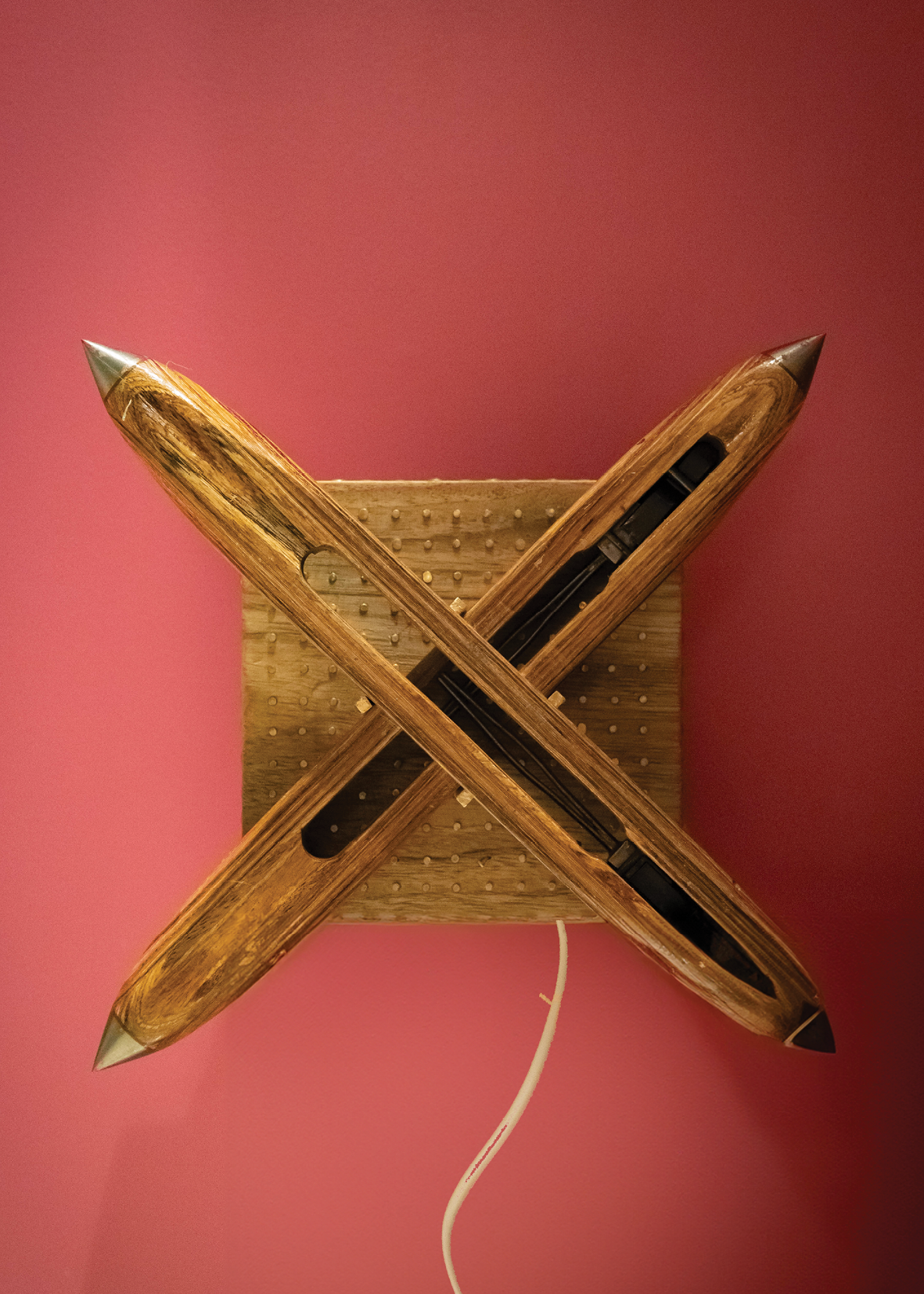
shuttle — thefoundededit by studio samayam.
shuttle
In the weaving villages of Pochampalli, Telangana, a shuttle is the pointed wooden tool that carries yarn horizontally through a handloom. It is how Ikat sarees are made. The sarees travel the world. The shuttle remains invisible, and when it breaks, it is discarded. The shuttle lamp is made from those discarded tools. studio samayam collected these discarded shuttles and turned them into light.
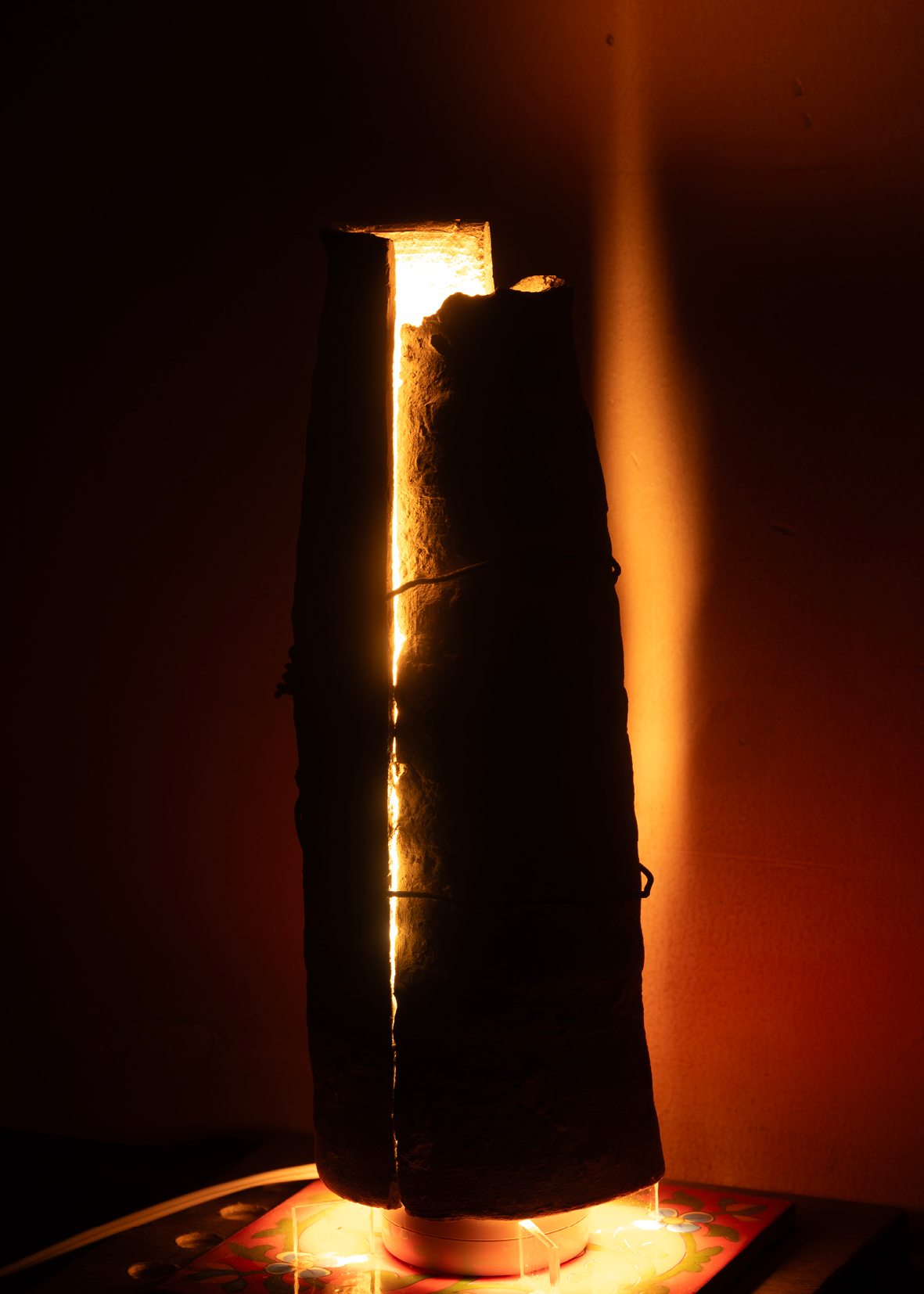
naliya — thefoundededit by studio samayam.
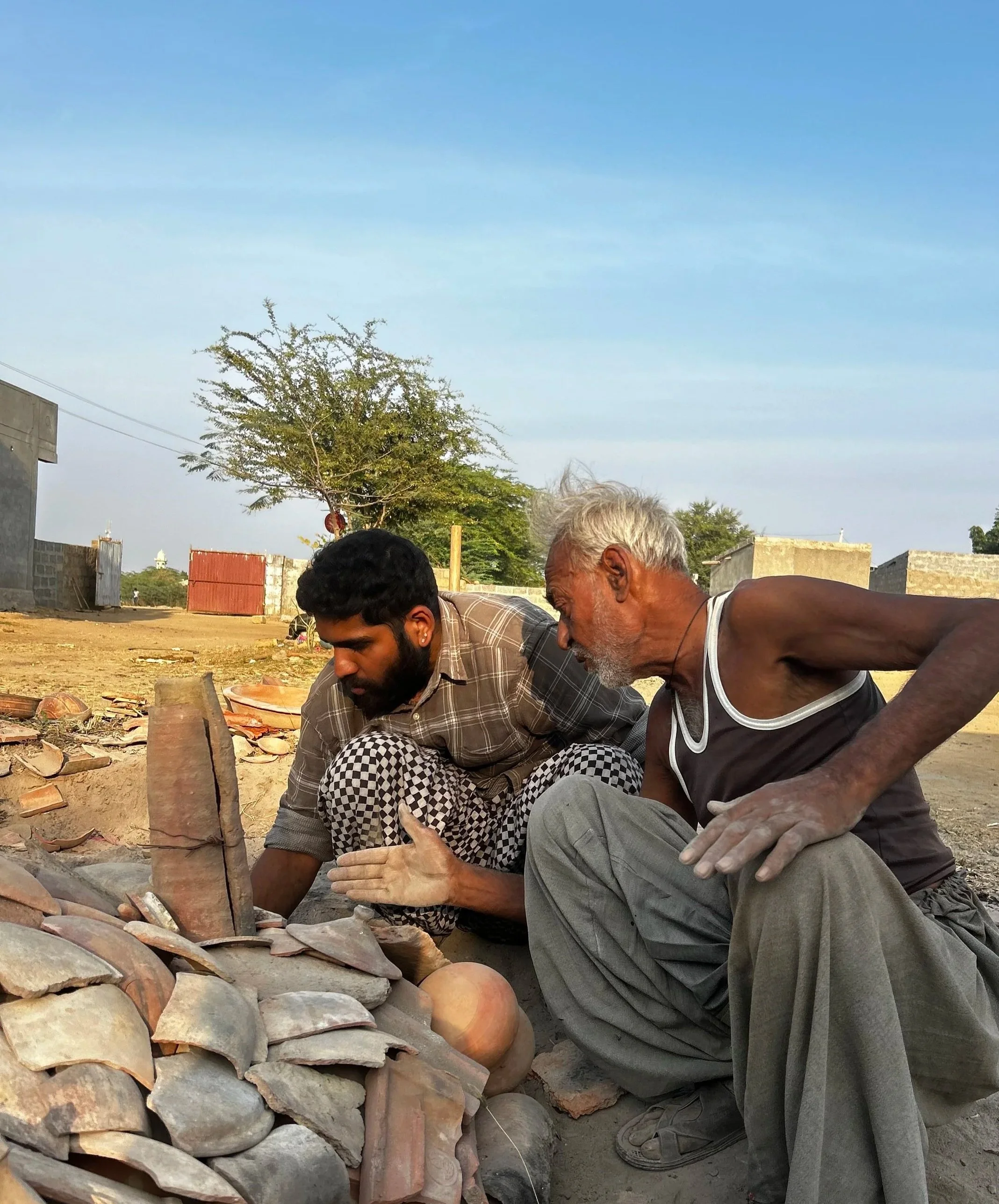
A. Shree Tej and Ismail Bhai, Lodai, Kutch. From the making of naliya — thefoundededit by studio samayam.
naliya
In Lodai, Kutch, ceramic roof tiles are handmade by potters and used to build chimneys for underground kilns, where clay pieces are fired. Ismail Bhai is the last full-time potter in what was once a thriving potters' village. studio samayam took these tiles, fragile by nature and made to chip and break, and turned them into light.
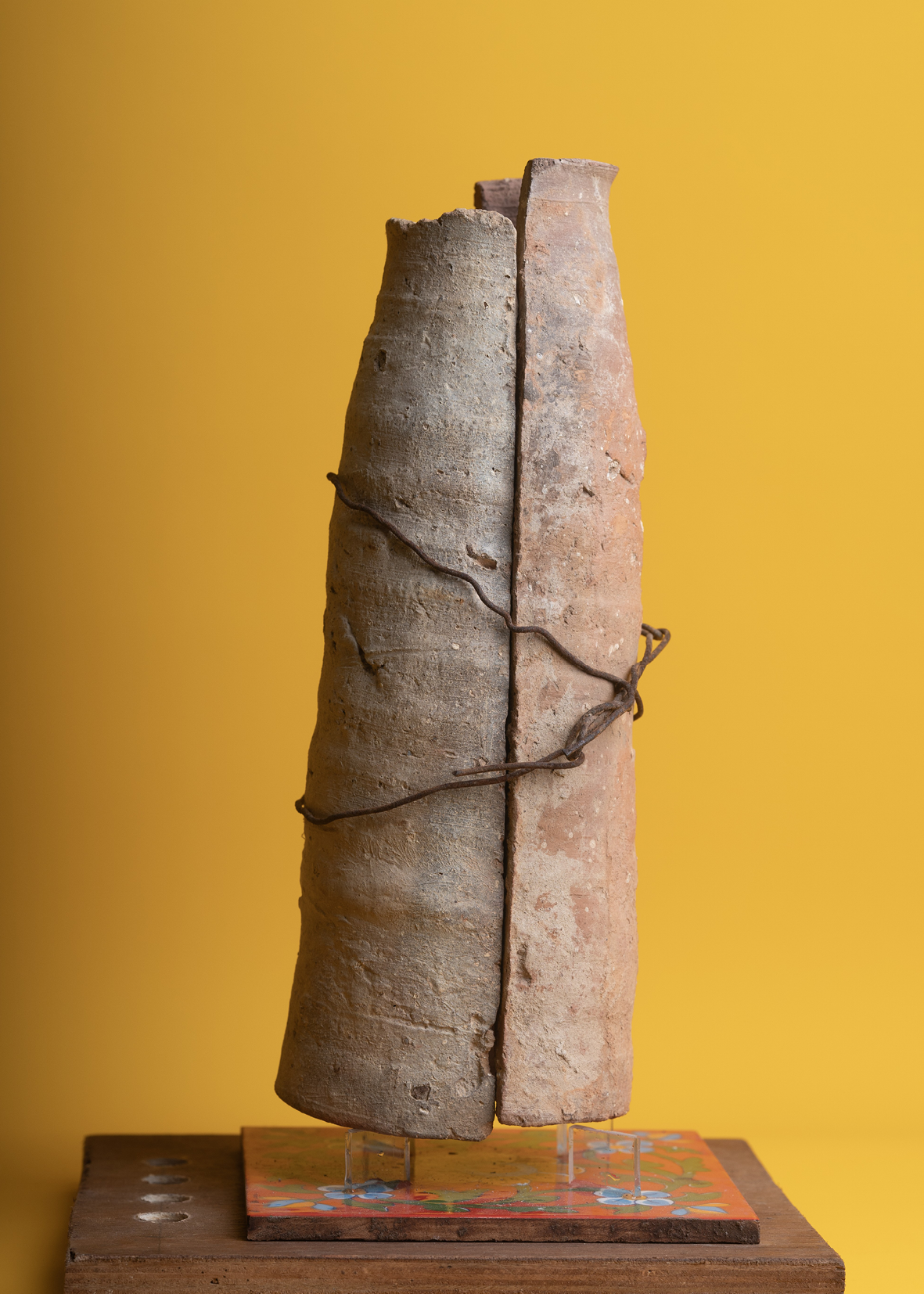
naliya — thefoundededit by studio samayam.
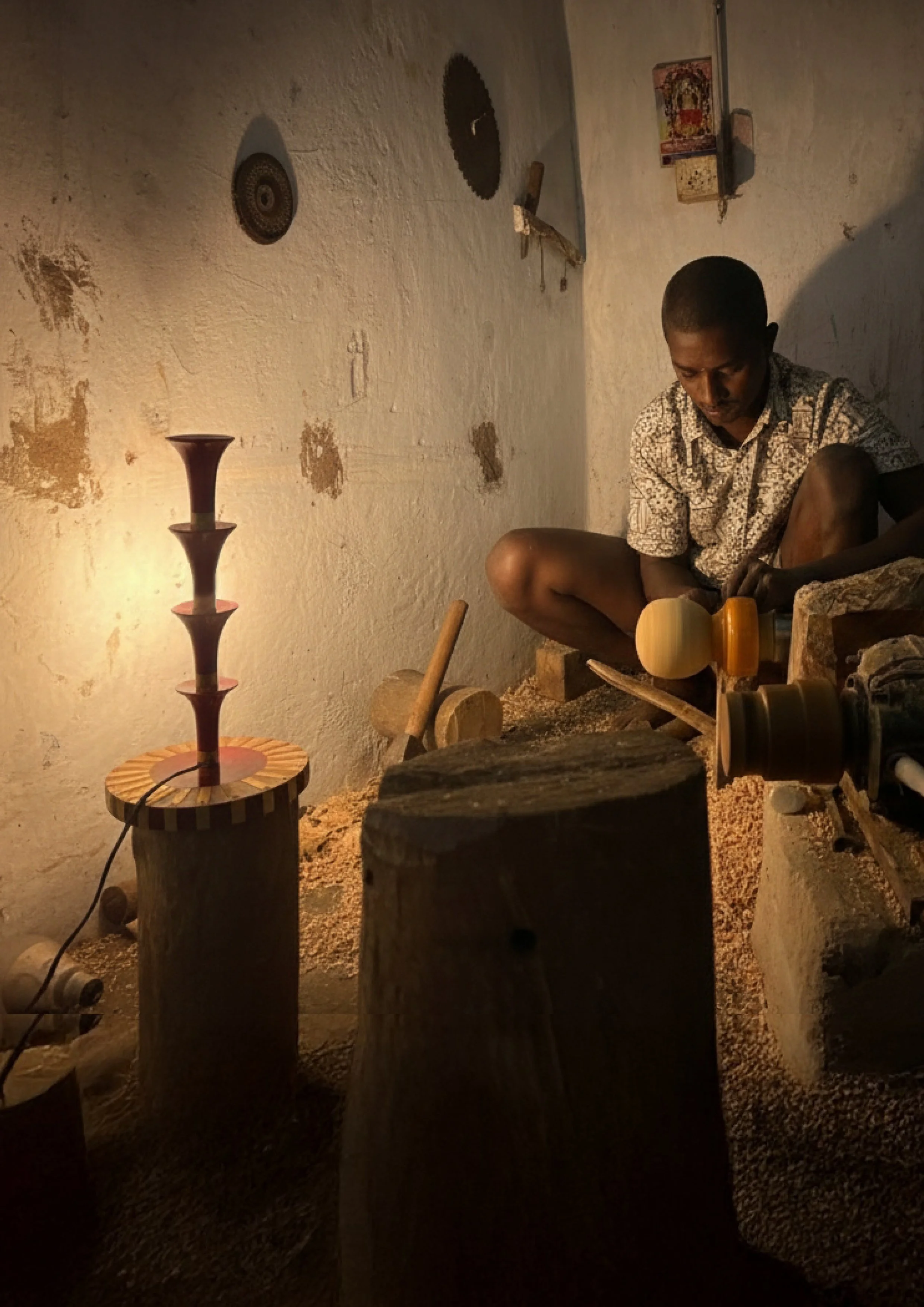
Manikanta working on the wood-turning lathe, Kailasapatnam, Andhra Pradesh.
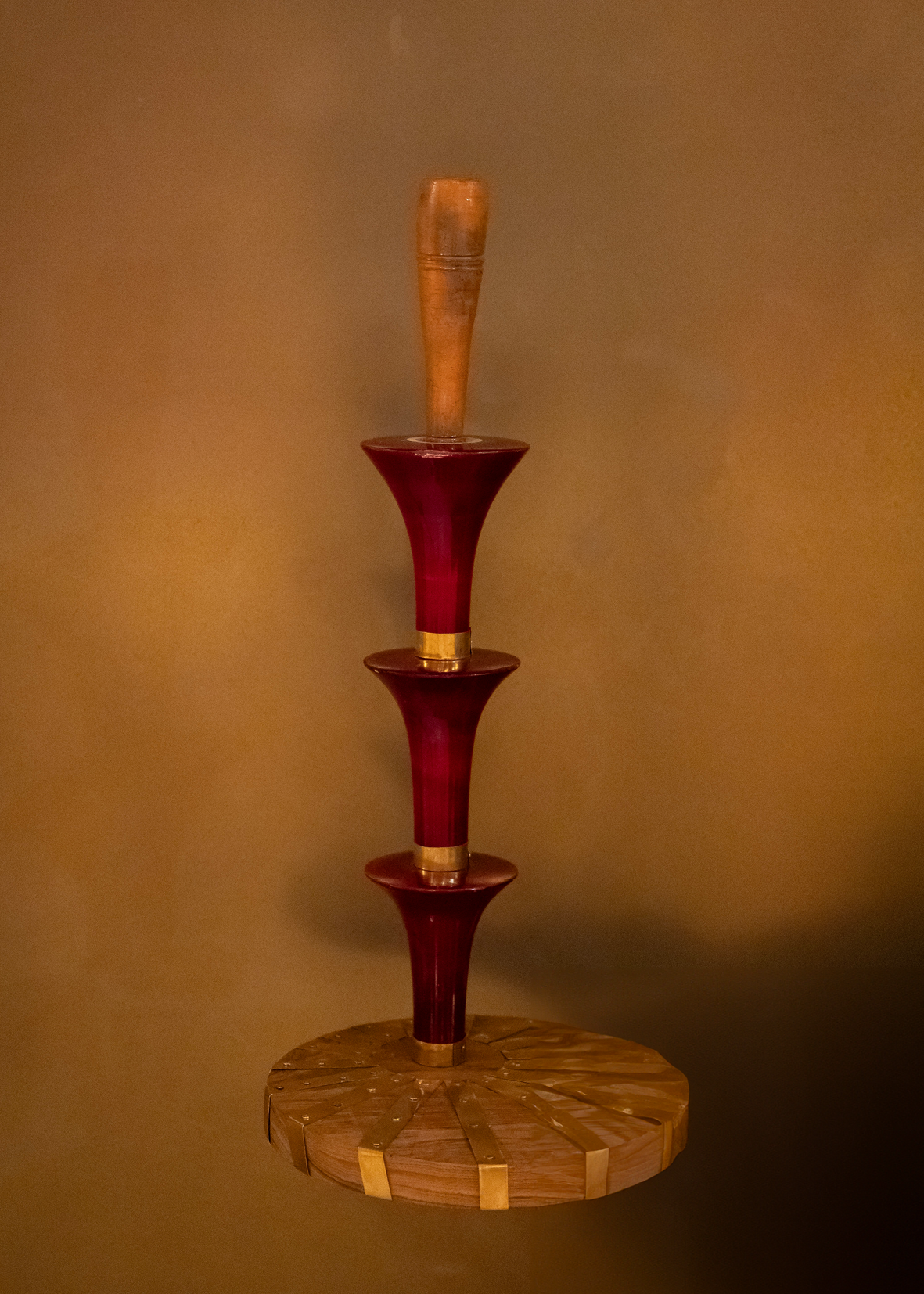
flower — thefoundededit collection by studio samayam.
flower
For over 400 years, artisans in Kailasapatnam, Andhra Pradesh, have made wood-turned lacquerware toys. studio samayam invited Etikoppaka artisans to a workshop, asking them to experiment freely with form, colour, and technique. The flower lamp emerged from what they made. Its lacquer is coloured with kumkum, the red powder used as a bindi and in temple ritual. What began as play became the object.
Further reading
Elizabeth (Dori) Tunstall, Decolonizing Design: A Cultural Justice Guidebook — MIT Press
Prasannan Parthasarathi, Why Europe Grew Rich and Asia Did Not — Cambridge University Press
Shiva Nallaperumal, "Decolonising Design" — Dezeen
Links
Photography courtesy of studio samayam
Text
Nina Zulian + claude.ai