
The Shape of Memory
Clay vessels by Kobina Adusah hold presence and heritage
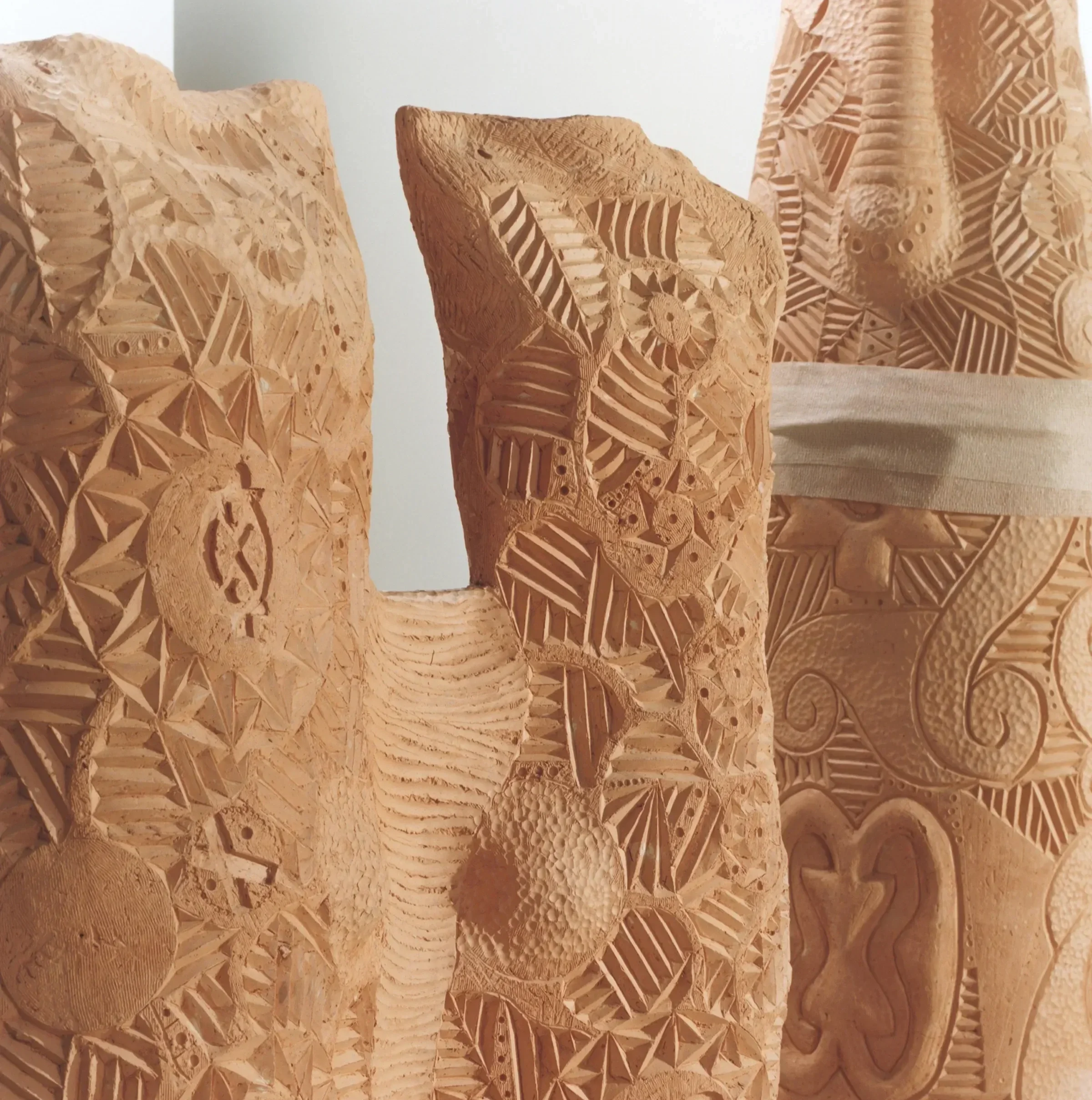
Kobina Adusah, I Still Face You, 2023 - exhibited as part of the 2025 Loewe Foundation Craft Prize Exhibition
Clay is shaped slowly by the earth that holds it. Formed over time through erosion, sedimentation, and water, it quietly gathers beneath our feet. Its colour, texture, and behaviour are not fixed traits, but responses to the soil conditions where it settles. No two clays are alike, just as no two landscapes are the same.
This intimacy between material and place means that clay is never neutral. It carries the memory of terrain—mineral layers, shifting climates, and long histories of transformation embedded within its body. To work with it is not merely to mould the earth, but to engage with something already full of meaning.
For Ghanaian artist Kobina Adusah, this meeting of earth and hand becomes the foundation of a practice grounded in listening. Clay, to him, is not a substance to command, but one to attend to—alive with the knowledge of land, culture, and gestures passed across generations. What emerges are not simply objects, but vessels of memory: of place, rhythm, and inherited touch.
Adusah studied ceramics at the Kwame Nkrumah University of Science and Technology in Kumasi, Ghana, and his approach is profoundly shaped by an upbringing in which stories, skills, and spiritual knowledge were shared through lived experience. His relationship with clay continues a lineage of gestures that predate formal education—reminding us that memory often lives in the hand before the mind.
What draws you in first when encountering his work is the surface. The forms themselves are often modest, grounded, and still. But their texture speaks. A dense constellation of hand-carved lines, grooves, and incisions stretches across them—traces of repetition, rhythm, and returning.
These markings gesture toward textiles, architecture, and everyday visual culture, yet they offer no single translation. They favour sensation over symbolism. Carved while the clay remains soft, the marks become permanent once fired—lasting records of presence and time. Rather than presenting a story, they invite you to stay longer, to feel rather than interpret.
Adusah’s work draws from spiritual knowledge and oral traditions within a Ghanaian context, not as a fixed archive but as a living practice shaped by repetition and change. At the same time, his pieces speak to the broader forces shaping contemporary identity—including the continued weight of imposed Western modernity. In this space, familial memory and cultural resilience are not nostalgic gestures, but active presences. His forms remember, and in remembering, they also reimagine.
The vessels he creates are more than physical objects; they function as quiet bridges between past and present. They hold not just matter, but meaning—offering inherited narratives not as literal retellings, but as impressions, movements, and atmospheres. Though rooted in personal experience, his work opens onto collective histories, prompting reflection on cultural continuity and the many ways we carry belonging.
Clay, too, introduces its own kind of unpredictability. It cracks, shifts, and resists certainty. Adusah doesn’t fight this — he works with it, letting the material guide the process. His practice is not about control, but about paying attention—following what the clay offers, and honouring where it leads.
The resulting sculptures feel as though they’ve grown slowly, nurtured by care. They don’t impose themselves. They stay close. They ask you to come nearer, to take your time. Like the hands that made them, they move with quiet persistence.
And in return, they offer something generous: a space where material, memory, and making hold together. In Adusah’s hands, clay becomes not only form, but surface—an interface where all that has touched it remains.

Kobina Adusah in his Studio, Kumasi, Ghana, 2025. Photography By David Nana Opoku Ansah. Courtesy Gallery Fumi.
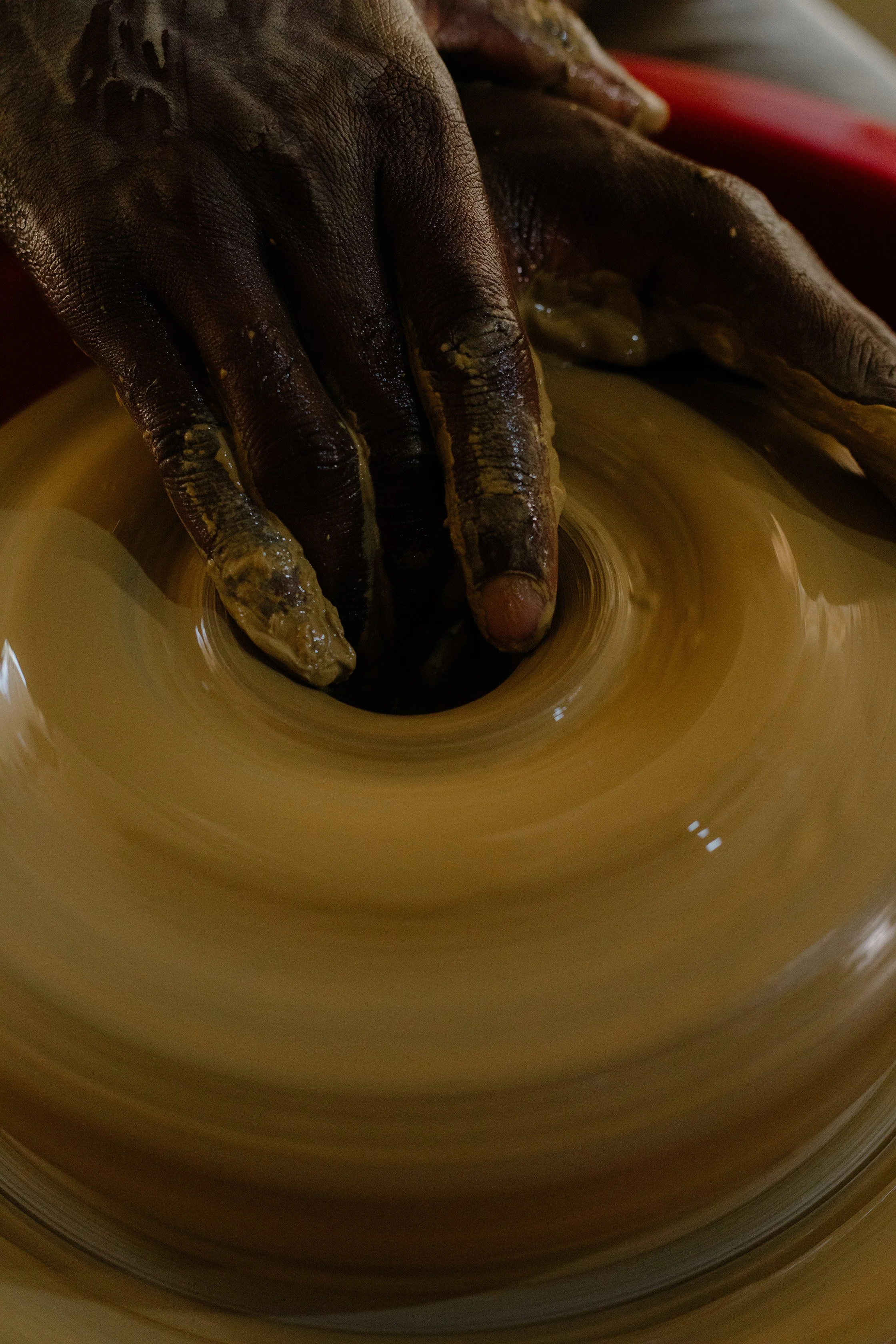
Kobina Adusah in his Studio, Kumasi, Ghana, 2025. Photography By David Nana Opoku Ansah. Courtesy Gallery Fumi.

Kobina Adusah in his Studio, Kumasi, Ghana, 2025. Photography By David Nana Opoku Ansah. Courtesy Gallery Fumi.
“My work [...] is rooted in the belief that the earth we walk holds memory, mystery, and story. Clay, to me, is not inert. It breathes with ancestral weight. It carries echoes of forgotten rituals, silent pain, and whispered dream. Each vessel I create is a dialogue not just between hand and material, but also between worlds.”
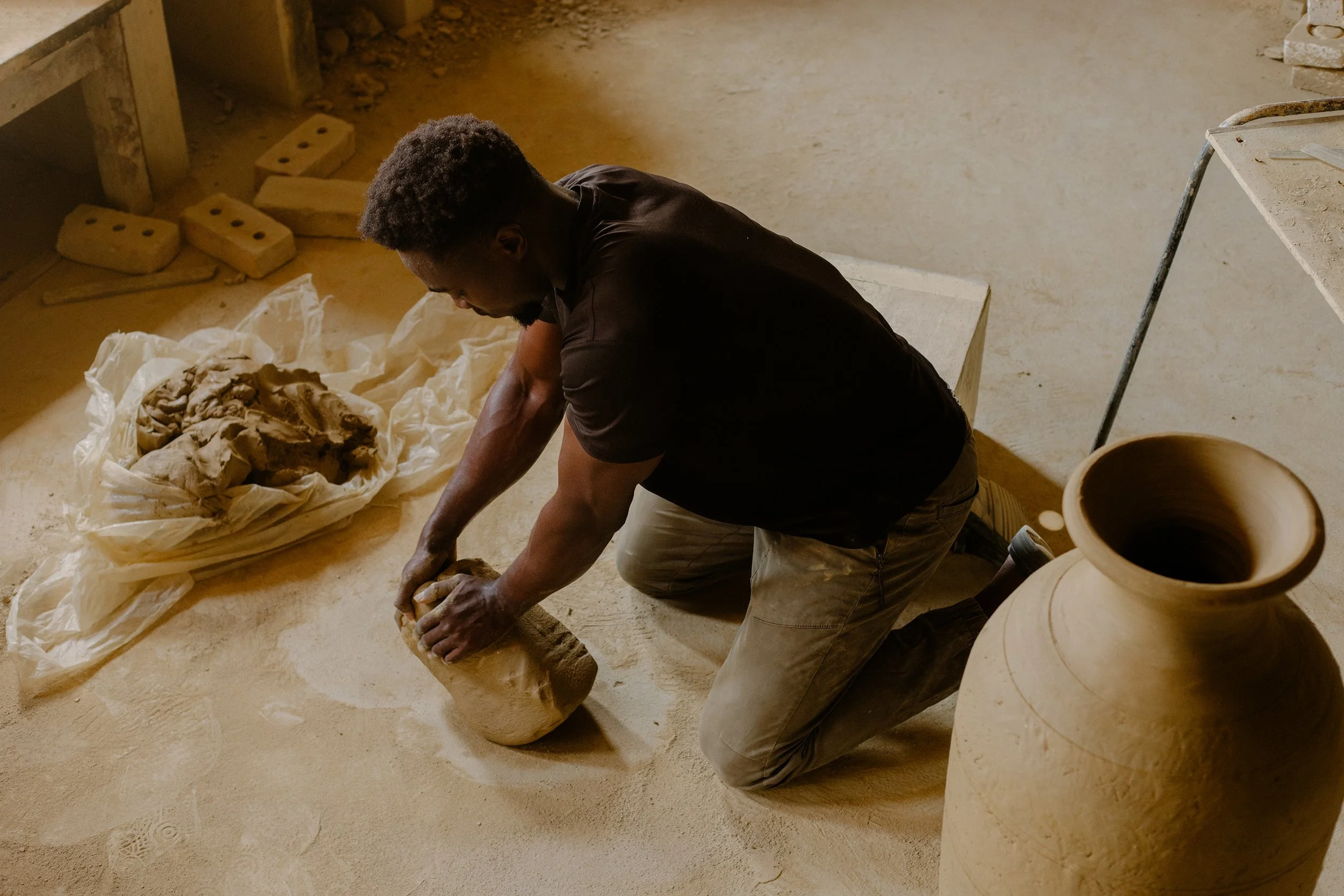
Kobina Adusah in his Studio, Kumasi, Ghana, 2025. Photography By David Nana Opoku Ansah. Courtesy Gallery Fumi.

Kobina Adusah in his Studio, Kumasi, Ghana, 2025. Photography By David Nana Opoku Ansah. Courtesy Gallery Fumi.

Kobina Adusah in his Studio, Kumasi, Ghana, 2025. Photography By David Nana Opoku Ansah. Courtesy Gallery Fumi.

I still face you series, 2023, Photography By Penguins Egg Studio. Courtesy Gallery Fumi.
Kobina Adusah (b. Ghana) is a ceramic artist working primarily with terracotta and hand-carving techniques. He is a graduate of the Kwame Nkrumah University of Science and Technology in Kumasi, Ghana. His work has been exhibited internationally, including in Munich, Kumasi, New York, and Madrid. In 2026, he was a finalist in the Loewe Foundation Craft Prize. From November 2025 to March 2026, Adusah will take part in Design in West Africa: Unity in Multiplicity at Palais de Lomé in Togo. His solo exhibition Inherited Beings will run at Gallery FUMI, London, from 19 February to 14 March 2026.
Photography by David Nana Opoku Ansah and Penguins Egg Studio
Courtesy Gallery Fumi
Text Nina Zulian