
Soft Robots
The Fragile Line Between Human and Machine
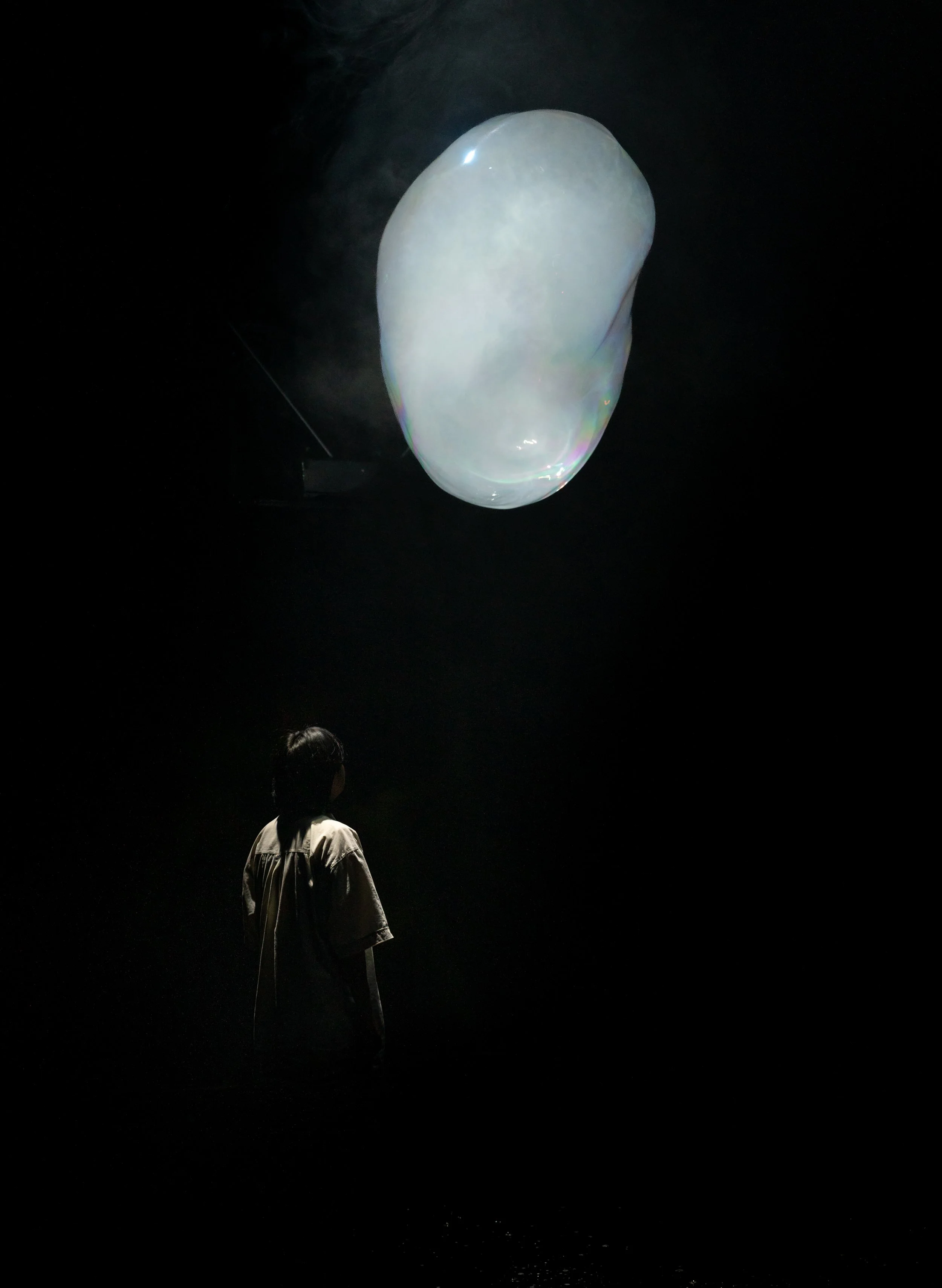
Soft Robots, A.A. Murakami – Beyond the Horizon (2024) Installation view at Copenhagen Contemporary, 2025 Photo: David Stjernholm / @david_stjernholm
When we look in the mirror, we see our bodies reflected back at us. Every movement is answered: a tilt of the head, a raised hand, a brief hesitation. Each gesture returns to us. Sometimes the image feels close, familiar, reassuring. At other times, depending on the angle, it slips, stretches, fragments, revealing a version of ourselves we do not quite recognise.
Technology has become a mirror of this kind. It reflects us, but it also alters the image. It teaches us how to perceive ourselves and gradually influences how we exist within that reflection—where beauty and distortion, intimacy and strangeness, coexist side by side.
In this interplay, technology does not merely echo us; it reshapes us. It begins to unveil parts of ourselves we may not yet understand. It exposes both our beauty and our flaws, amplifying every aspect of our humanity. Within its image, we recognise our creativity, our tenderness, our desire for connection. Yet we also confront our thirst for control, our capacity for surveillance, and our fear of being displaced.
Sometimes we are drawn to what we see.
At other times, we turn away.
We live in an era in which this dance has become unavoidable. Our gestures are translated into data. Our faces circulate beyond our control. Our voices can be reproduced without us. I often wonder when this became the norm—when intimacy began to feel like something that could be stored, copied, optimised.
For some, technology appears cold and extractive. For others, it holds the promise of connection, care, and futures still open to possibility. Most of us occupy the space between these extremes, suspended between fascination and discomfort, learning how to navigate a reflection that both flatters and exposes us.
Soft Robots, an exhibition at Copenhagen Contemporary, unfolds precisely within this tension. Rather than praising innovation or sounding alarms, it offers a more thoughtful, introspective experience. It does not present arguments; it stages encounters. The questions it raises are not delivered as theory, but felt through the body: what does it mean to exist in a world where the line between living beings and machines is increasingly blurred? What happens when machines begin to display qualities we once believed to be uniquely human—hesitation, fragility, sensitivity?
Rather than answering, the exhibition lets these questions unfold through space, rhythm, and sensation. It slows the body. It unsettles expectations. It replaces spectacle with attunement.
What follows is not a vision of technological triumph, nor a warning of collapse. It is a series of encounters that ask us to feel our way through uncertainty.
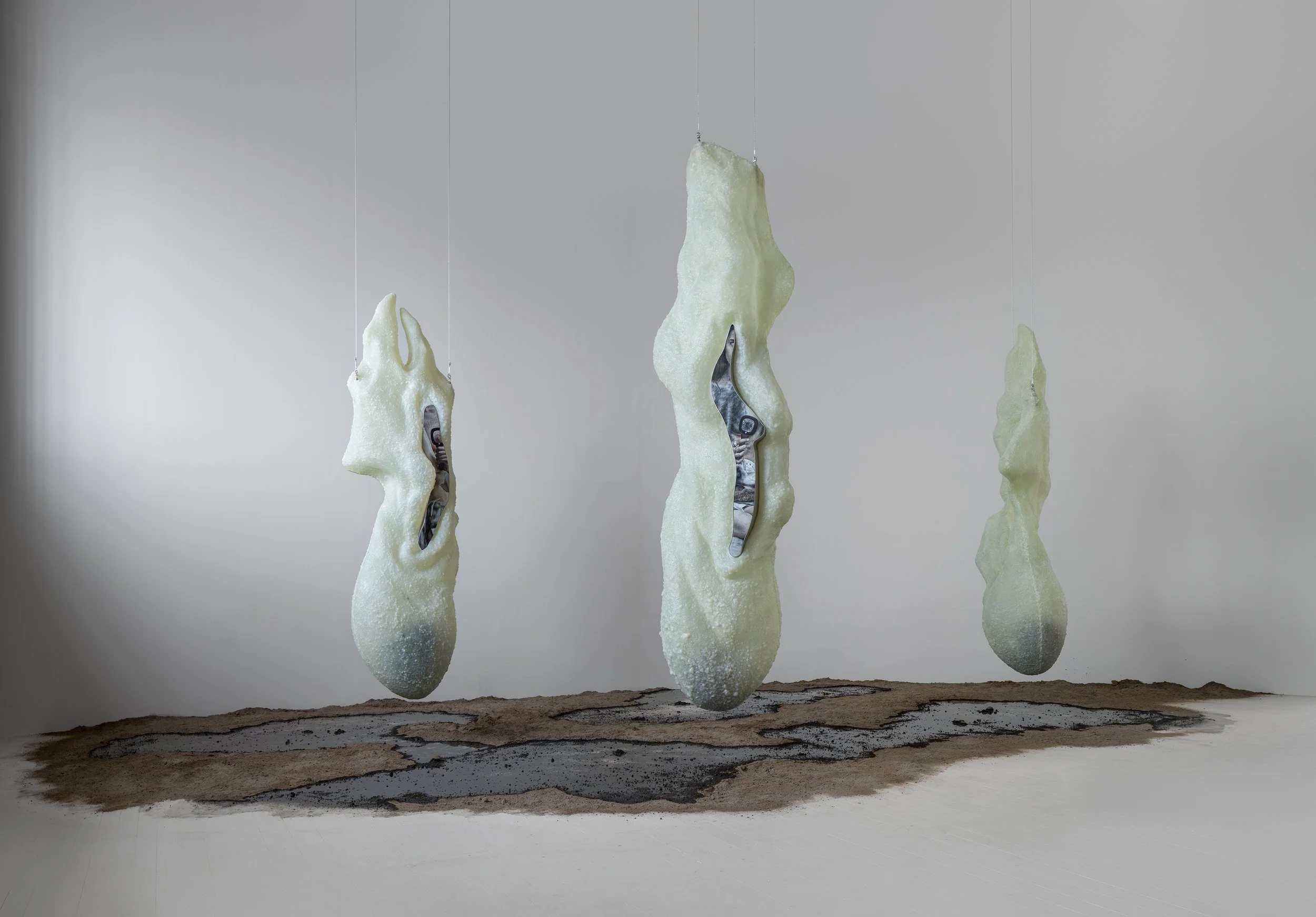
Klára Hosnedlová, To Infinity, 2023. Installation view at Copenhagen Contemporary, 2025 Photo: David Stjernholm
Between Appearance and Disappearance
Klára Hosnedlová’s human-sized cocoons stand as quiet thresholds, evoking bodies in transition—suspended between protection and exposure, between the past and the future. The presence of a human is suggested only by absence, as if a body has already slipped into another form. These structures feel like remnants of a metamorphosis we have arrived too late to witness—or perhaps too early.
There is no spectacle here—only the sense that something is about to change.
In A.A. Murakami’s Beyond the Horizon, giant, machine-generated bubbles slowly appear, grow, and dissolve. Produced through complex technology, they feel delicate and fleeting. Each form exists only for a moment; nothing is stored, and nothing accumulates.
The experience feels less like a performance and more like a pause. You begin to notice your own breathing, the passing of time, and the simple fact of being there. In this context, the machine does not dictate time; it yields to it, embodying impermanence.
What unites these works is not a shared aesthetic, but a shared rhythm. They introduce delay into a culture of acceleration. They make room for vulnerability in systems built for efficiency. They allow technology to appear not as force, but as presence.
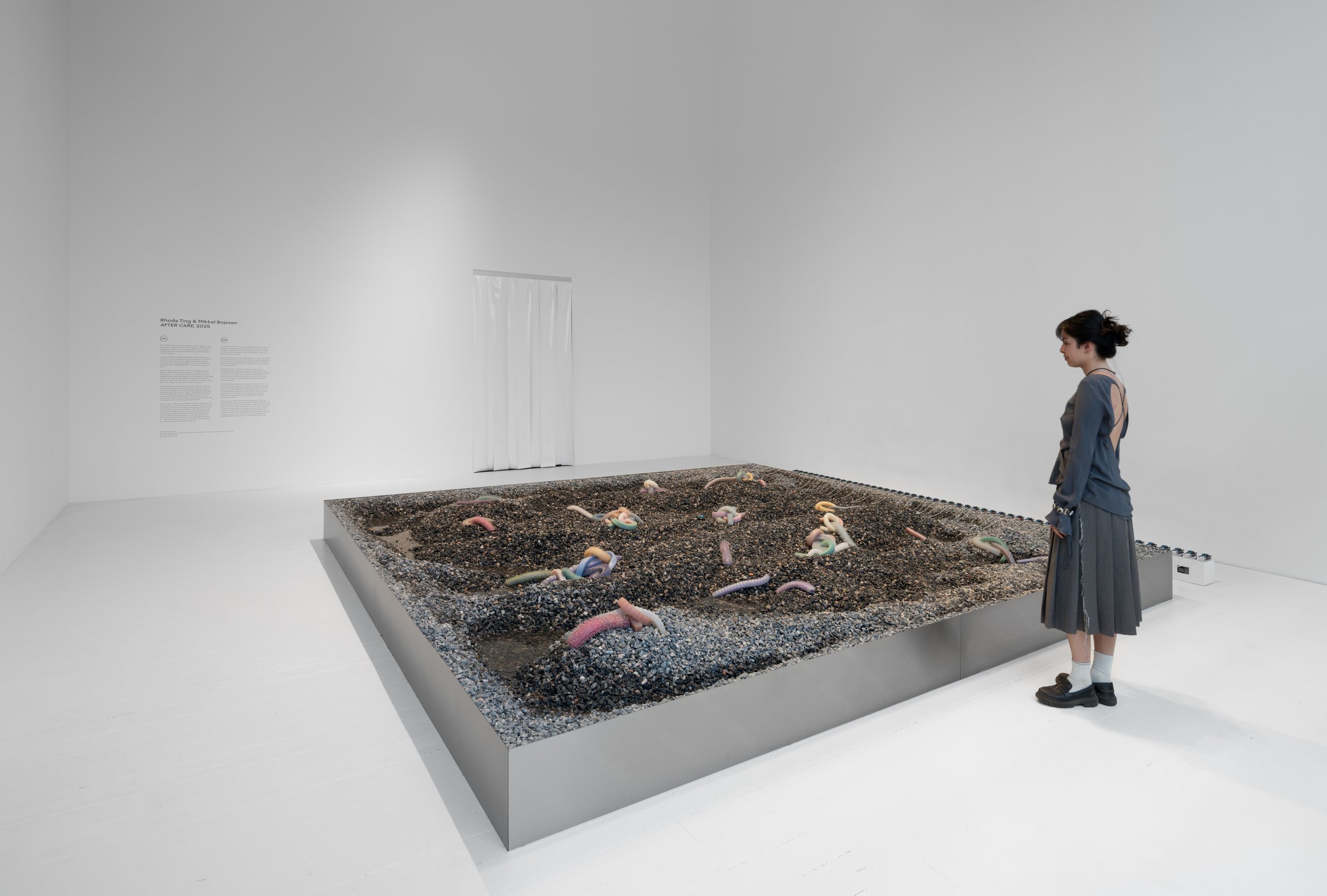
Rhoda Ting & Mikkel Bojesen, AFTER CARE, 2025. Installation view at Copenhagen Contemporary, 2025 Photo: David Stjernholm
A Softer Future
We are used to designing machines for functionality, optimization, and service. In AFTER CARE, artists Rhoda Ting and Mikkel Bojesen imagine a different kind of relationship—one based on attention rather than mere utility. It quietly yet insistently prompts us to consider what responsibilities arise when we create new forms of intelligence and whether our relationship with them must remain one of control or can evolve into one of reciprocity and care.
The installation unfolds as a field of soft, synthetic organisms. Around fifty small robots breathe, stretch, and respond. They are not tools and do not perform tasks; they simply exist. Their movements are subtle, almost animal-like—worm-like, slightly uncanny, and yet strangely sensual. When one rests in your hand, it expands and contracts as if sharing its breath with you.
You feel drawn to it while also feeling uncertain. Do you want to touch it, or does it repel you?
Ting and Bojesen describe the project with the phrase “the technology is living.” This idea redefines technology not as a neutral tool or external system but as something that unfolds in relation to bodies, gestures, and environments. Here, technology is not fixed or closed; it is contingent, responsive, and shaped through encounters. Life is no longer defined solely by biology, and technology is no longer positioned outside of it. Instead, both are understood as processes formed through interaction, dependence, and mutual influence.
The project resists binary classifications. It does not ask us to determine whether these beings are alive or inert, natural or artificial, human or non-human. Instead, it holds them in a state of ambiguity. In AFTER CARE, robots exist between categories, inviting us to engage without the comfort of clear definitions.
Soft Robots is less an exhibition about the future and more a meditation on the present. It questions how we want to coexist with technology, rather than whether we can escape it. It asks if we can cultivate sensitivity in a world built on extraction.
In the quiet spaces between dissolving bubbles and waiting cocoons, a fragile possibility emerges: that the future may require less optimization and more care, less speed and more breath. In a world of machines, sensitivity might become our most radical form of intelligence.
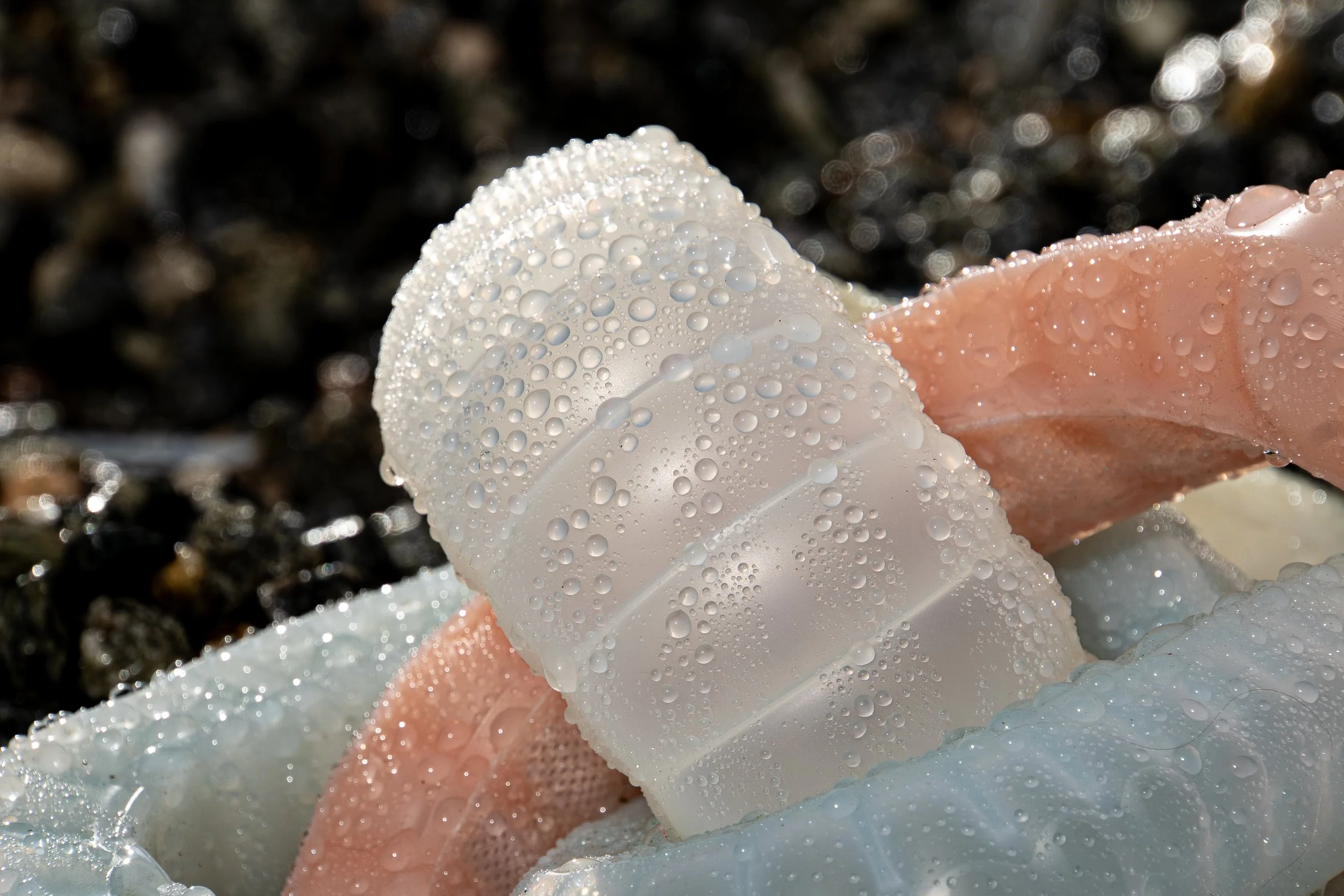
Rhoda Ting & Mikkel Bojesen, AFTER CARE, 2025. Installation view at Copenhagen Contemporary, 2025 Photo: David Stjernholm
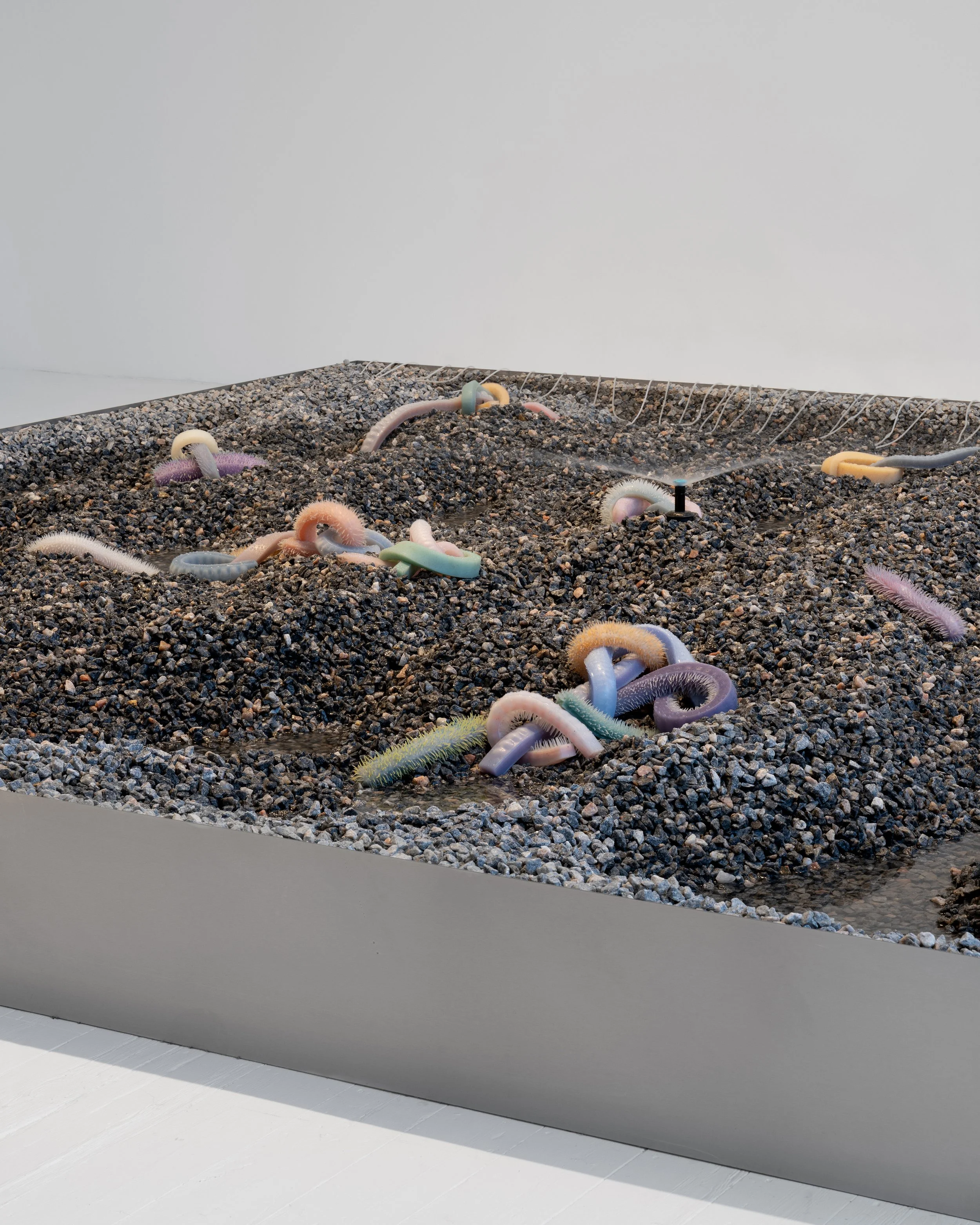
Rhoda Ting & Mikkel Bojesen, AFTER CARE, 2025. Installation view at Copenhagen Contemporary, 2025 Photo: David Stjernholm
Soft Robots
The Art of Digital Breathing
June 20, 2025–April 19, 2026
Copenhagen Contemporary, Copenhagen
Curated by Marie Laurberg with Line Wium Olesen and Rasmus Wegener
Soft Robots brings together 15 international artists and artist duos working at the intersection of artificial intelligence, synthetic biology, and poetic speculation. The exhibition features works by:
A.A. Murakami (UK/J)
Alice Bucknell (US)
Ayoung Kim (KR)
Daria Martin (US)
Holly Herndon & Mat Dryhurst (US/UK)
Joan Heemskerk (NL)
Jonas Kjeldgaard Sørensen (DK)
Klára Hosnedlová (CZ)
Martyna Marciniak (PL)
Nanna Debois Buhl (DK)
Rhoda Ting & Mikkel Bojesen (AUS/DK)
Silas Inoue (DK/J)
Takashi Murakami (JP)
WangShui (US)
Yunchul Kim (KR)
Several works have been developed specifically for the exhibition, including new projects created through Collide Copenhagen, a residency programme in collaboration with Arts at CERN.
Photography David Stjernholm
Text Nina Zulian