
Material Ecologies in Practice: Jessie von Curry
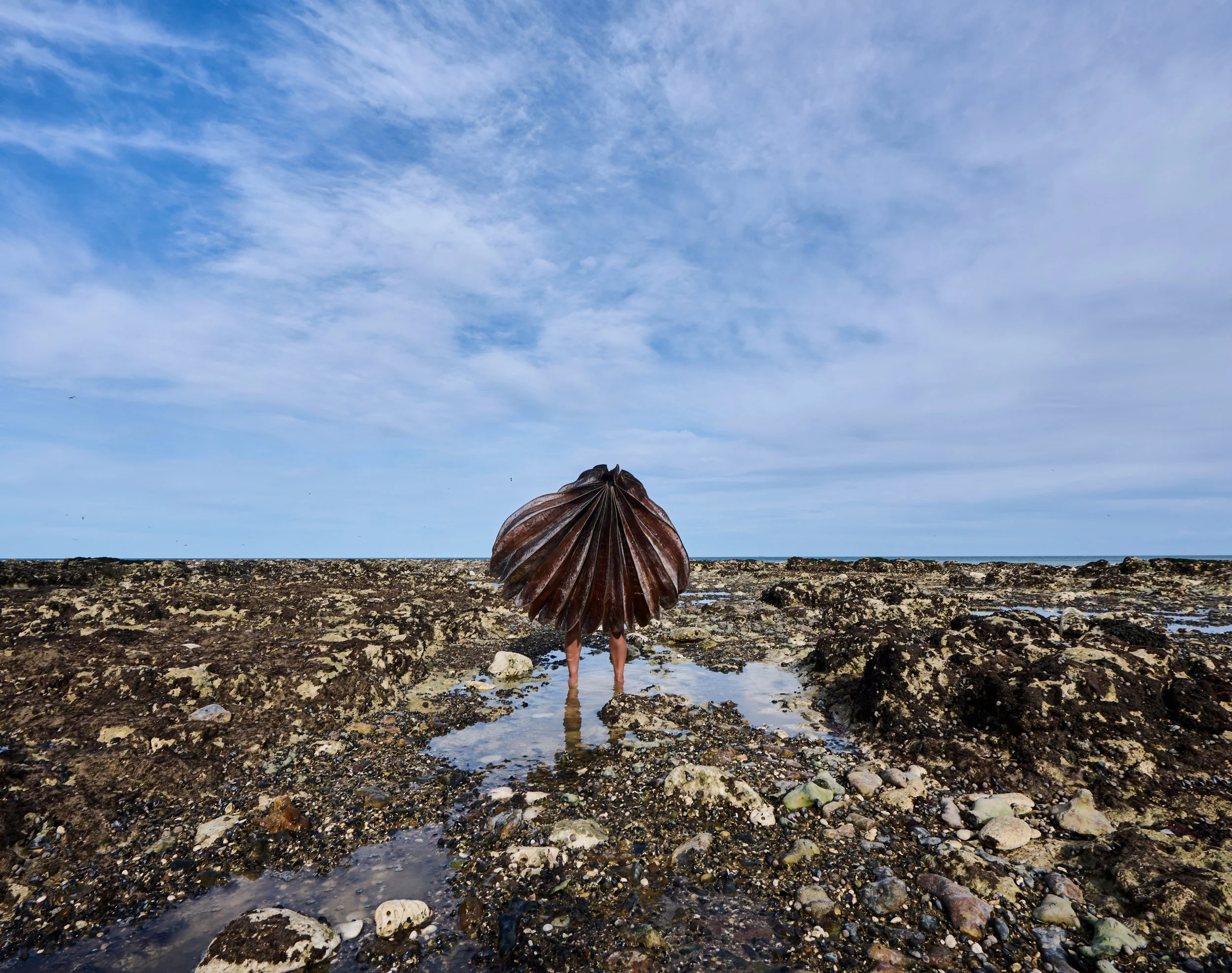
Jessie Von Curry - Plantspeak | Photo Antonia Penia
Design’s relationship with ecology is no longer a peripheral concern. It has become central to how many designers think, work, and position their practice. Increasingly, design is understood not only as a way of producing objects or systems, but as a way of engaging with the ecological and social realities that shape them. Across both research and professional practice, the conversation has moved beyond traditional sustainability frameworks towards deeper questions: how materials are sourced, who labours over them, and how non-human systems are entangled within broader socio-ecological conditions.
Current research suggests that ecological thinking in design cannot be reduced to surface innovation alone. It demands approaches that engage with interdependence, time, and responsibility across entire systems of production and environment. It is within this evolving and often debated terrain that Jessie von Curry’s work operates, grounded in material exploration and attentive to how ecological and social relationships are formed, experienced, and negotiated.
Although her work is often associated with fashion and textiles, it extends well beyond those categories. Von Curry works as a professional designer whose practice spans speculative storytelling, costume, sculpture, workshops, institutional commissions and forms of activism. Her projects create multi-sensory experiences shaped by the behaviour of materials themselves. Rather than treating materials as passive resources, she approaches them as active participants, each carrying biological characteristics and histories of extraction, labour and environmental impact.
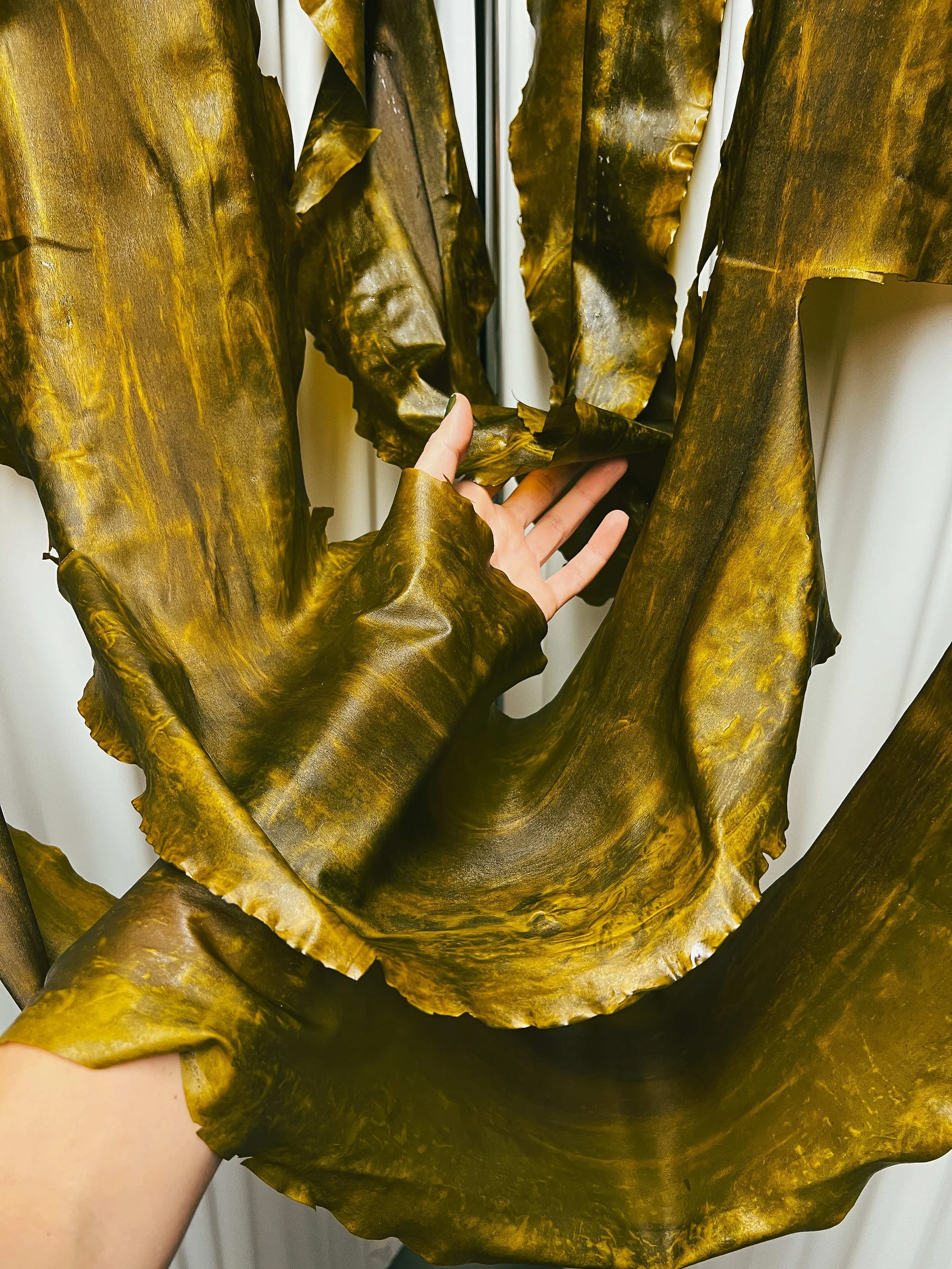
Jessie Von Curry, Plantspeak – Processes | Photo: Jessie Von Curry
Seaweed, a recurring material in her work, reveals alternative rhythms of production. In PLANTSPEAK, von Curry created performative costumes from Saccharina japonica kelp and abaca fibre to explore vegetal intelligence and interspecies dialogue. The kelp is cut, dried, rehydrated and shaped, yet it retains traces of its marine origin. It curls, stiffens, absorbs moisture from the air and shifts in tone and texture in response to the performer’s movement and surrounding climate. Elastic yet fragile, saline yet fibrous, it carries the memory of tide and saltwater into the performance space.
Kelp grows rapidly without fertilisers or freshwater, supports marine biodiversity and exists within cyclical ecological systems. Its sensitivity to moisture makes it resilient yet unpredictable. By placing this marine organism in contact with the human body, von Curry makes visible a relationship that is often distant and hidden within supply chains. The material’s biological behaviour informs both the aesthetic and structural dimensions of the work, shifting authorship so that the final form is co-produced by time, climate and touch.
When performed at the Royal Botanic Gardens, Kew, the work entered into dialogue with a carefully cultivated botanical environment. Within the glasshouse, the costume responded subtly to changes in humidity and temperature, absorbing moisture and stiffening as the body moved through space. The performance did not simply represent ecological systems; it was materially shaped by them.
This approach continues in projects such as the collaboratively woven Seaweed Trousers, developed with loom design by Vega Hertel and through workshops co-hosted with Materevolve. Constructed from multiple Pacific species, including bull kelp (Nereocystis luetkeana) and giant kelp (Macrocystis pyrifera), the garment resists uniformity. Each species contributes a distinct texture, density and tensile strength. Some strips remain supple, while others crack and stiffen. The weave preserves these differences rather than correcting them.
The creation of this colorful garment requires collective labor and considerable time. It moves between sculpture and wearable form, transforming how the body inhabits it. Rather than presenting a finished object as a scalable model, the work highlights process and ecological specificity, inspiring thoughtful consideration of the infrastructures—both social and material.
Alongside seaweed, mycelium becomes another material through which von Curry explores how life sustains itself through networks, decay and renewal. Fungal systems thrive through cooperation and reciprocity, transforming waste into nourishment. They demonstrate survival not as competition, but as interdependence.
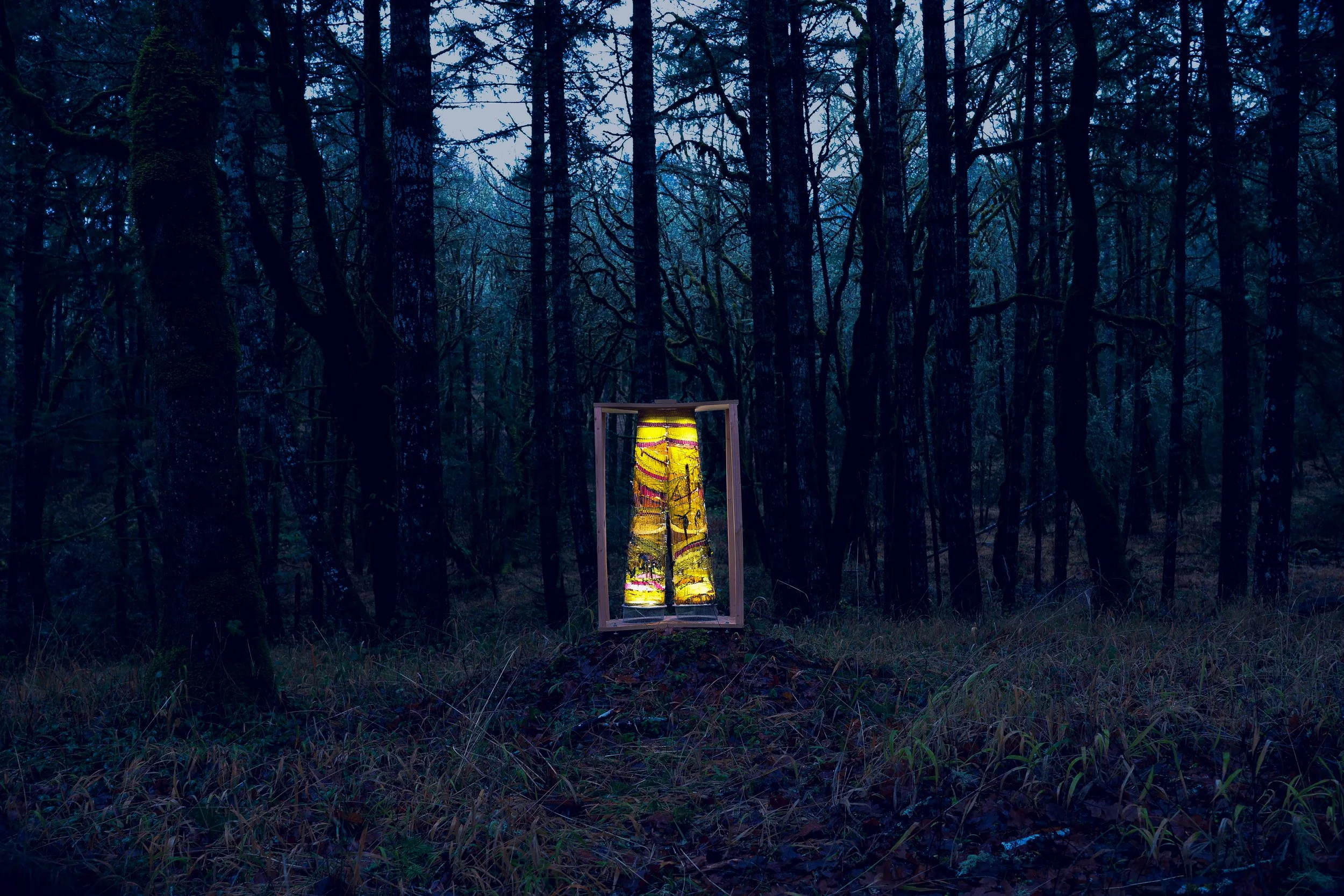
Seaweed Trousers. Photo: Jessie von Curry
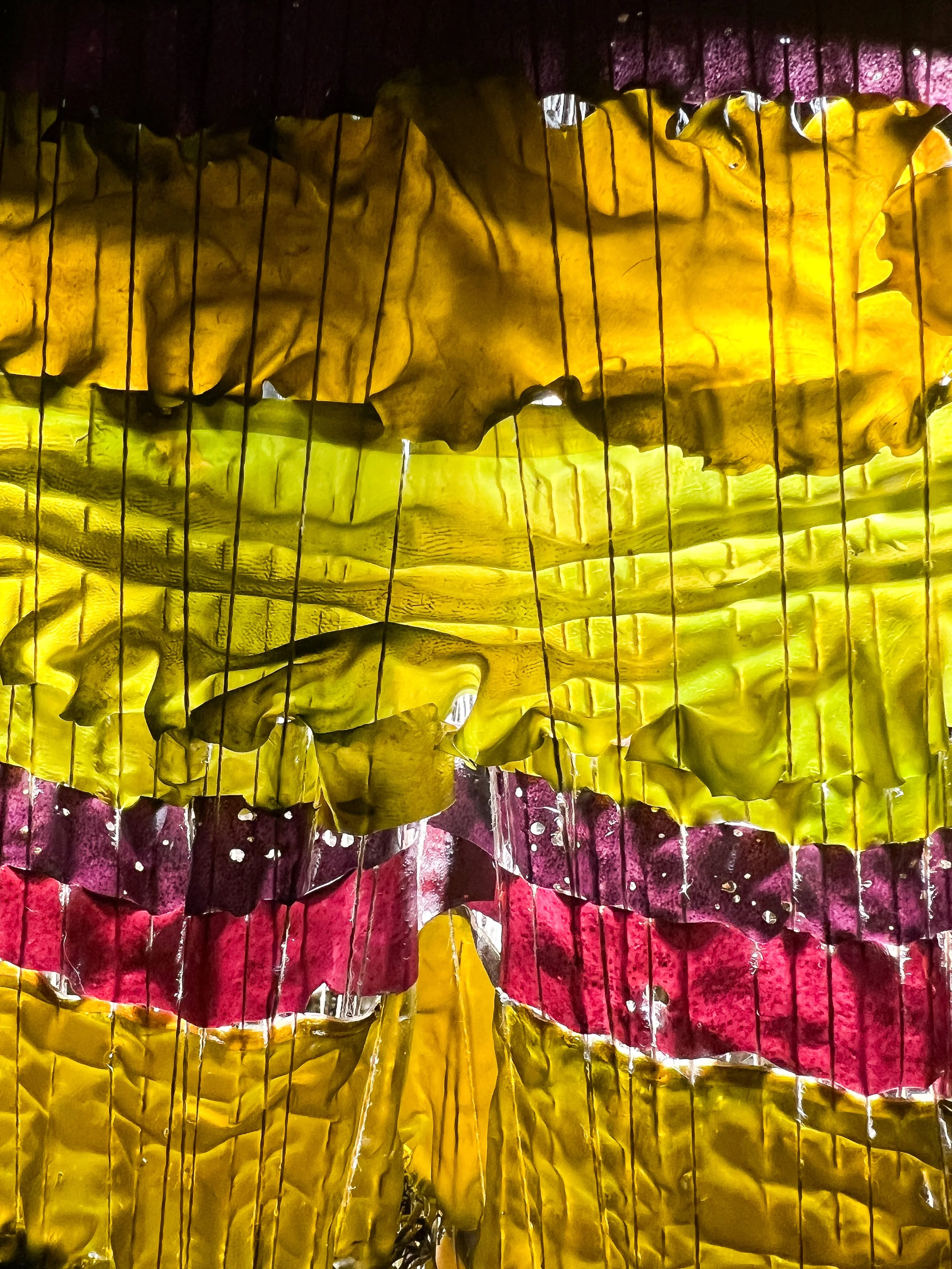
Seaweed Trousers (detail). Photo: Jessie von Curry
In Vested Fruits, a speculative mushroom vest developed in response to food insecurity and systemic instability, nourishment, mobility and material reuse converge within a single object. Constructed from blue oyster mushrooms, alder sawdust, shredded cardboard and discarded packaging, the piece reflects increasingly fragile food systems shaped by climate disruption, conflict, displacement and economic volatility.
The vest does not present itself as a technological solution. Instead, it poses a question: what do we carry when safety is uncertain? How might survival be materially reimagined? By placing edible matter on the body, von Curry draws attention to the vulnerability of contemporary supply chains and suggests a different logic, one in which waste becomes substrate, mobility becomes sustenance and resilience emerges through ecological cooperation.
This investigation into fungal systems also informed Hyphal Body, commissioned by the Royal Botanic Gardens, Kew, in collaboration with London College of Fashion. The large-scale mycelium T-shirt draws a parallel between textile construction and fungal growth. Just as fibres form thread and fabric, hyphae form branching mycelial systems that sustain soil ecologies. Built from hemp fibre, bamboo and mould-formed mycelium tiles using natural and compostable materials, the work reinforces her commitment to designing in dialogue with ecological systems rather than imposing form upon them.
What distinguishes von Curry’s practice is its refusal to simplify ecological narratives. Regeneration is not framed as harmony restored, nor as a guaranteed outcome of design. It is approached as negotiation, friction and responsibility. Her work does not promise resolution; it keeps the questions open.
Through Materials as Species, a workshop series developed with industry partners, von Curry extends this thinking into professional education. By reframing materials as living entities and supply chains as ecosystems, the programme encourages designers to reconsider decision-making across entire systems of production. The focus is not on novelty, but on attentiveness and accountability.
Continuing this line of inquiry is crucial. As bio-based materials gain visibility across design industries, there is a risk they become aesthetic signifiers absorbed into existing extractive models. Practices such as von Curry’s resist this by insisting on process, context and long-term engagement.
Her contribution is not defined by a single project or material. It is defined by a sustained commitment to working with ecological complexity rather than smoothing it away.
Rather than asking how design might fix ecological crises, her practice asks something more enduring: how we might design while recognising that we are already embedded within the systems we seek to transform.
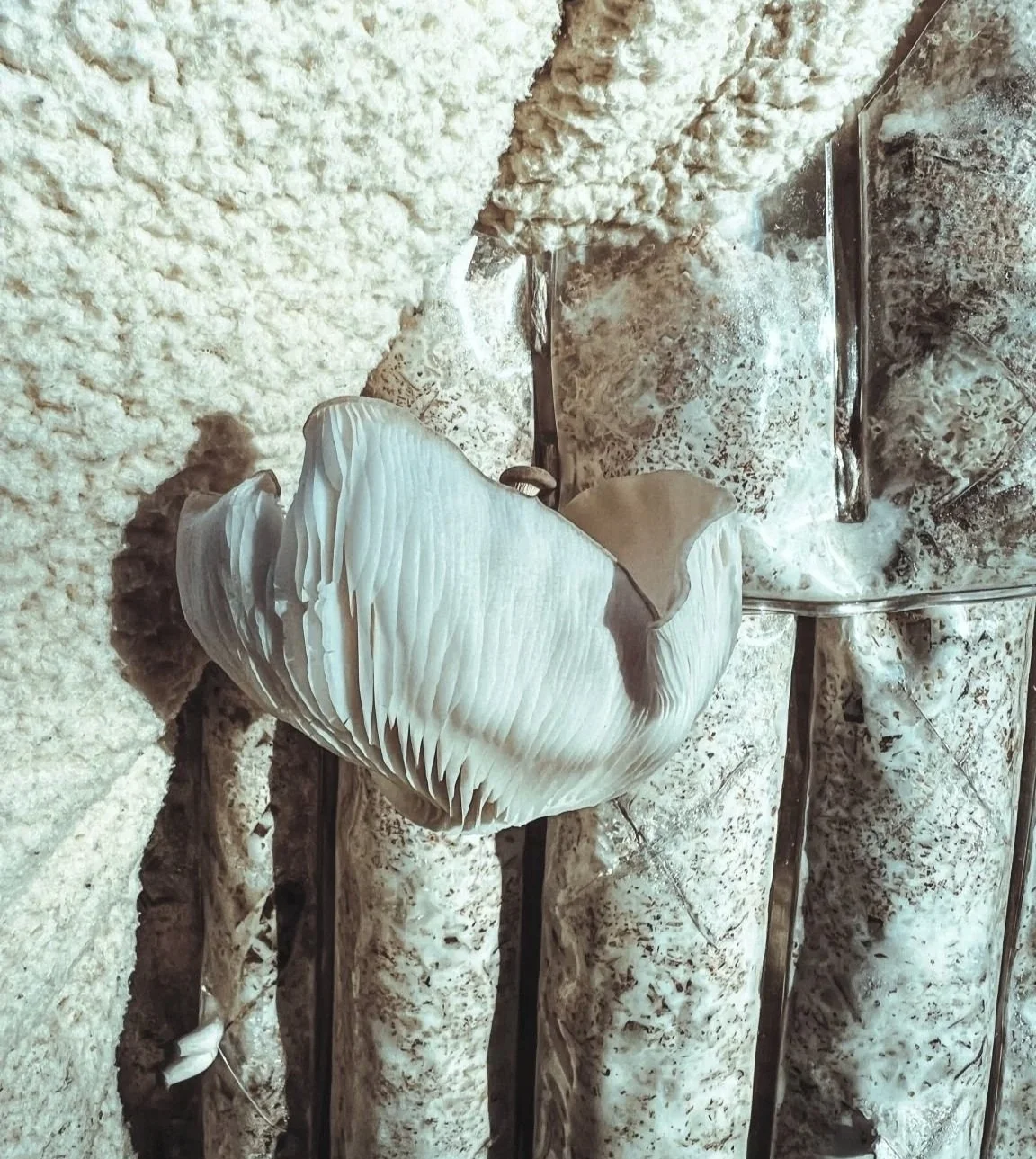
Vested Fruits — A Mushroom Vest for Uncertain Futures (detail) | Photo: Jessie von Curry
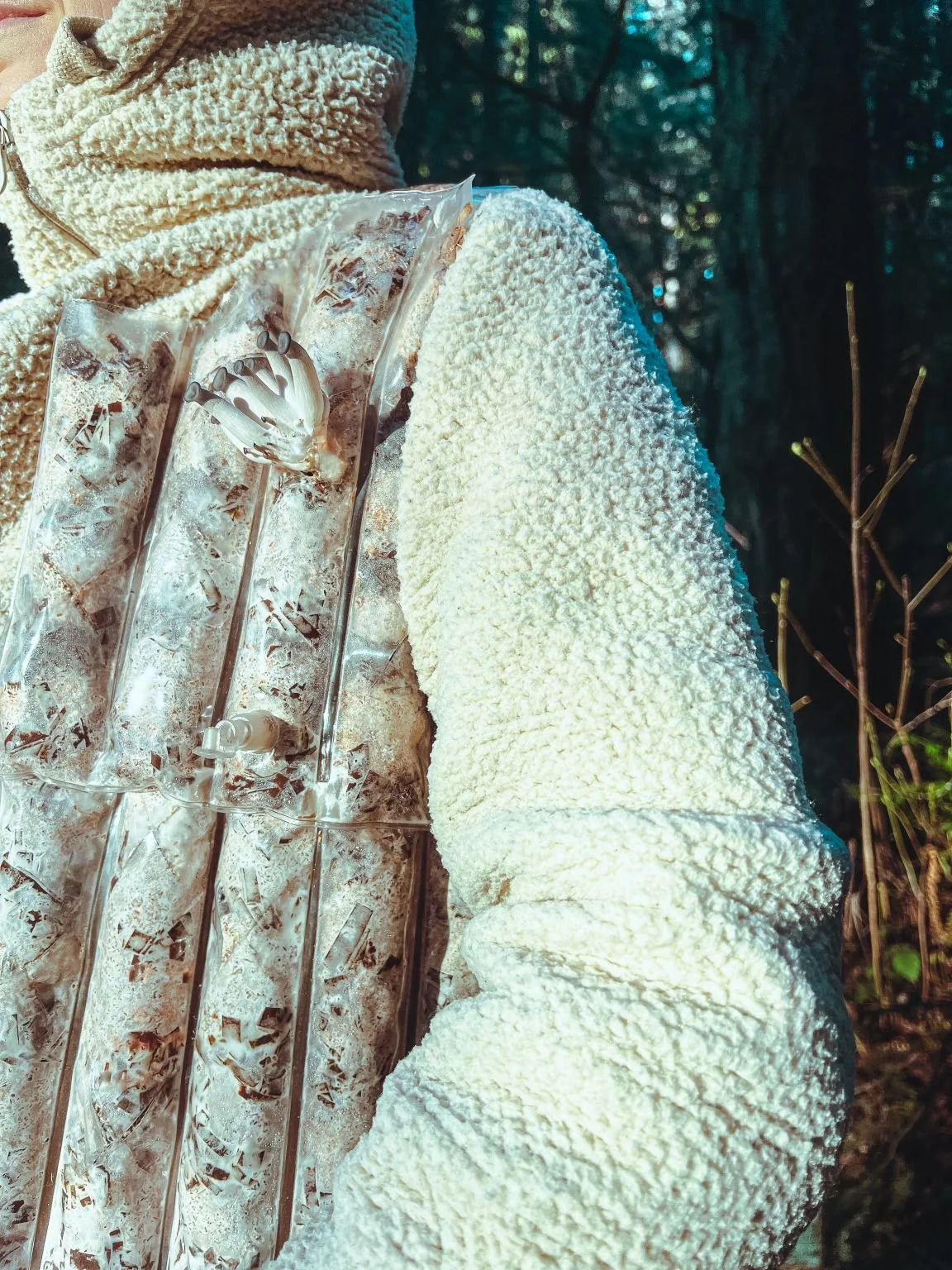
Vested Fruits — A Mushroom Vest for Uncertain Futures | Photo: Jessie von Curry.
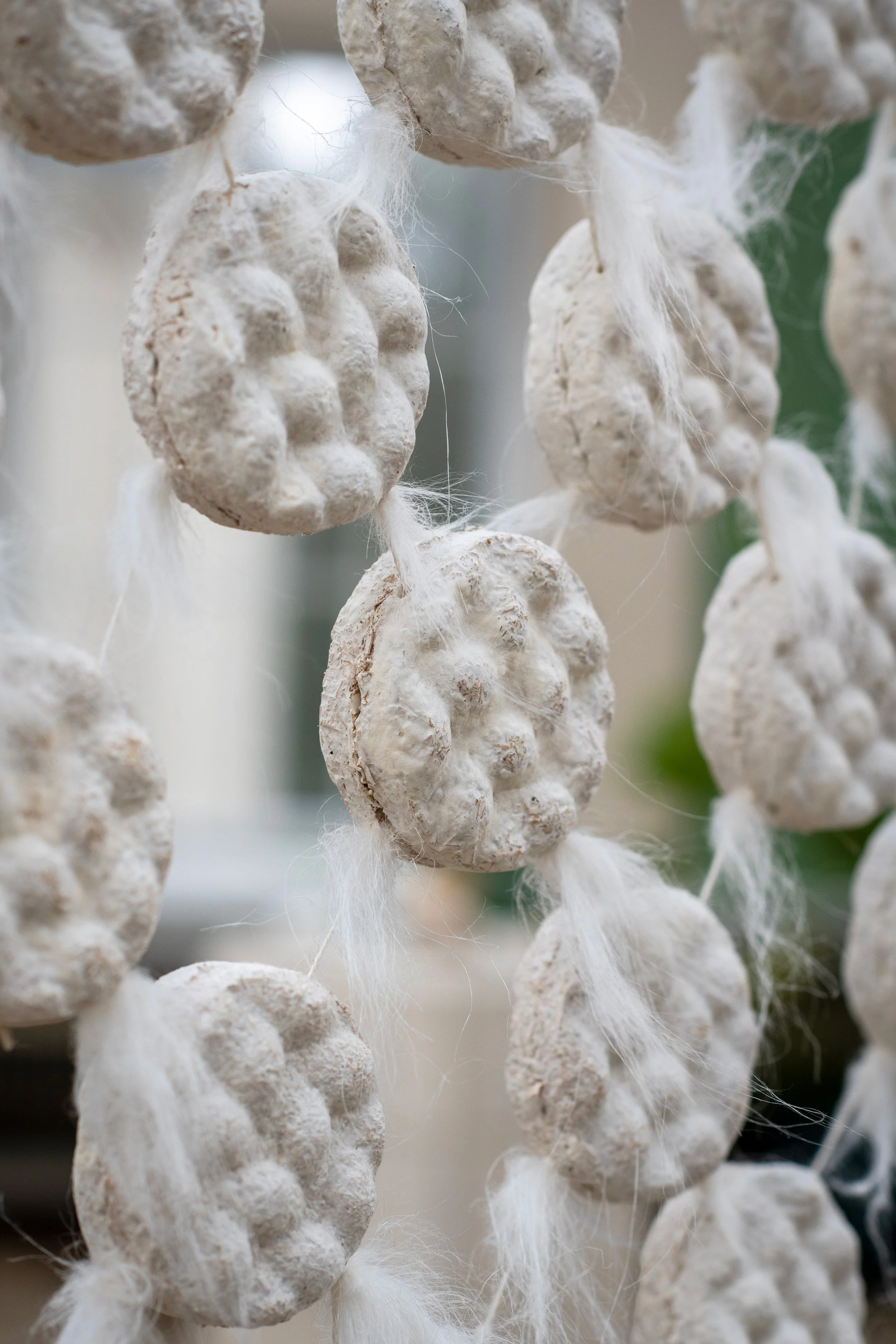
Hyphal Body by Jessie von Curry. Photo: Oliver Dixon
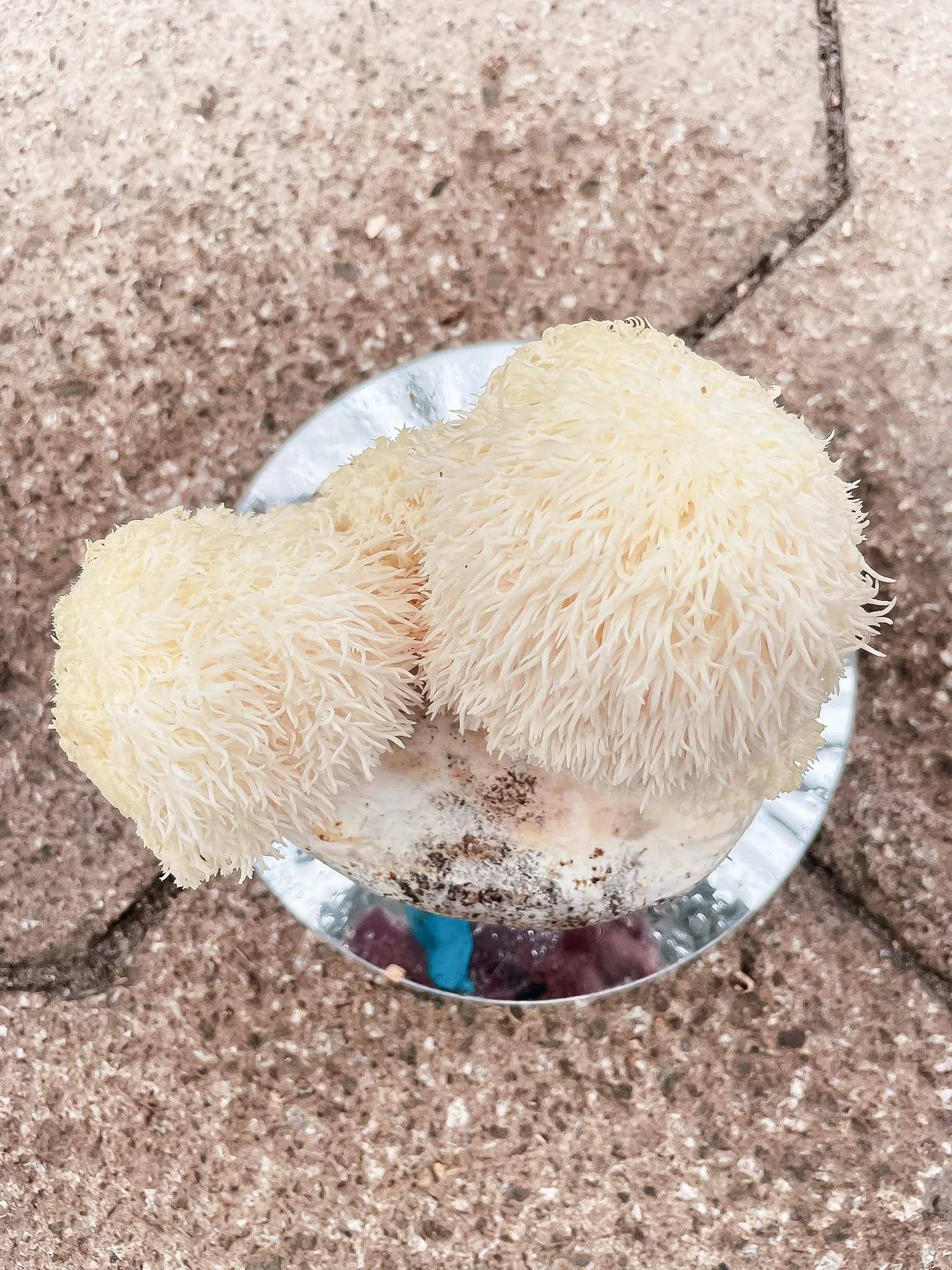
Mushrooms in Kew Gardens — Jessie von Curry
Jessie von Curry
voncurry.com
@voncurry.design
Video:
Turning Seaweed & Fabric Waste into Living Art | Jessie Von Curry at Kew Gardens
Project Credits
PLANTSPEAK
Concept and costume design: Jessie von Curry
Performer: Oliver Chapman
Photography: Jessie von Curry and Antonia Penia
Supported by UAL Procter & Gamble Better Lives Scholarship
Performed at Royal Botanic Gardens, Kew
Seaweed Trousers
Design: Jessie von Curry
Loom design: Vega Hertel
Developed in collaboration with Krystle Moody Wood (Materevolve)
Weaving with Materials as Species workshop participants
Seaweed foraging: Alanna Keiffer (Shifting Tides Northwest)
Photography: Jessie von Curry
Portland, Oregon
Vested Fruits
Concept and design: Jessie von Curry
Photography: Jessie von Curry
Hyphal Body
Commissioned by Royal Botanic Gardens, Kew
In collaboration with London College of Fashion
Design: Jessie von Curry
Photography: Jessie von Curry
Text Nina Zulian