
Design Academy Eindhoven at Dutch Design Week 2026
Design has never been neutral. Even an object that claims no position carries one: in the resources it consumes, the labour it relies on, the bodies it accommodates and the ones it overlooks. At Design Academy Eindhoven's Graduation Show 2026, this awareness is not a theme added to the work afterwards. It is where the work begins.
Often the politics sits in the form itself. A choice of material can carry a history of resistance; an object's shape can decide whether it commands or invites; a craft technique can encode what was never safe to say aloud. Aesthetics, here, is where the argument is made.
Many projects start as investigations. Rather than designing first and justifying later, graduates trace the systems behind things, from state science and resource extraction to the energy infrastructures presented as solutions. Patricia Reed, head of the MA Critical Inquiry Lab, describes this as "constructing good problems", resisting both quick solutions and passive critique.
The designer is also no longer the centre of the story. Materials, landscapes and other species take part in producing knowledge, acting as witnesses, archives and even participants in decision-making. Daniel van der Velden, co-head of the MA Geo-Design, sees graduates approaching the Earth through physical processes that blur familiar distinctions, asking design to feel more while also understanding more.
Questions of whose knowledge counts run throughout. Afaina de Jong, head of the MA Contextual Design, notes that every student arrives from somewhere, but not every somewhere enters the design world on equal terms. Graduates return to archives that colonial and national histories left incomplete, and to craft traditions whose meaning was long hidden or dismissed.
The same scrutiny extends to control and to how a practice survives. Several graduates hand authority back to natural forces, available materials or the public, rather than fixing every outcome in advance. Martina Muzi, art director of this year's show, observes that industries are saturated and socially necessary work may not provide a livelihood. As Joost Jansen, leader of BA Studio Body Building, puts it, it is "okay to be small".
None of this makes the work heavy. Humour, play and participation run through the show, often turning the visitor into part of the work. Imagination here is not an escape from reality but a way of rearranging it.
To call design a political act is not to say every project carries a manifesto. It is to recognise that every form distributes attention, value and agency, and that making something is always a proposal for how the world could be arranged. The fifteen works that follow make those proposals tangible, and invite us to consider which of them we would like to live with.
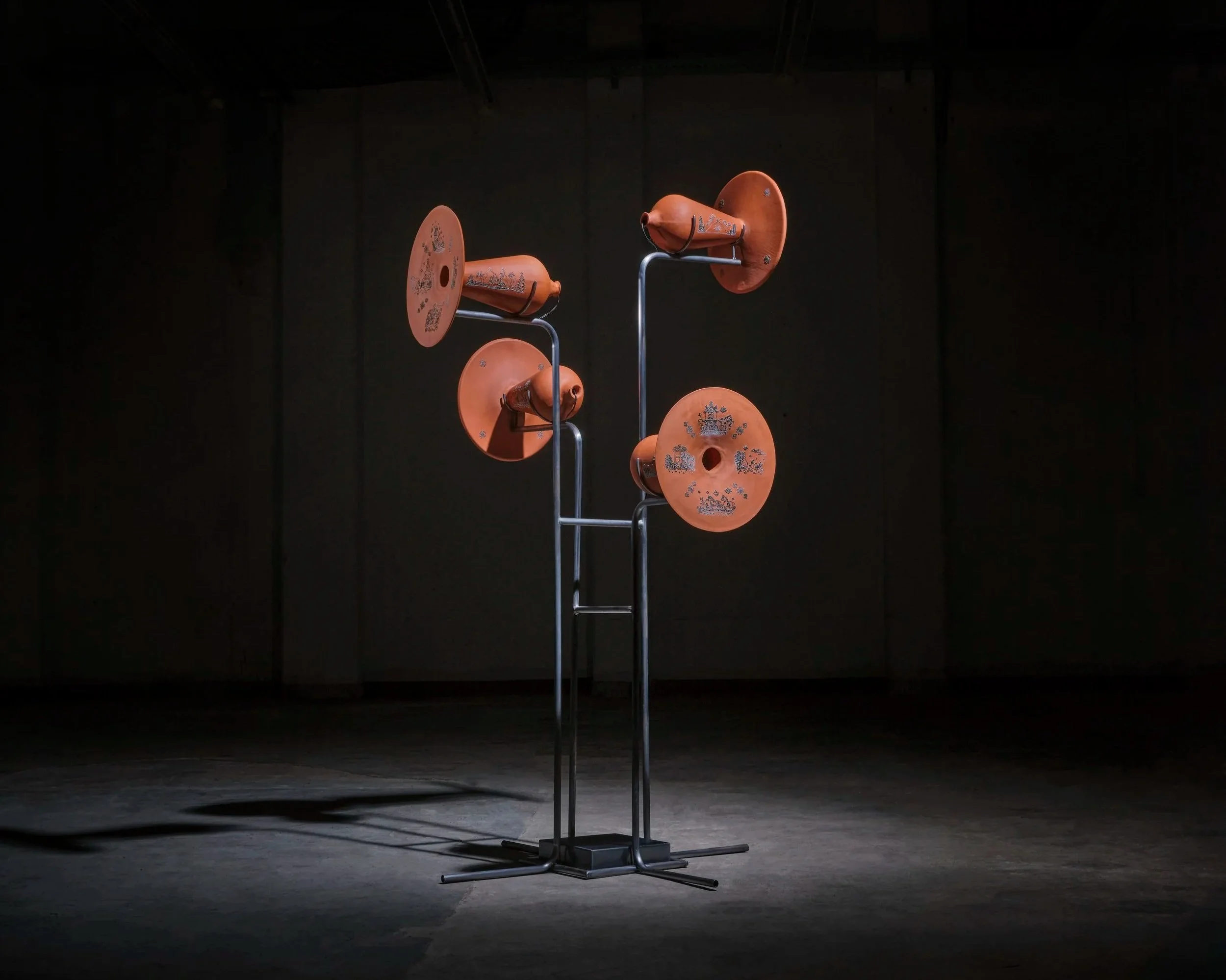
Scarlet Flowers by Aleksandra Alehina | Photo: Carlfried Verwaayen
Scarlet Flowers
Aleksandra Alehina
Each conical piece of red stoneware in Aleksandra Alehina's installation is part megaphone, part imperial vase. From it rises a melody based on chastushka, an improvised genre of Russian folk verse that emerged in the late 19th century and was once used for social commentary. Look closer and laser-engraved ornaments, drawn from cross-stitch embroidery, tell a story of female endurance through symbols such as rabbits and horses. Alehina is interested in how women under patriarchal authority hid meaning inside craft and poetry, and why ambiguous language becomes necessary when speaking plainly is not safe. The work rewards slow attention: its lexicon only opens to those who take the time to decipher it.
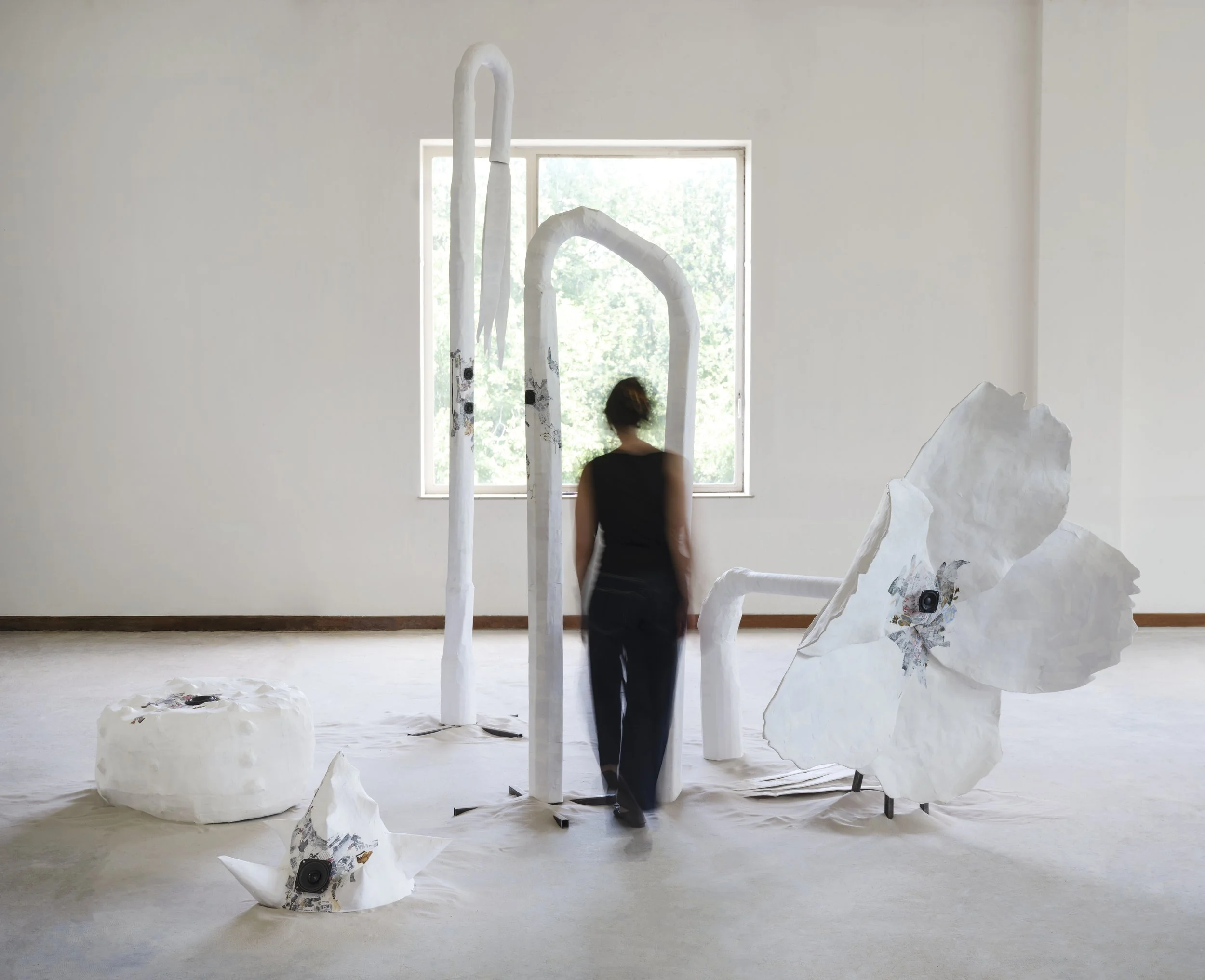
Paraiso PfknR by Mia Domenech Puras | Photo: Carlfried Verwaayen
Paraiso PfknR
The Caribbean is sold as paradise, but Puerto Rico is living through energy, water and displacement crises. US policies framed as economic development have turned the island into a tax haven and luxury destination, making it ever harder for Puerto Ricans to stay in their homes. Mia Domenech Puras answers the postcard with its distortion. A palm tree, a hibiscus, a sea urchin and a seashell, made in traditional Puerto Rican papier-mâché, act as speakers. Their bleached surfaces are layered with collages documenting displacement, while a soundscape mixes protests, political speeches, bomba, plena and reggaeton. The result holds the contradictory sounds through which the island is imagined, contested and lived.
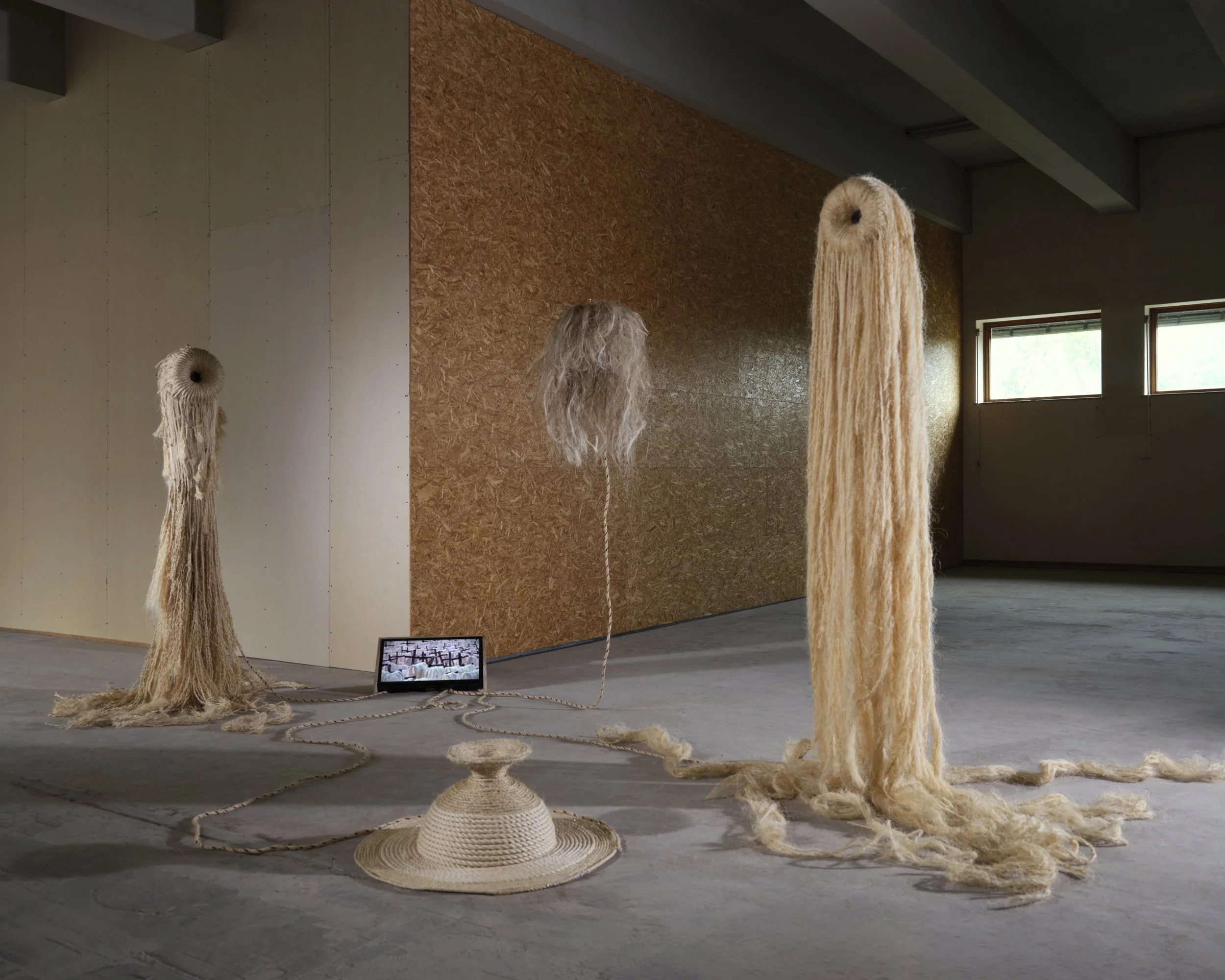
A Living Archive of Fibre by Lilou Lemonnier-Bernede | Photo: Femke Reijerman
A Living Archive of Fibre
In the 1920s, French colonisers introduced sisal to the Androy region of southern Madagascar as a source of durable fibre. The agave, known locally as Taretra Vazaha, displaced native vegetation and became the backbone of colonial supply chains, farmed by the Androy people for decades. Lilou Lemonnier-Bernede pieced together this history through archives and fieldwork in active plantations and abandoned ghost fields. Her installation pairs a silent video with four sculptural bodies woven from sisal that work as speakers, carrying voices, machinery and environmental sound. Choosing sound over text reflects Madagascar's oral traditions, and lets voices missing from written colonial records enter a living archive.
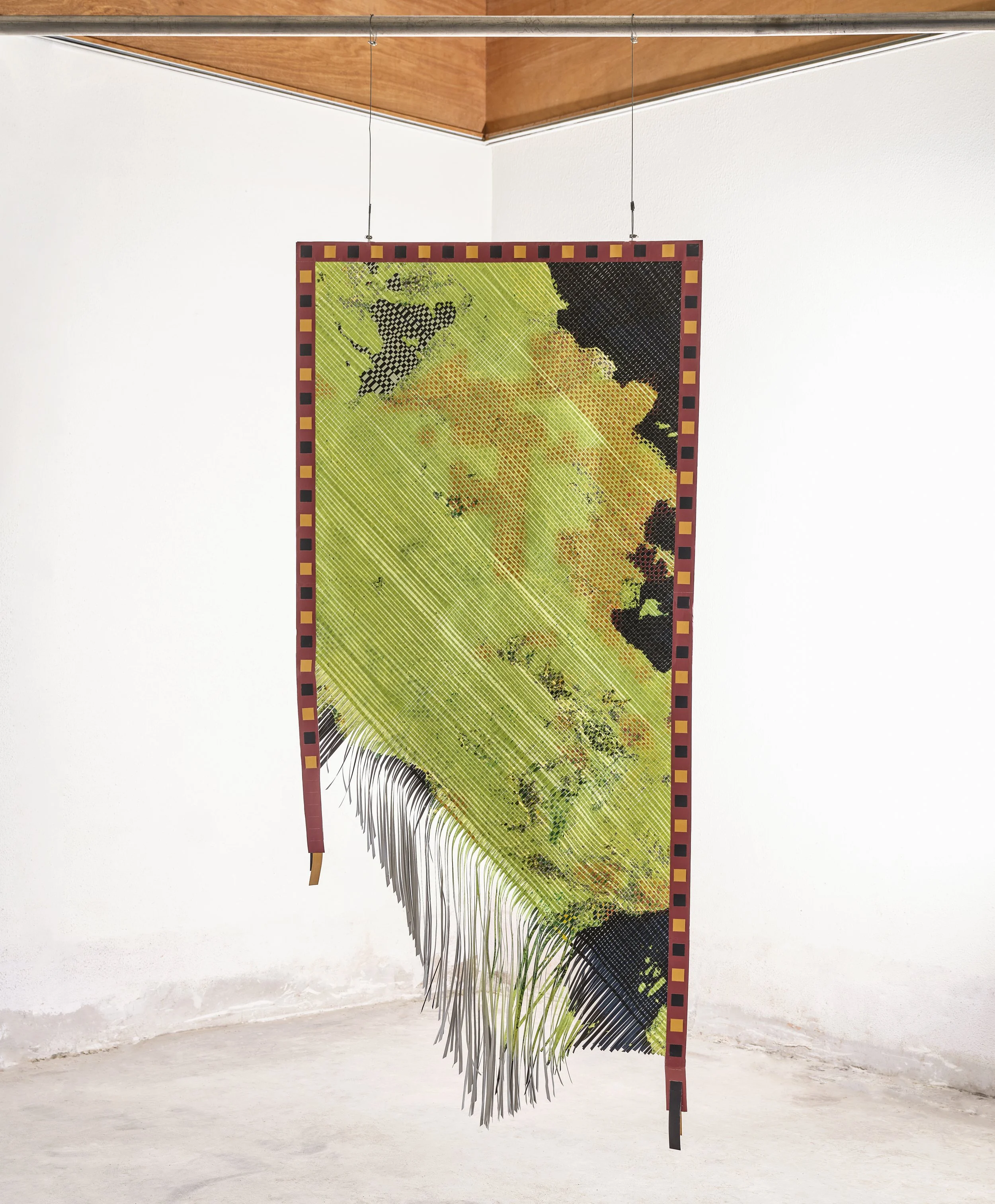
The Last Elevation by Sandra Saffira Desitasari | Photo: Carlfried Verwaayen
The Last Elevation
In Southeast Sulawesi, Indonesia, nickel mining for stainless steel and electric vehicle batteries is clearing the forests where a rare fibre orchid grows. With the orchid goes the Tolaki weaving practice that depends on it. Sandra Saffira Desitasari's installation centres on a woven rug, informed by that tradition, which maps the region's mining concessions. The rug is deliberately unfinished. On its back, a projected video brings together journalists, scientists and Tolaki weavers. Together they show extraction closing in on the orchid's final refuge, and make tangible what is lost in the pursuit of a 'green' future.
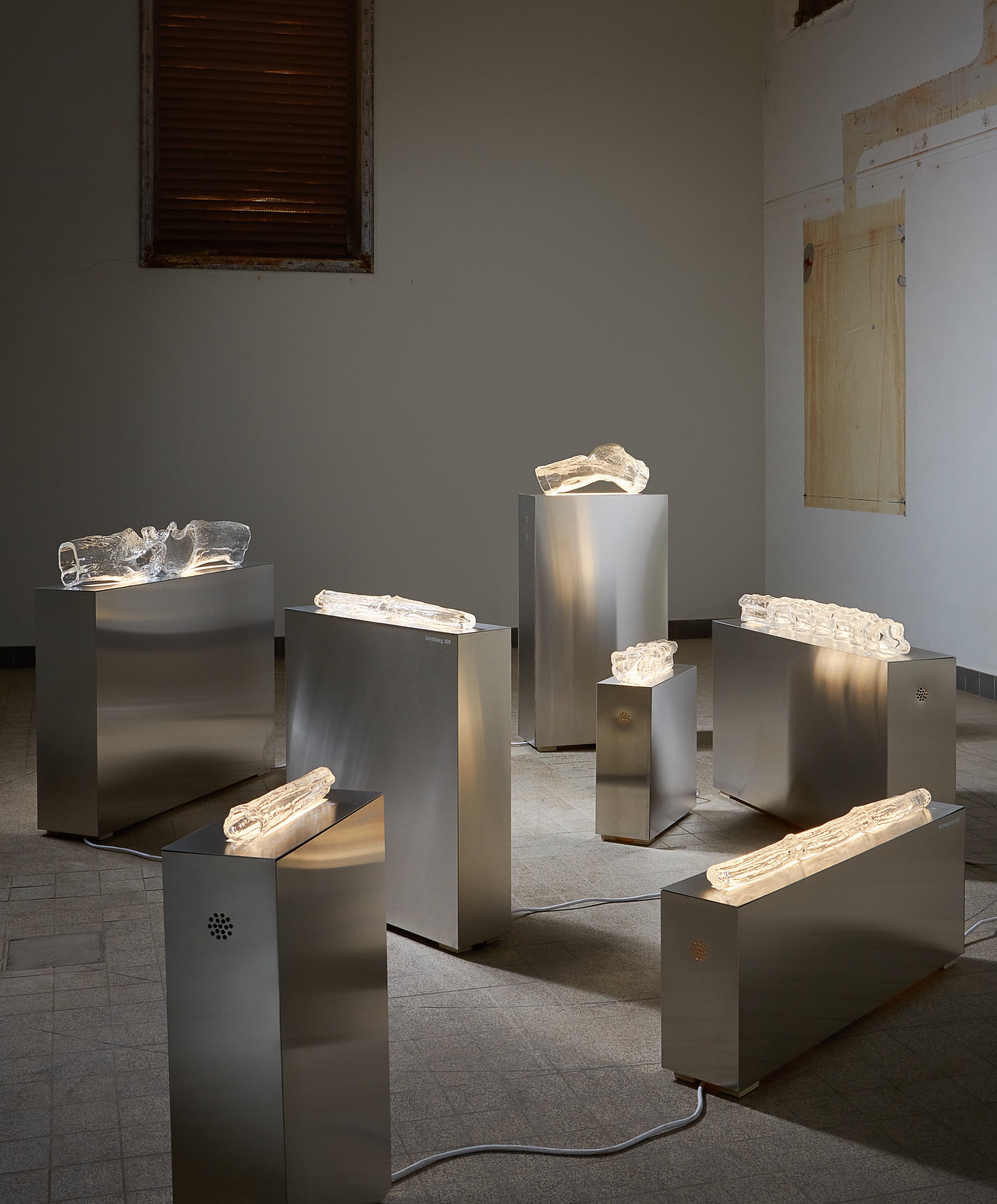
Requiem of a Tree by Hanna Matera | Photo: Nicole Marnati
Requiem of a Tree
In the forests of Lower Silesia, in south-western Poland, many trees have outlived the people who planted them, most of whom were displaced after the post-war border shift. Hanna Matera, who grew up there, reads these trees as non-verbal archives. She inflated molten glass inside hollow trunks collected from the region, producing translucent forms that recall branches, bones or fossils. Raised on aluminium plinths engraved with former German place names and mountain elevations, the sculptures emit whispers and wind recordings in Polish and German. The installation becomes a fallen forest of souls, showing how a landscape can retain lives and histories that political borders tried to divide.
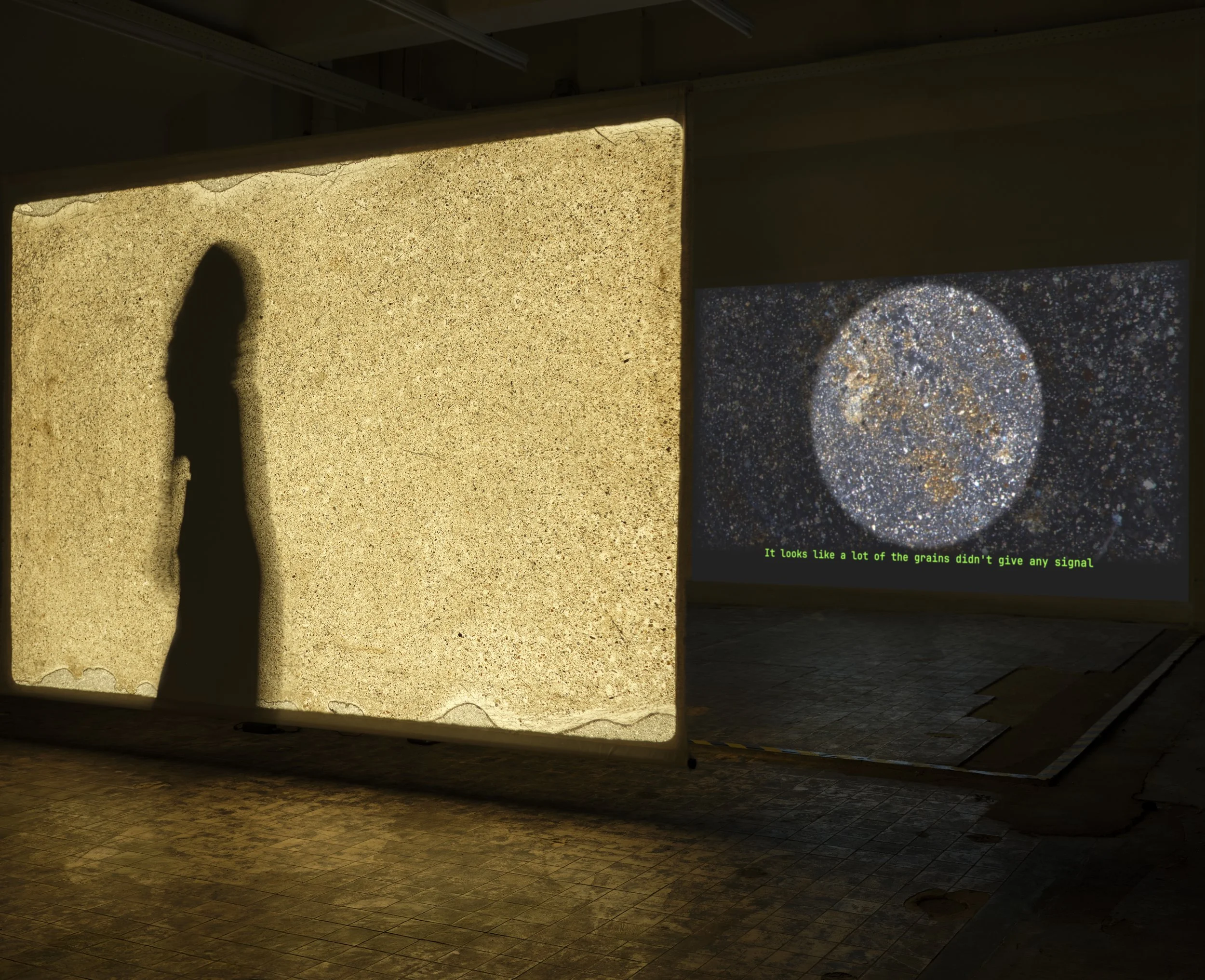
The Dead Are Never Inert by Raghad Saqfalhait | Photo: Carlfried Verwaayen
The Dead Are Never Inert
In Palestinian archaeology, artefacts are extracted, classified and used to build narratives that are weaponised in the dispossession of Palestinians from their land. Raghad Saqfalhait turns instead to what is thrown away: the discarded archaeological soils she calls "the discard of the discard". Her starting point is ash, a fundamental component of these soils, and the Arabic word sakan, meaning both ash and to inhabit. Through film, performance and live analogue projection, she sifts soil beyond the point of scientific value, where it takes on a cosmological dimension. The land appears not as a passive record of the past but as living ground, continually formed through inhabitation and cultivation.
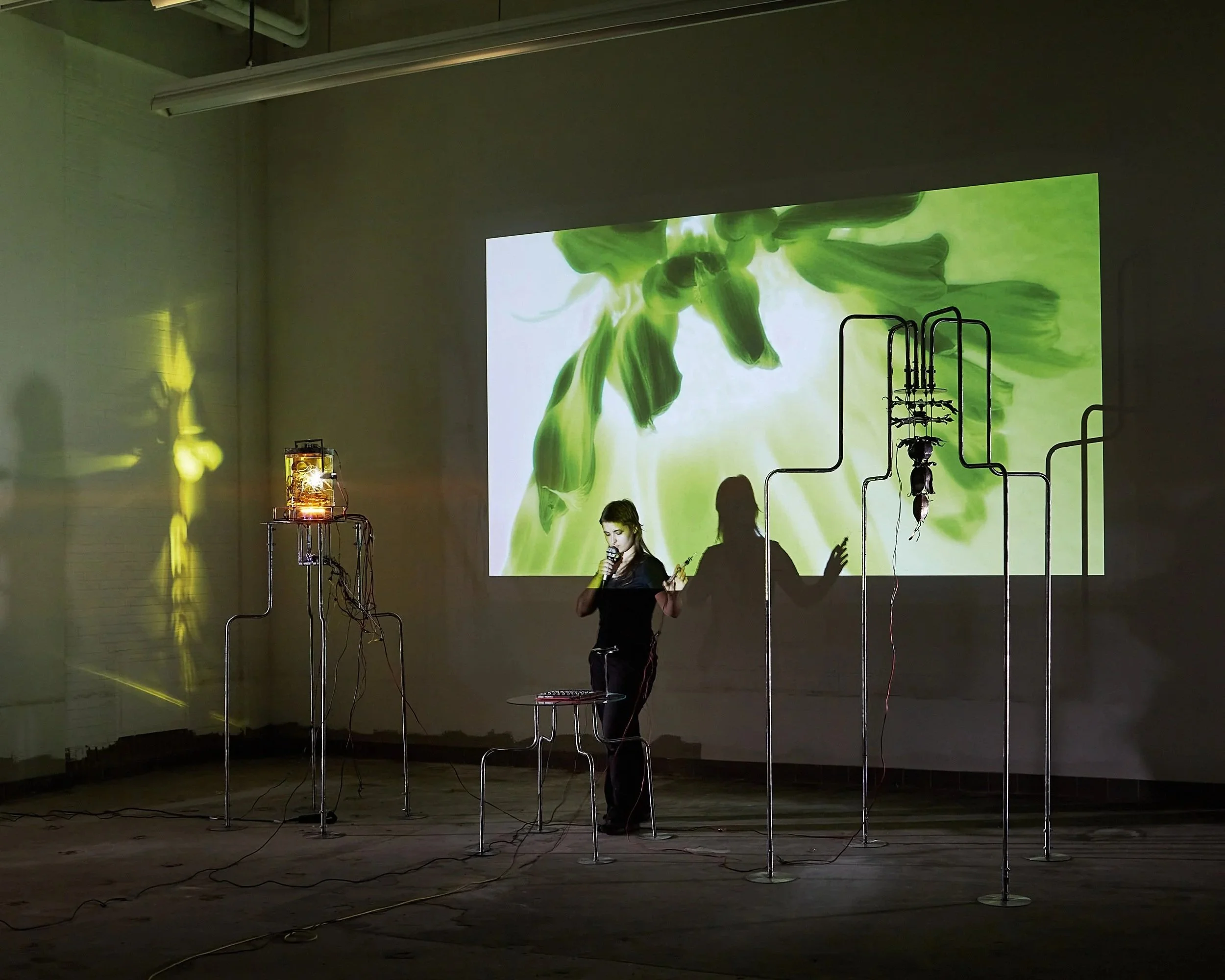
RADIAL – Breed-West, Yield-East by Sabina Scorțanu Iacub | Photo: Nicole Marnati
RADIAL – Breed-West, Yield-East
Between 1950 and 1980, Soviet plant breeders in Moldova used radiation in disputed attempts to raise sunflower oil yields for the national economy. A machine brought in 1972 irradiated a plot known as the GAMMA Field to study genetic effects on crops. Sabina Scorțanu Iacub revisits this obscure history through film, a spoken-and-sung performance, a sonic sculpture and an oil vessel. The vessel is a hybrid, like the modern sunflower: part leftover of Soviet science, part light-emitting clock that follows the plant's daily turn towards the sun. The work asks how political ideology and demands for productivity shape the optimisation of living bodies.
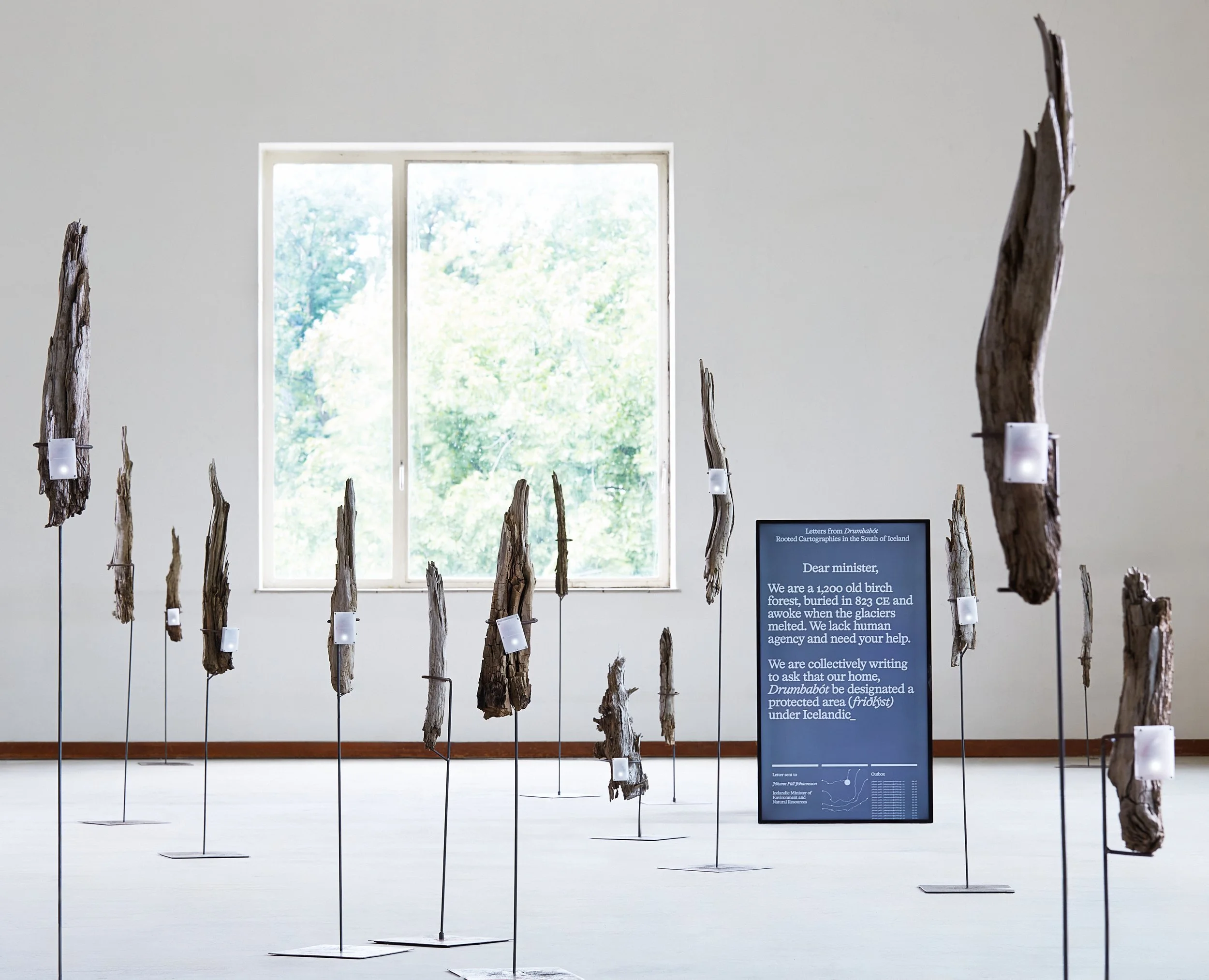
Letters from Drumbabót by Arnar Ingi Viðarsson | Photo: Nicole Marnati
Letters from Drumbabót
At Drumbabót in southern Iceland, ancient birch stumps exposed by glacial retreat are disappearing through erosion, largely unnoticed by the systems that decide which places deserve protection. Arnar Ingi Viðarsson connected stumps recovered from the site to sensors that record their unique radiation signatures. These signals are converted into typed letters and sent as petitions to Icelandic government officials, through the same channels any citizen would use. Arranged as a fragment of the original landscape, the installation treats the trees as active agents rather than resources. It imagines a present in which the more-than-human world takes part in the bureaucratic decisions that shape it.
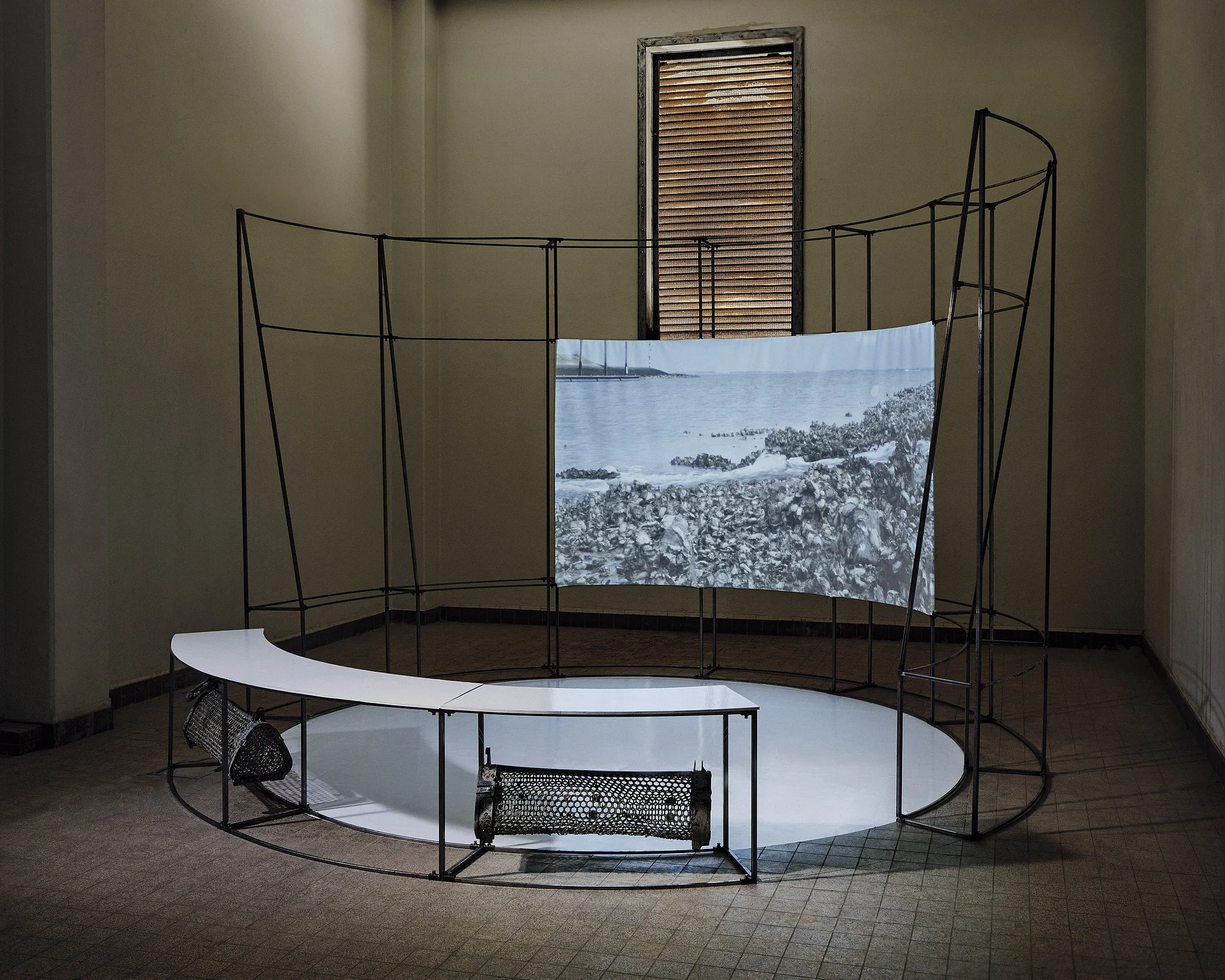
Cultchless by Meret Behnke | Photo: Ronald Smits
Cultchless
In the wild, an oyster larva drifts until it finds a hard surface, then cements itself there for life and becomes part of a reef. 'Cultchless' is named after the cultivation method that prevents this attachment, keeping farmed oysters mobile and harvestable. Meret Behnke's moving-image installation centres on that interrupted moment. From it grows a wider question of value: the oyster appears in turn as luxury food, invasive species and ecological engineer, its worth shifting with the systems that encounter it. The work asks what is obscured when living beings are understood mainly through what they provide, and what it would mean to attend to their relationships instead.
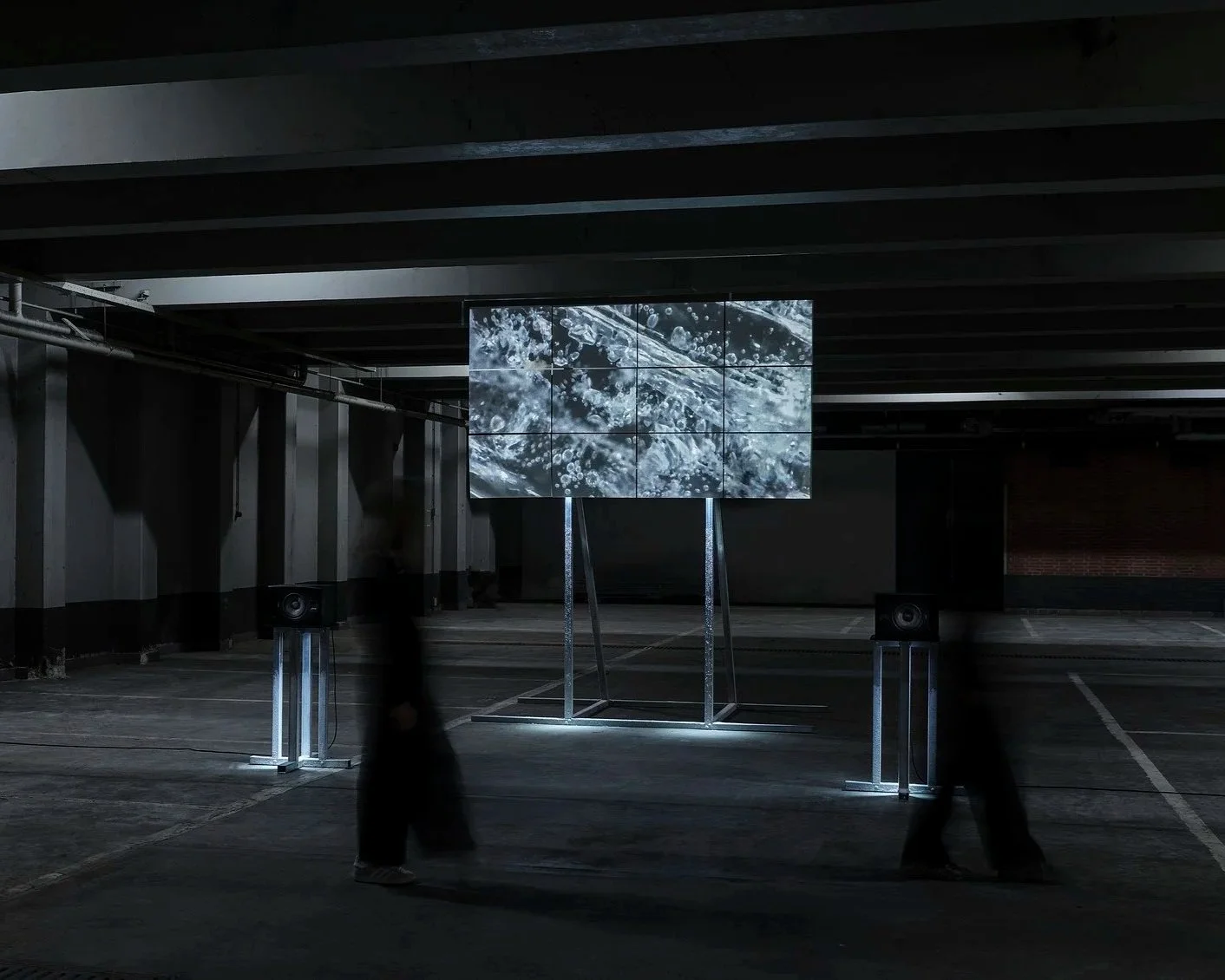
A Matter of Salt by Josephine Conen | Photo: Carlfried Verwaayen
A Matter of Salt
For more than a century, potassium salt extraction has reshaped the River Werra in Germany. Josephine Conen's video installation works with the idea of shifting baseline syndrome: the tendency of each generation to mistake the environment it inherits for the way things have always been. Documentary footage is blended with personal testimony, treating lived sensory experience and acts of witnessing as environmental evidence. The video is projected onto a salt-coated, billboard-like structure that echoes the signage of the region's extraction zone. Where those signs once spoke of industrial prosperity, Conen's version carries stories that resist the normalisation of ecological harm.
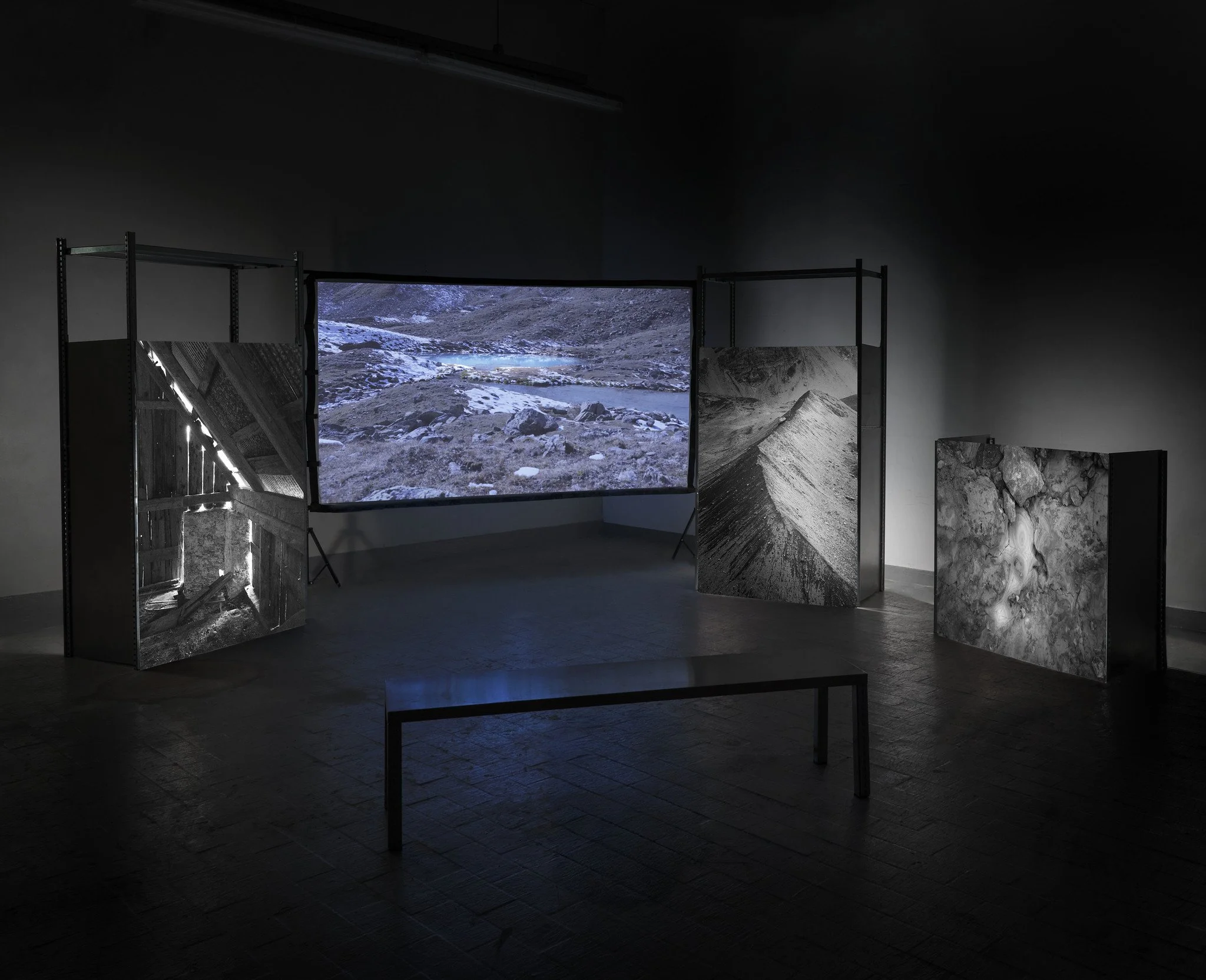
Where the stone moves by Costanza Sacher | Photo: Carlfried Verwaayen
Where the stone moves
In Val Venosta, South Tyrol, melting rock glaciers release heavy metals trapped in pyrite into the rivers below, a little-known process called acid rock drainage. Costanza Sacher's 17-minute documentary follows the river downstream, combining field recordings with conversations with scientists and shepherds. Larvae of the alpine midge Diamesa steinboecki serve as biological witnesses to change largely invisible to the human eye. Illuminated photographic structures, viewed in the round, extend the film beyond the screen. The project asks for sustained attention to the slow, interconnected ways climate change reshapes mountain landscapes, and brings scientific knowledge into dialogue with lived experience.
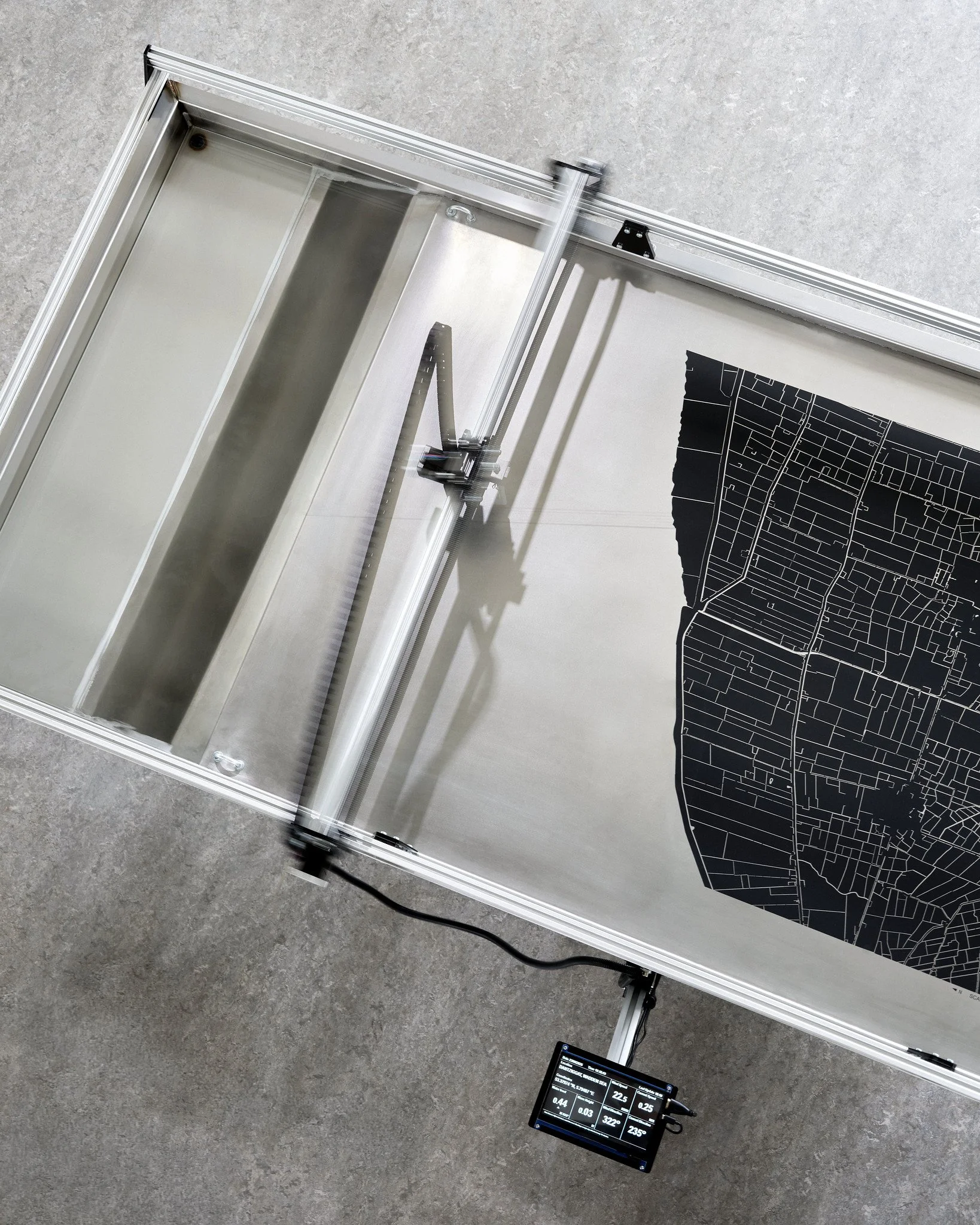
Dissolving Edges by Siri Heidweiller | Photo: Femke Reijerman
Dissolving Edges
Few traditions are as Dutch as fixing the line between land and water. Siri Heidweiller's drawing machine questions it. Focusing on the Wadden Sea, where human intervention has restricted the natural movement of the coast, she built a plotter that stands between two basins of water and ink, representing sea and land. Live measurements of tides, waves and wind direct a brush across a printed map of the Wadden coast, gradually eroding and redistributing its outline. As the machine runs, the boundary becomes an evolving gradient. The work proposes that responses built on control could be unlearnt, in favour of listening to and living with forces we cannot fully predict.
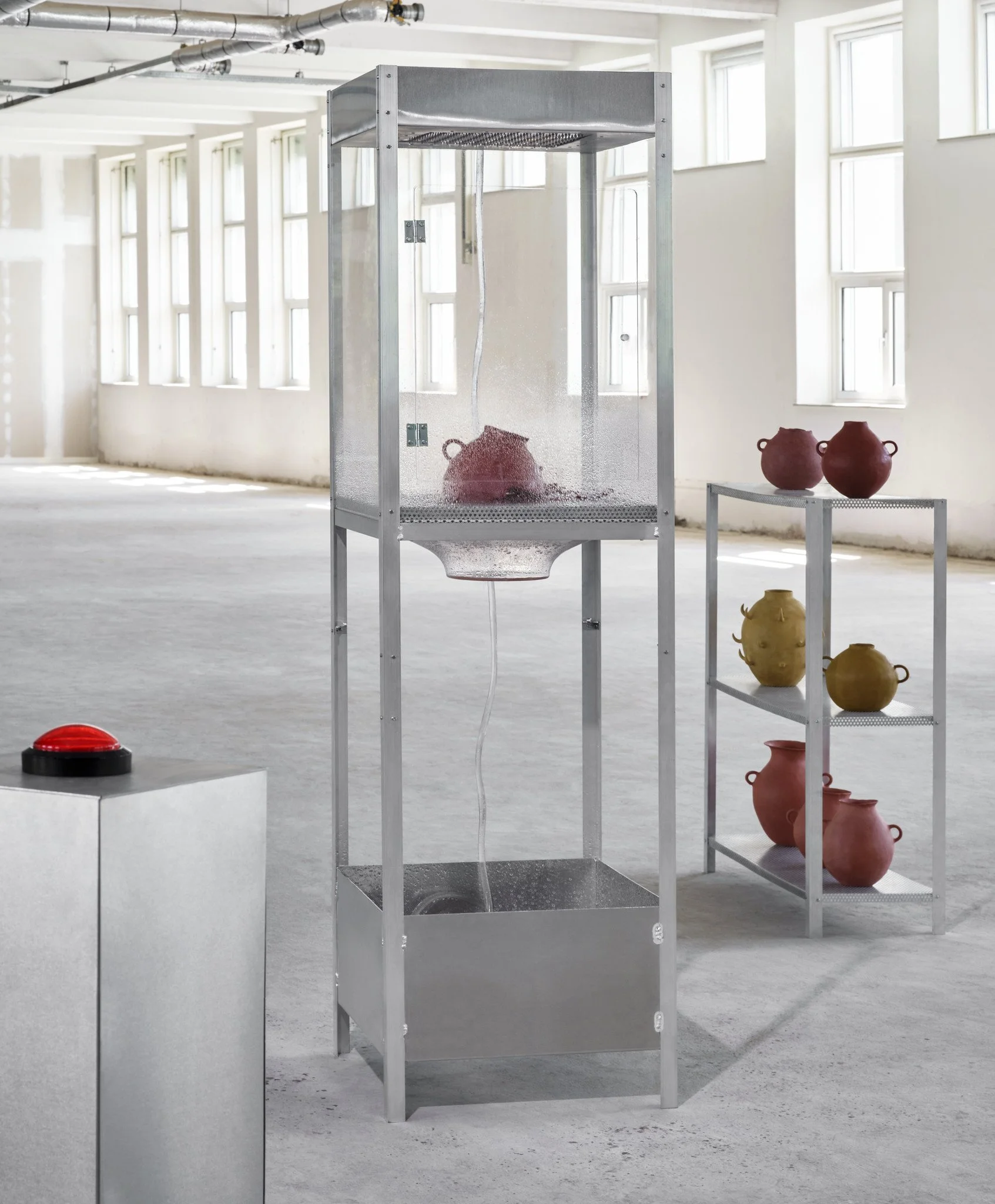
This Might Last Forever by Matilde Bovo | Photo: Carlfried Verwaayen
This Might Last Forever
Consumerism runs on ever-faster cycles of making, buying, using and discarding, and even artisan objects have become status symbols. Matilde Bovo turns this critique on her own practice with clay, a material that can last millennia once fired yet takes repeated trial and error to master. Her installation is a test for the public. Unfired clay vases are placed in a rain machine and offered for sale for a limited time, after which water slowly destroys them. A visitor can halt the destruction by buying a vase and deciding how the maker will complete it. Ownership becomes a matter of responsibility for an object's existence, not only desire for it.
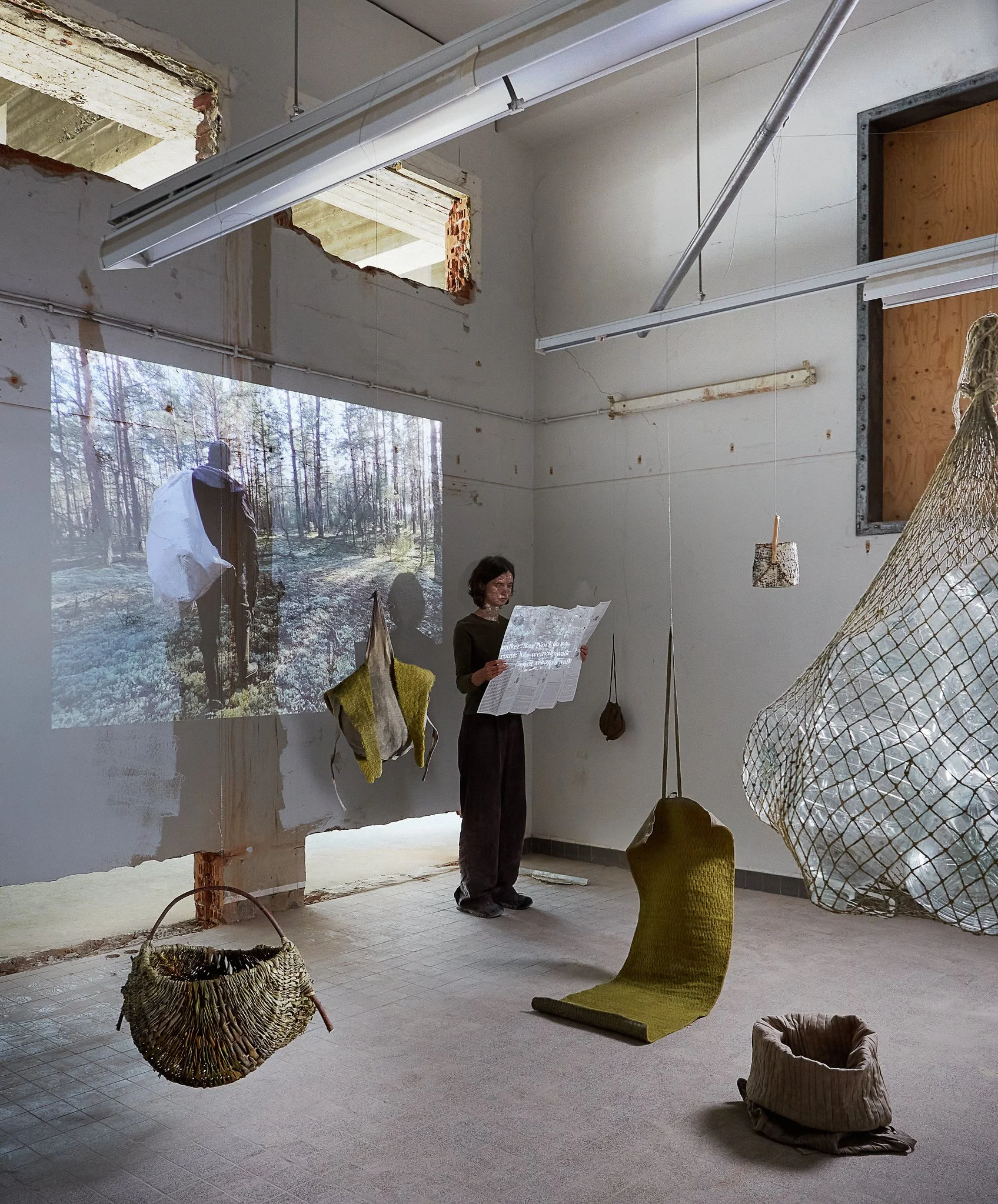
Forest Walker Method by Vikenė Vaitkevičiūtė | Photo: Nicole Marnati
Forest Walker Method
In Lithuania, accelerating forest clearance has sharpened public debate, while traditional relationships between people and forests have recently been recognised as national heritage. Vikenė Vaitkevičiūtė asks whether these relationships can be reconciled through everyday practice and design rather than ideology, moving beyond the binary of extraction and preservation. Working with local forest walkers, she transformed materials gathered along their paths into seven handcrafted bags, each tracing an individual walker's story and accompanied by a film and a guide. The project proposes design as a way of cultivating lasting relationships with place, and walking as a practice of gathering, observation and care.
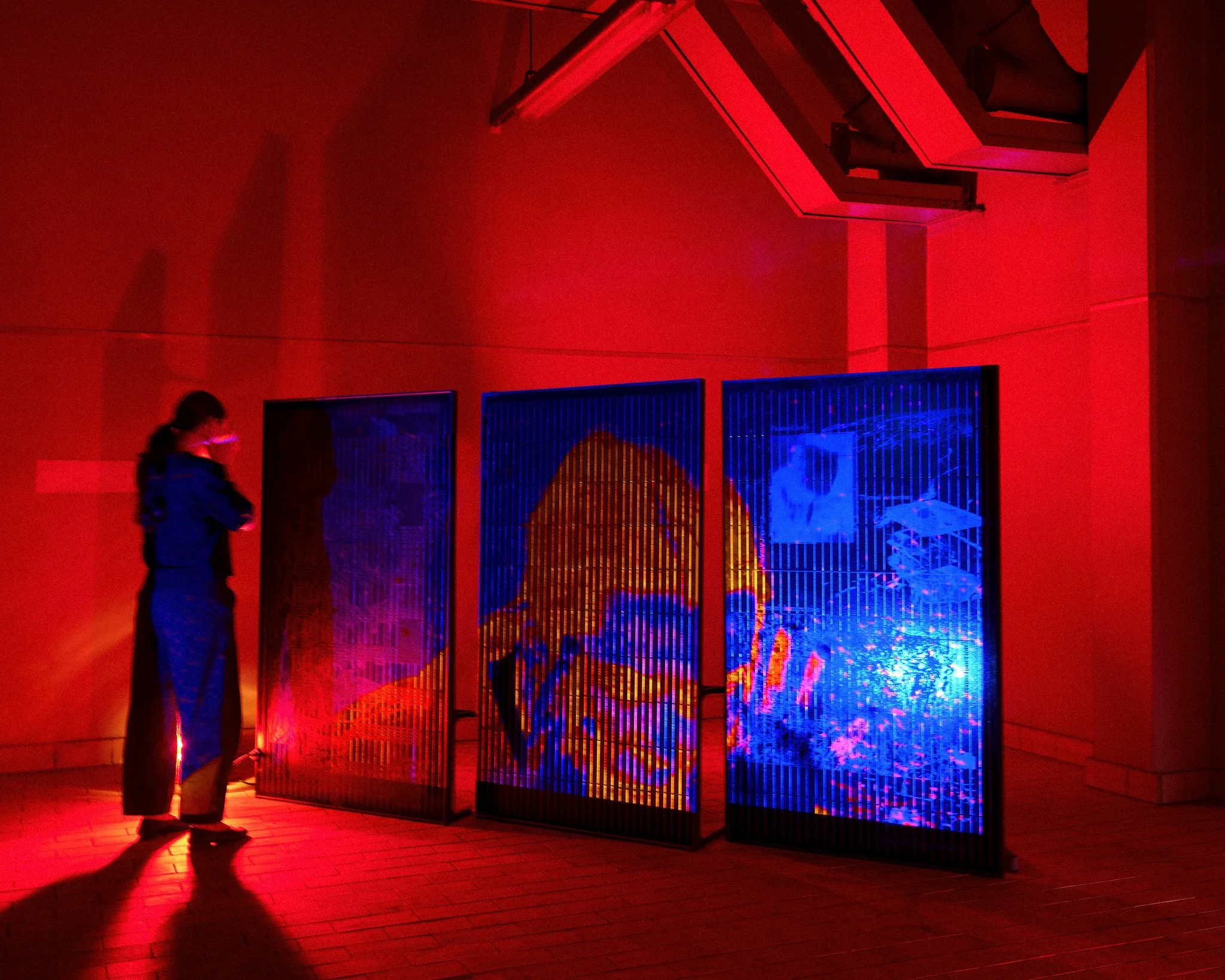
The Solar War-Machine by Adam Białek | Photo: Femke Reijerman
The Solar War-Machine
Renewable energy is often presented as inherently emancipatory, a solution to political and economic crises. Adam Białek questions that assumption. His installation, subtitled I've dreamt of solarpunk erotica, examines how photovoltaic technology remains embedded in the logic of the petro-economy, where energy is a geopolitical instrument of control. The work restages a political forum. A choreography captured in infrared is registered by solar panels, converted into heat and released into the room, while a thermal surveillance camera monitors both the system and its audience. As the temperature rises, bodies, infrastructure and technology merge into a single thermodynamic assemblage, and the conditions under which energy futures are imagined come under scrutiny.
Exhibition: Design Academy Eindhoven, Graduation Show 2026, Dutch Design Week 2026
Graduation Show art director: Martina Muzi
Sources
Graduation Show 2026 catalogue, Design Academy Eindhoven
"Education Designs Possibilities", preface by Raf De Keninck and Martina Muzi
"A World That Looks Back: Designing Our Bearings", essay by Nadine Botha, drawing on conversations with DAE's BA Studio Leaders and MA Department Heads
Project descriptions adapted from the designers' texts in the catalogue
Quoted
Patricia Reed (MA Critical Inquiry Lab), Afaina de Jong (MA Contextual Design), Daniel van der Velden (MA Geo-Design, with Vinca Kruk), Martina Muzi (BA Studio Technogeographies), Joost Jansen (BA Studio Body Building). Quotes taken from Nadine Botha's essay in the catalogue.