
Textile and interaction designer Katrijn Westland combines knit, pneumatics and conductive yarn to make companions that ask to be cared for, and respond in return.
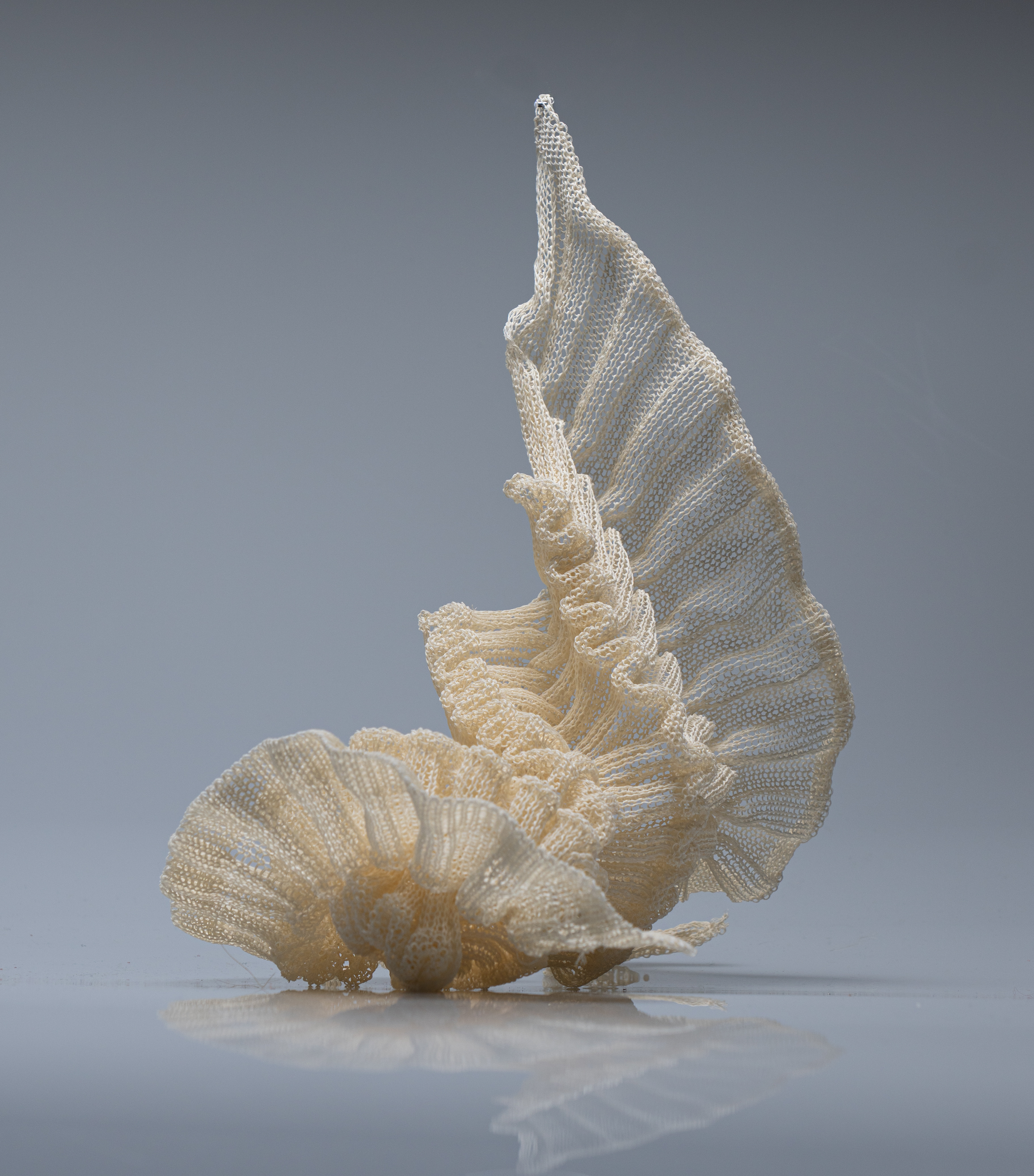
Soft Companions: A Breathing Textile Creature for Sensory Rituals of Care By Katrijn Westland
Loneliness is rarely about an empty room. It is not the same as being alone: a person can live by themselves and feel content, or sit among family and colleagues and feel unseen. The World Health Organization describes loneliness as the painful gap between the connections we want and those we actually have, and distinguishes it from social isolation, the measurable lack of contact with others. Its causes are layered, from poor health and low income to living alone, a lack of shared community spaces and the way digital technologies reshape how we meet. It affects every age group, with the highest rates reported among teenagers and young adults, and last year the WHO’s Commission on Social Connection found that 1 in 6 people worldwide is affected. Design cannot solve something this complex, but it can explore some of its quieter dimensions, especially the bodily and sensory ones. This is where Katrijn Westland’s Soft Companions begin.
Westland came to the subject through her earlier career as a nurse, supporting people with diverse care needs, often at moments when they were at their most fragile. In that work, she saw how much of what sustained them went beyond practical assistance. The presence of another being, physical touch, small daily rituals and the feeling of still being needed carried as much value as the care itself, yet were rarely recognised as part of it. Soft Companions grows from that observation, shifting attention from utilitarian interaction, where an object simply serves its user, towards reciprocal sensory exchange. The companions offer warmth or a calm breath, and invite grooming or a light stroke back.
Soft Companions is a series of creature-like textile pieces, each with its own way of responding. The one Westland has developed furthest is built like a body. The knitted textile is its skin, an inflatable lining inside works like an organ that fills and empties with air, and a single touch is enough to wake it.
Once activated, it inflates and deflates in a box-breathing cycle: four counts in, hold, four out, hold. Worn on the chest, shoulder, belly or back, it sets a regular pace that the body tends to follow, drawing on research showing that people synchronise their respiration with others when the pattern is predictable. The textile is also infused with a calming scent of lavender and bergamot, and with repeated use, Westland suggests, the interaction may become part of a calming routine.
The key idea for designers lies in the movement. As it swells, the creature lifts and folds as though struggling to stand, then collapses gently as the air escapes. Westland describes this as a “slightly clumsy and vulnerable presence”, referencing studies in which perceived clumsiness in care robots prompted people to help. The knit reinforces the effect: it is intentionally hairy and delicate, so it invites grooming. While the object calms the user’s breath, the user tends its fur.
Two techniques make this possible. Pneumatics, the use of air pressure to create movement, allows the knit to rise and sink without rigid mechanical parts. Conductive yarn, spun with metal fibres that carry small electrical signals, turns the textile itself into a sensor that responds to contact.
Alongside it, the rest of the series extends this vocabulary. Combining naturally dyed knits with pneumatic and mechanical systems, these pieces purr when satisfied, stroke the shoulders, and give off heat and light.
None of this replaces another person in the room, and Westland does not claim it does. What the companions offer is smaller and perhaps more specific: the chance, for a few minutes each day, to look after something that responds. For anyone who has lost the sense of being needed, that simple act of care can matter more than it first appears.
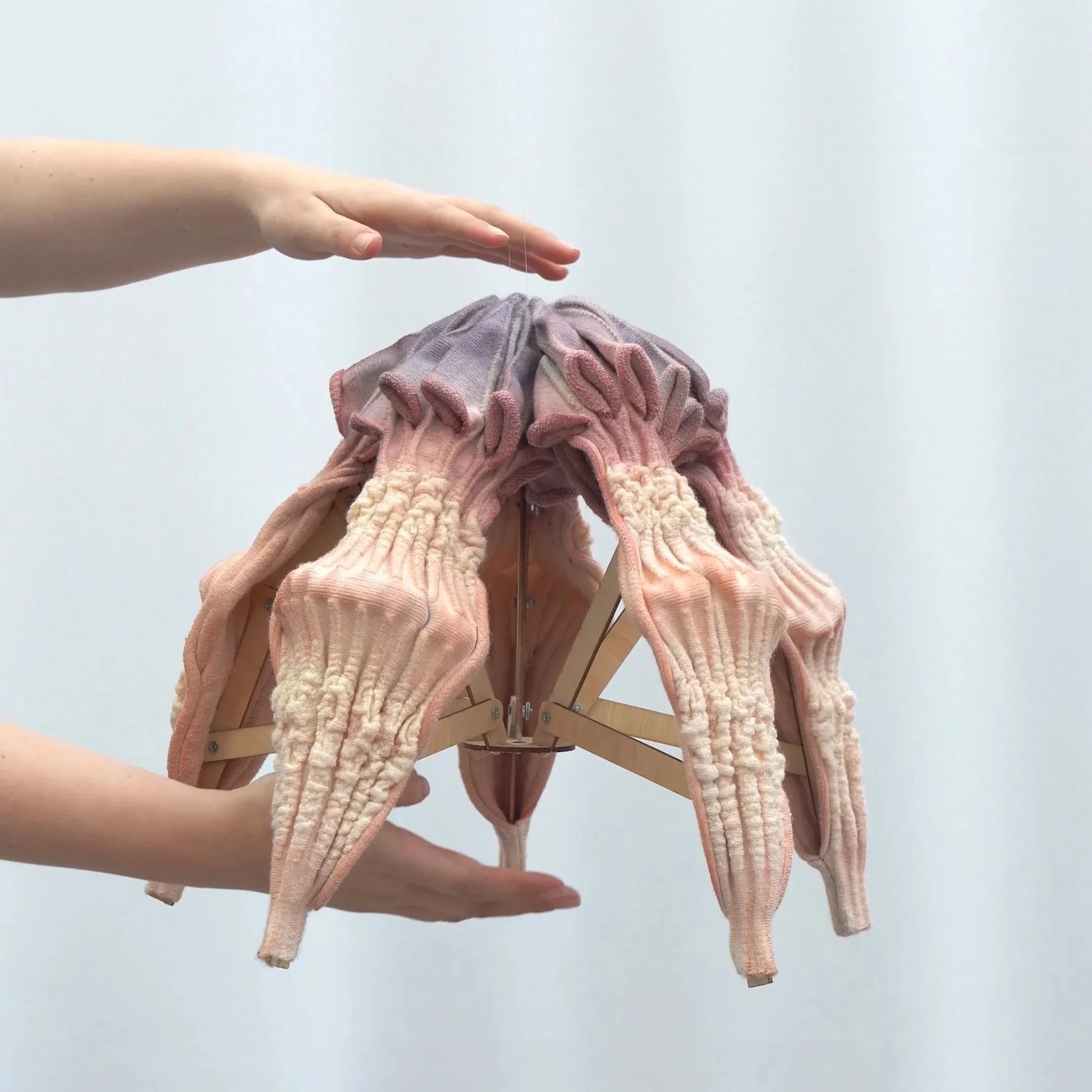
Soft Companions: A Breathing Textile Creature for Sensory Rituals of Care By Katrijn Westland
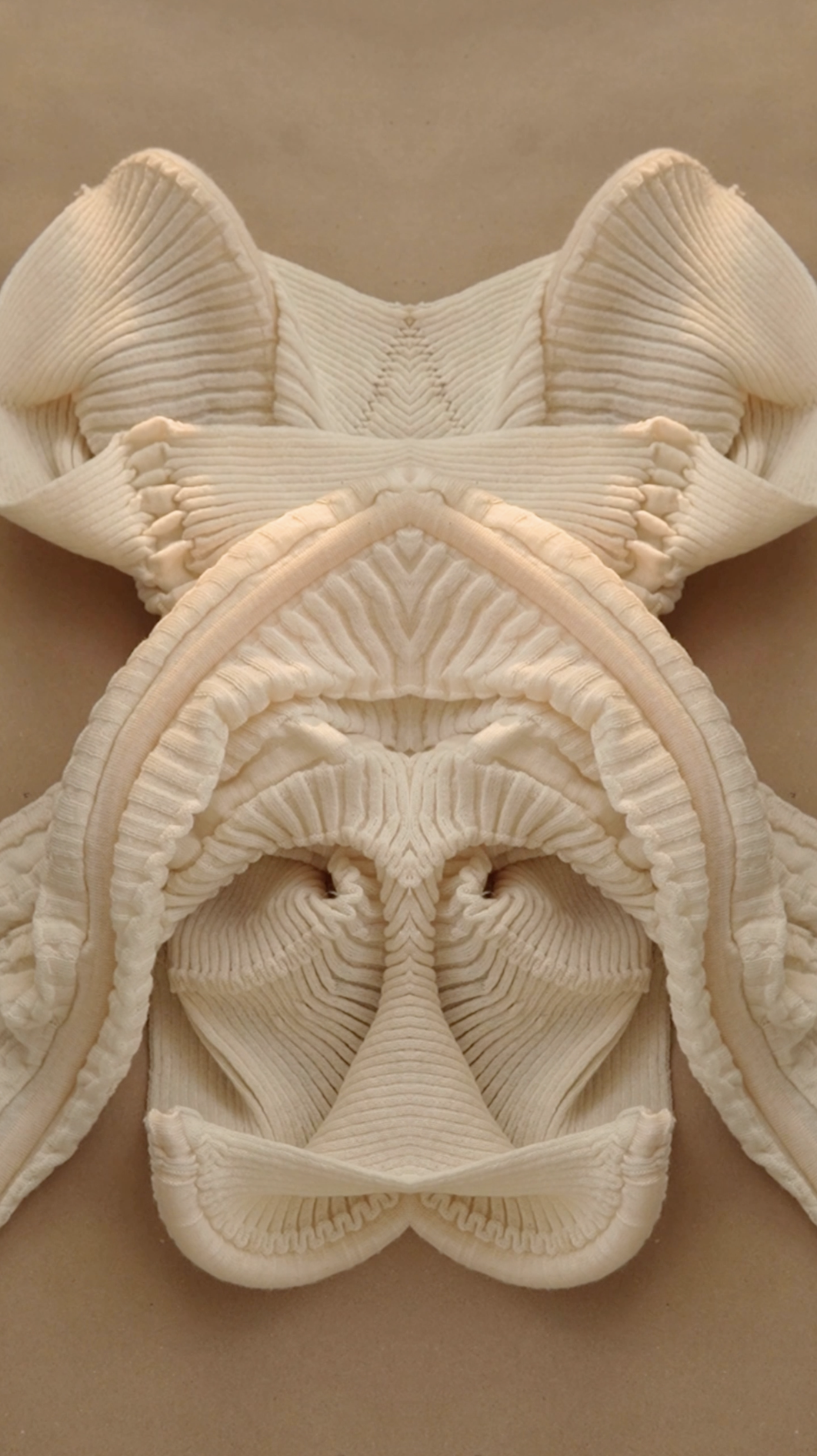
Soft Companions: A Breathing Textile Creature for Sensory Rituals of Care By Katrijn Westland
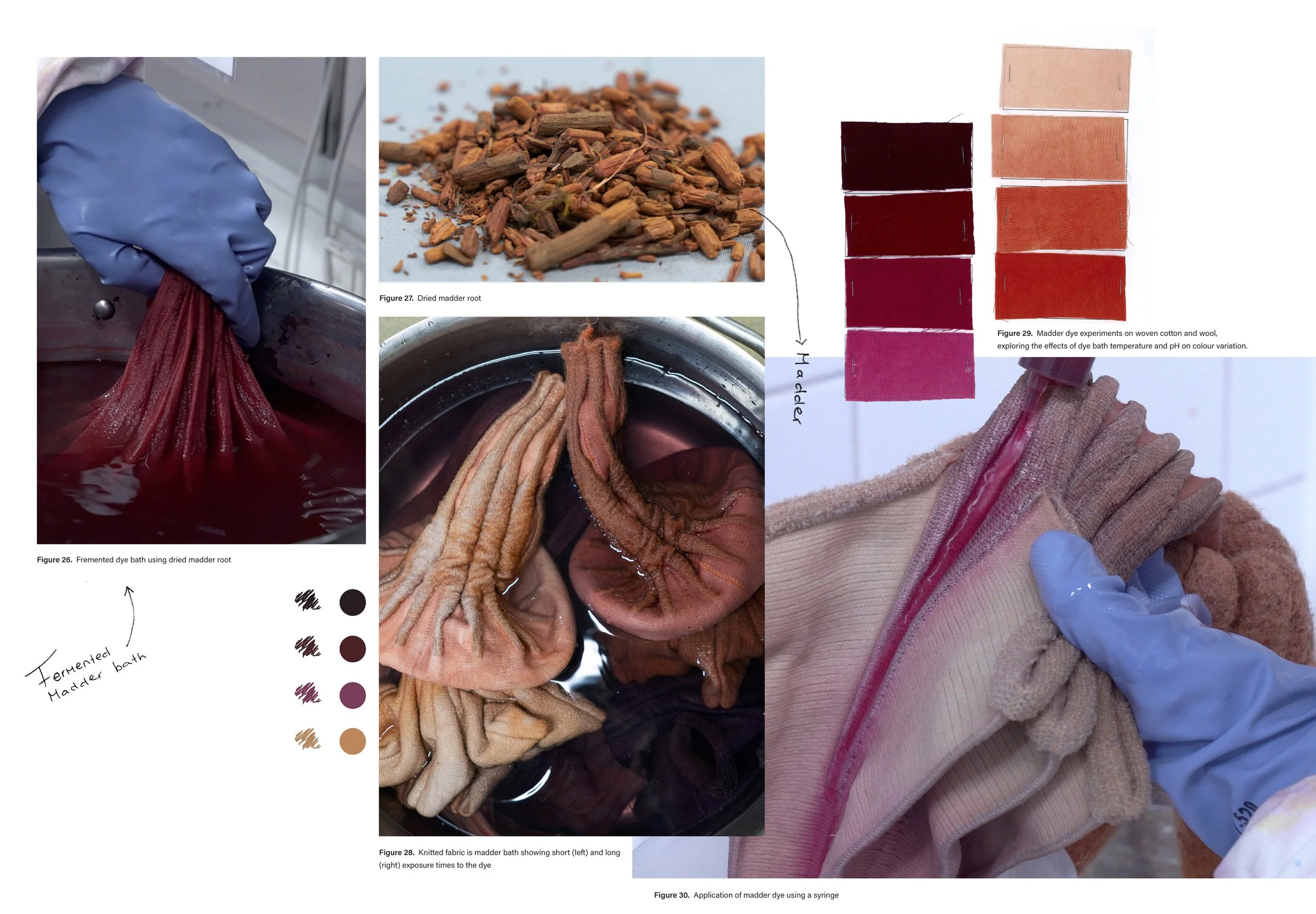
Soft Companions’ work in progress: natural dyes research by Katrijn Westland
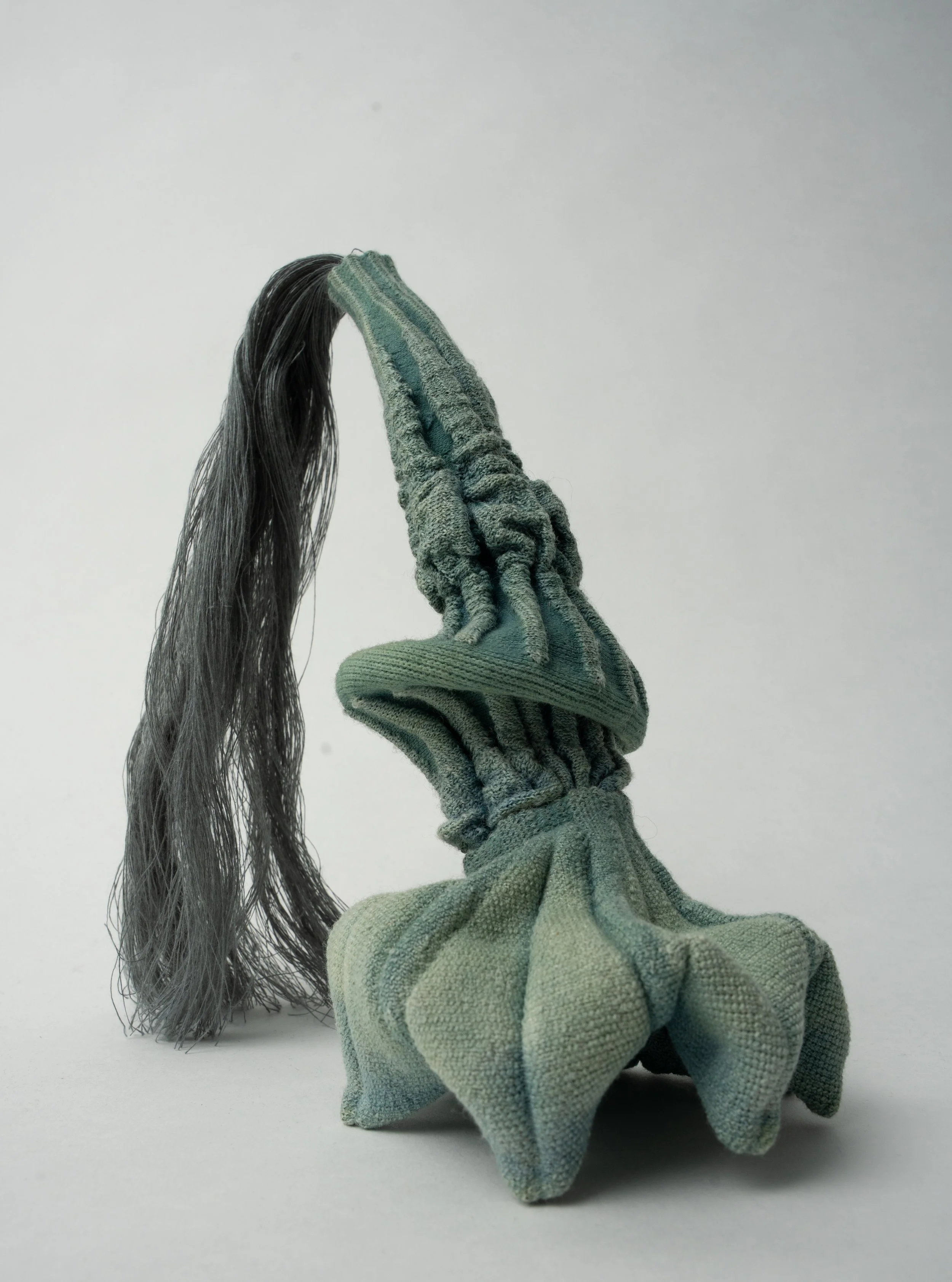
Soft Companions: A Breathing Textile Creature for Sensory Rituals of Care By Katrijn Westland
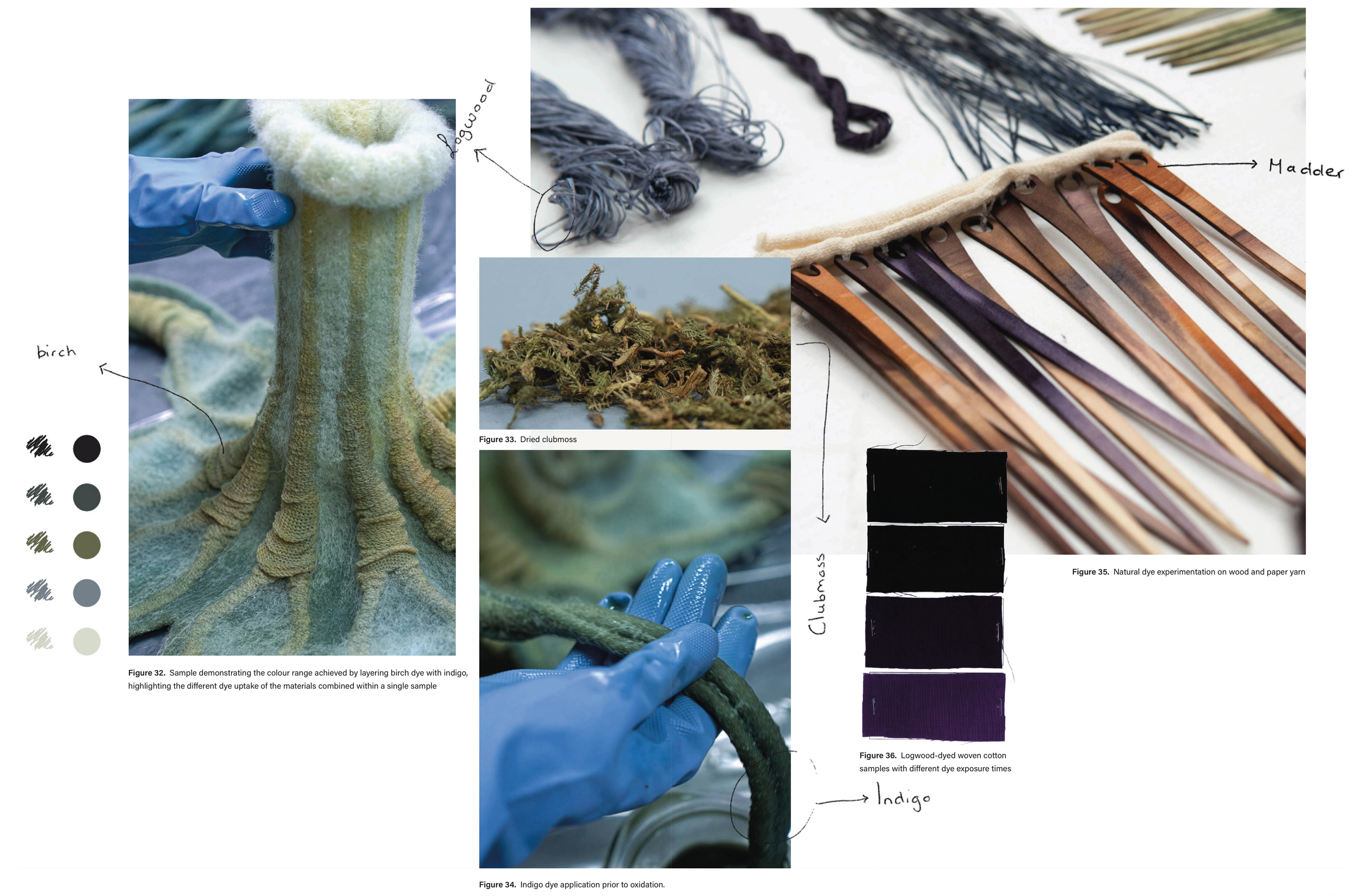
Soft Companions’ work in progress: natural dyes research by Katrijn Westland
Soft Companions is on show at Dutch Design Week 2026 - Klokgebouw
About the designer
Katrijn Westland is a textile and interaction designer working with e-textile principles, knitted structures, inflatables and natural dye processes. Her practice investigates animacy and reciprocal care through soft, responsive textiles that blur the boundaries between object, body and companion.
Design & Research
Katrijn Westland
@katrijnwestland
Video: Celine Caly
Photography: Kasper Heden and Katrijn Westland
Words
Nina Zulian with Claude (Anthropic)