
Adrián Salvador Candela’s Journey through Craft
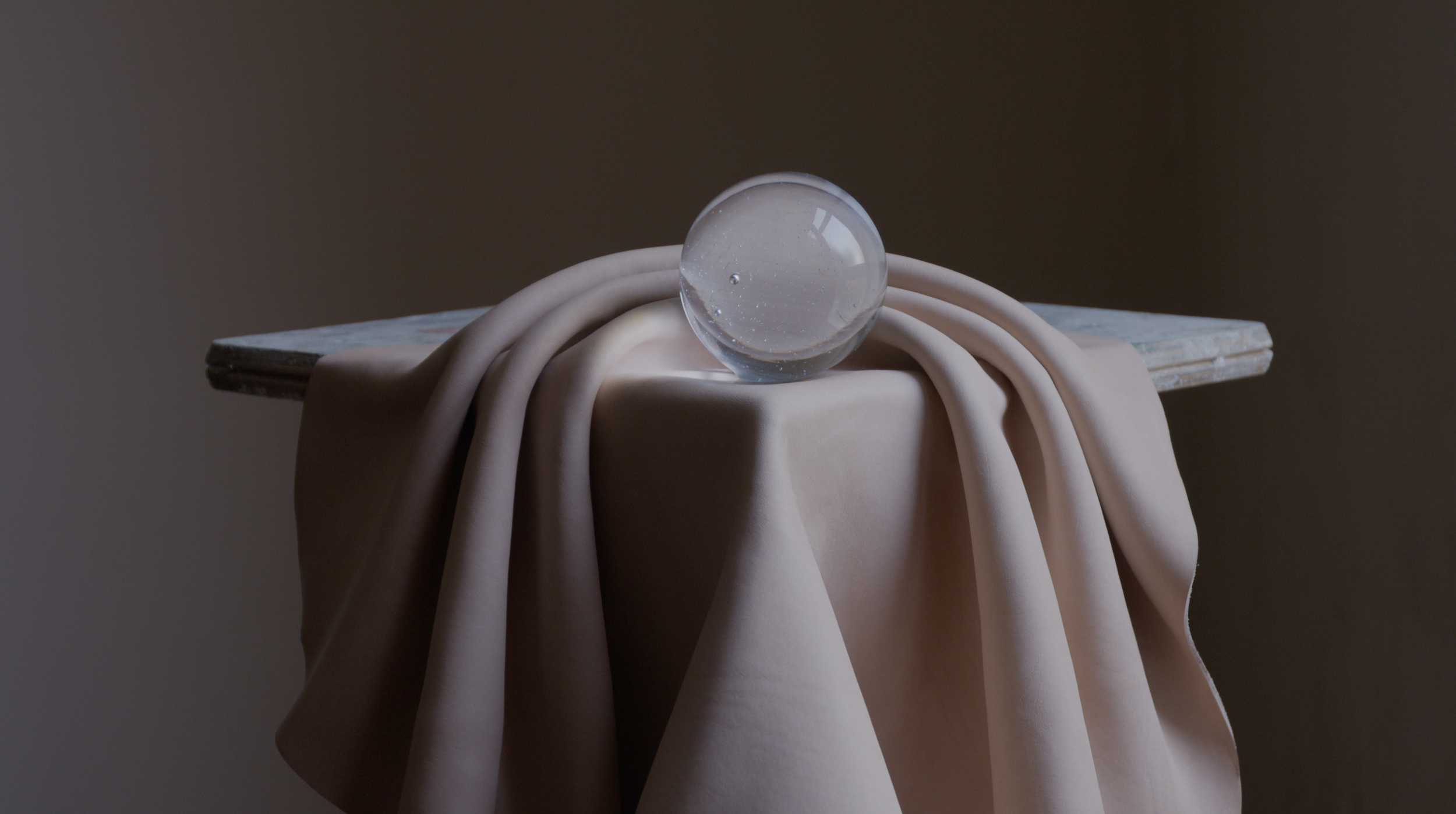
Spanish designer and researcher Adrián Salvador Candela invites us into a world where materials transcend their ordinary roles, becoming vessels of memory, emotion and time. His recent project, Epiphytic Objects and the Stratified City — developed during his residency at the Royal Academy of Spain in Rome — intertwines traditional craftsmanship with contemporary reflection.
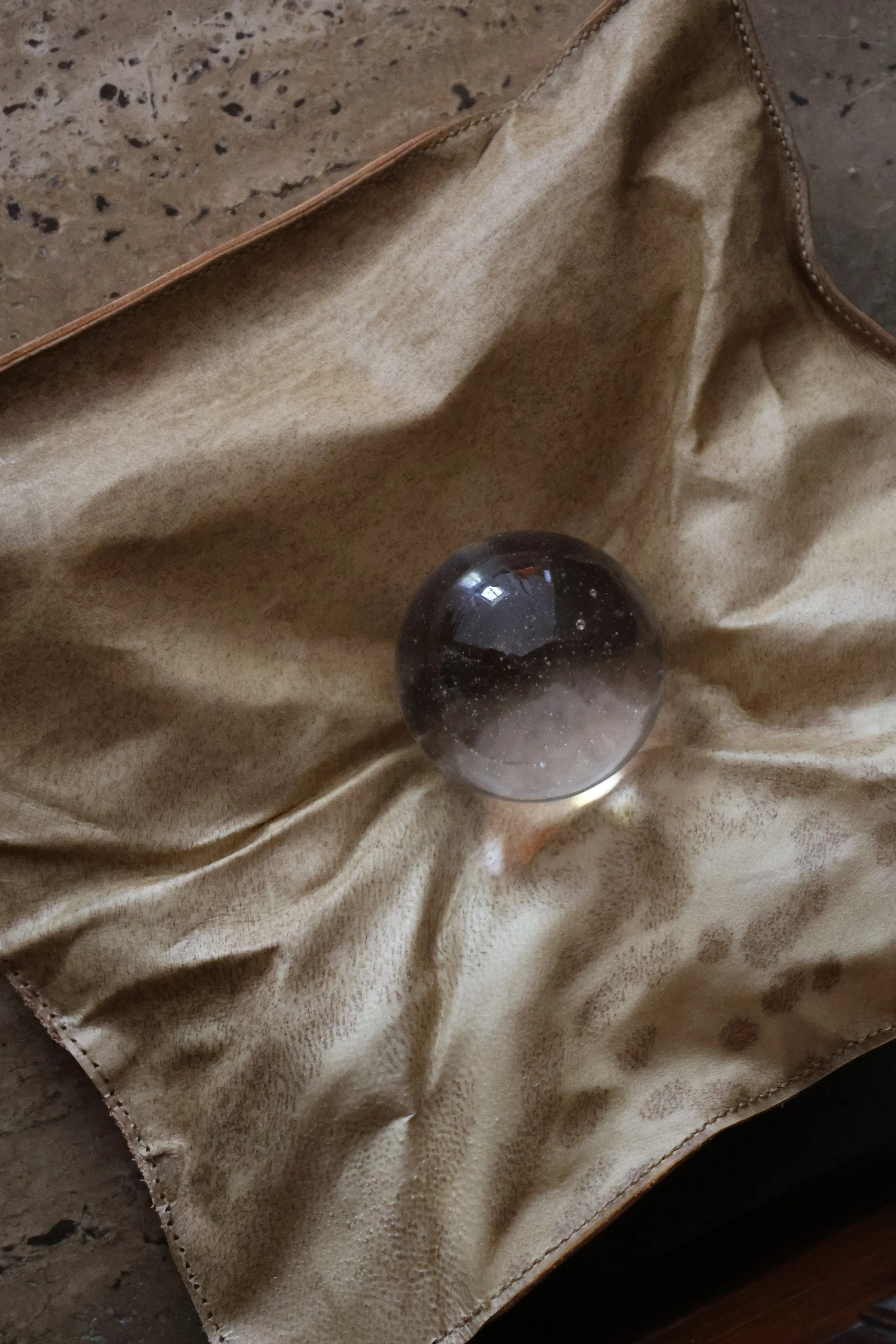
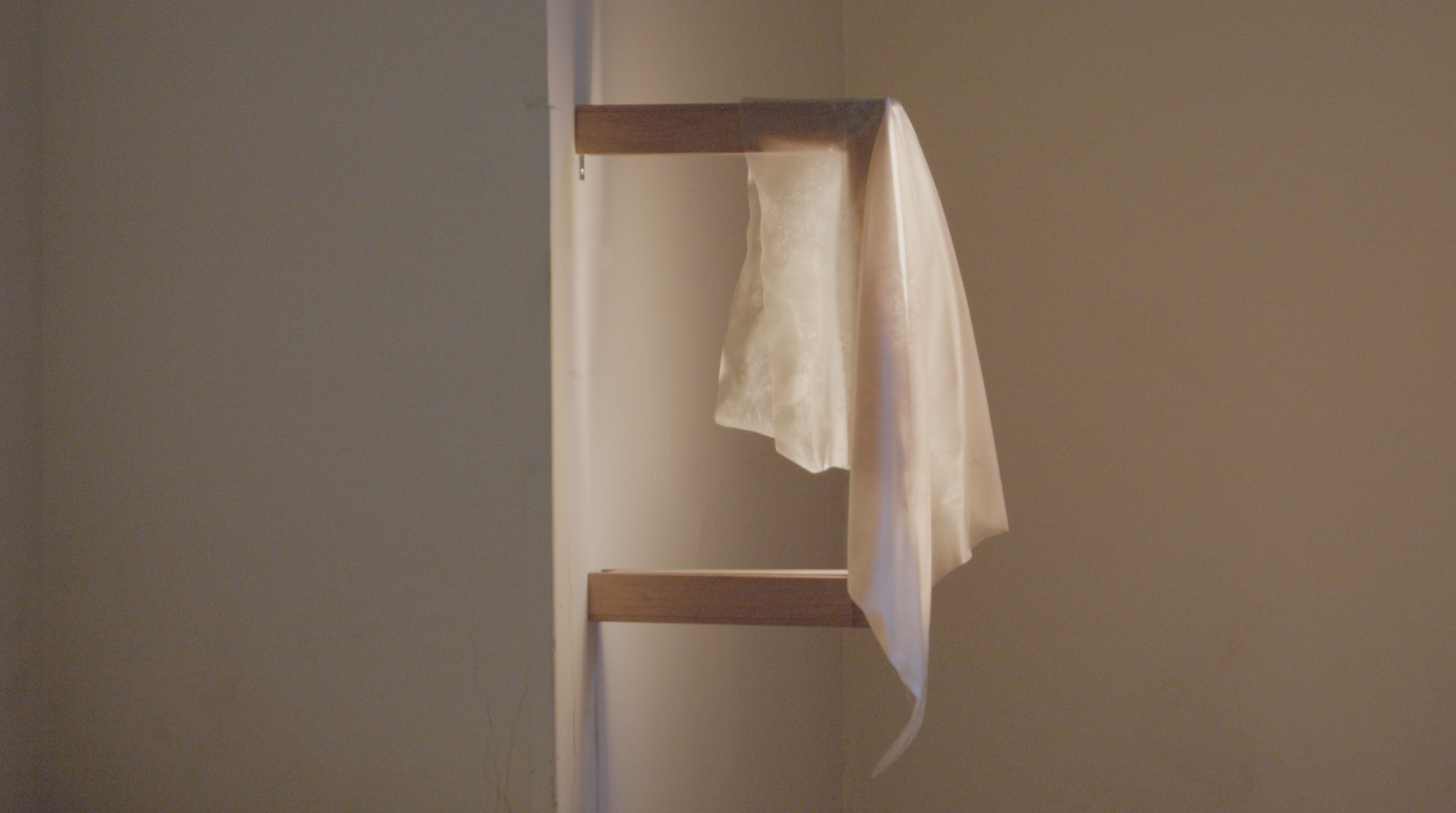
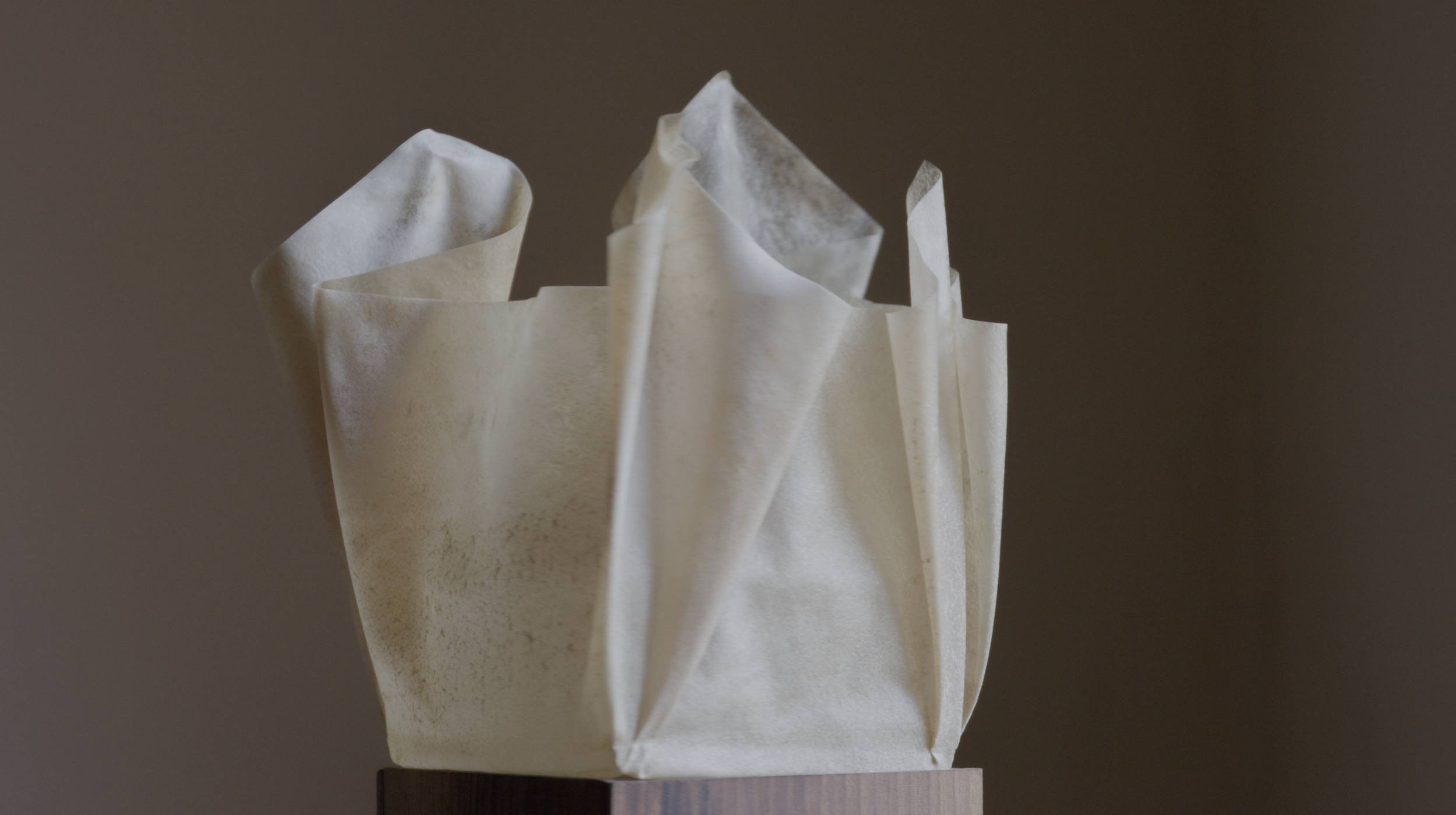
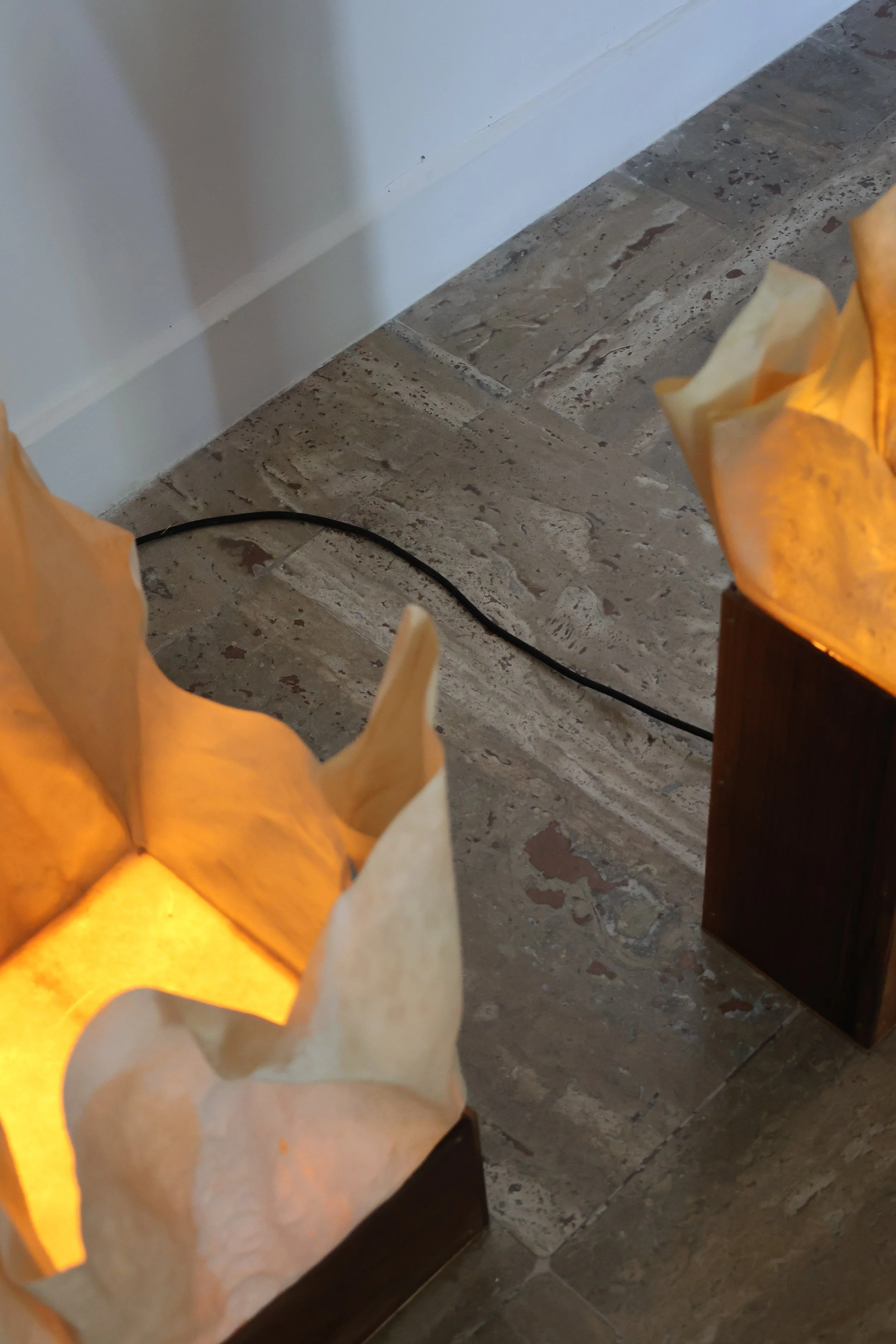
Candela is committed to giving new life to hides that are by-products of the food industry, rescuing what would otherwise become waste. His philosophy is rooted in care and continuity, viewing materials as active participants in natural and social cycles. Working with vegetable-tanned leather and the ancient art of ahormado (wet moulding), he transforms the material into sculptural forms that seem to breathe and move. These pieces sit between sculpture and object, embodying what he calls “epiphytic forms” — objects that do not stand alone, but come to life when placed in context, much like plants that grow on other trees to reach the light.
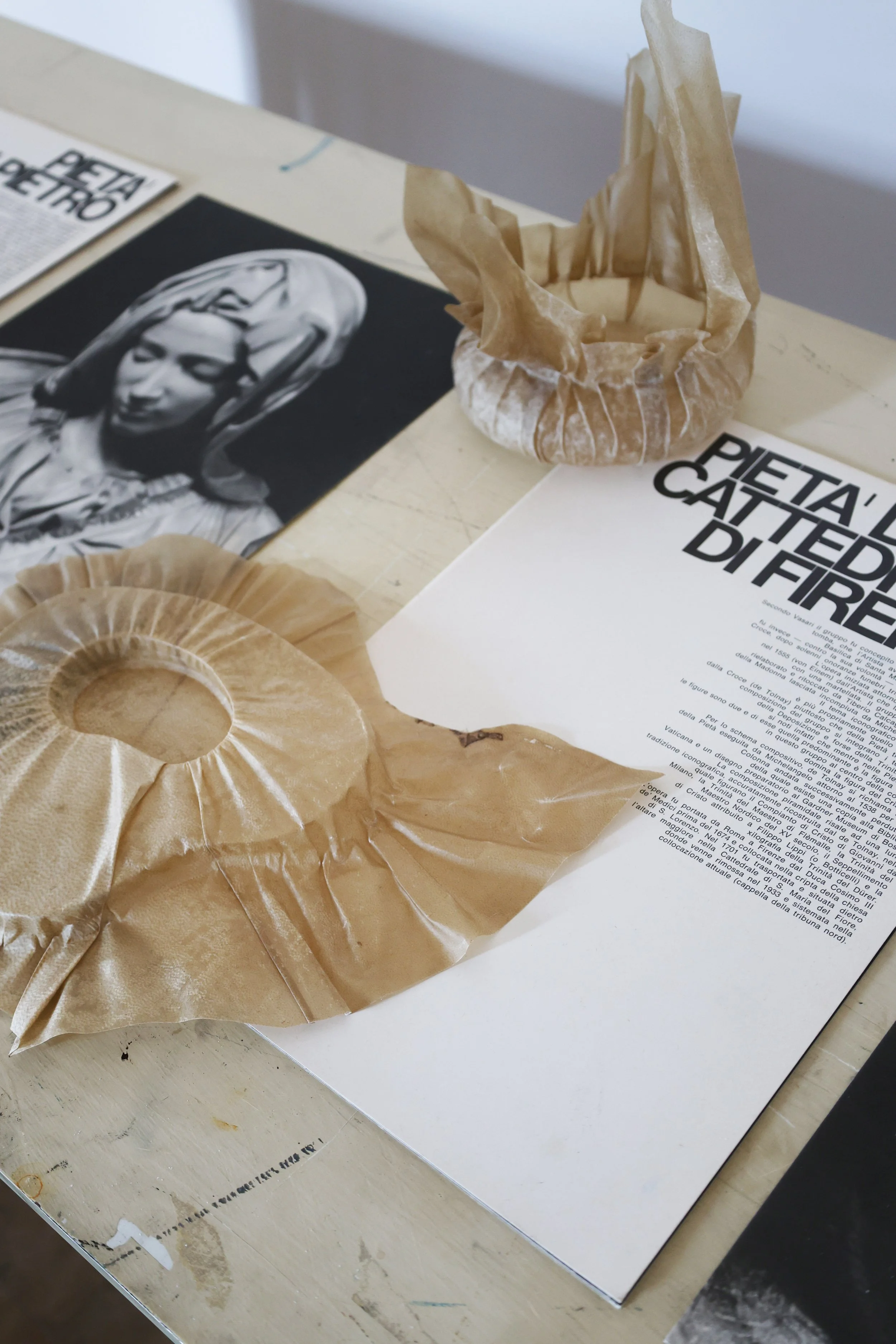
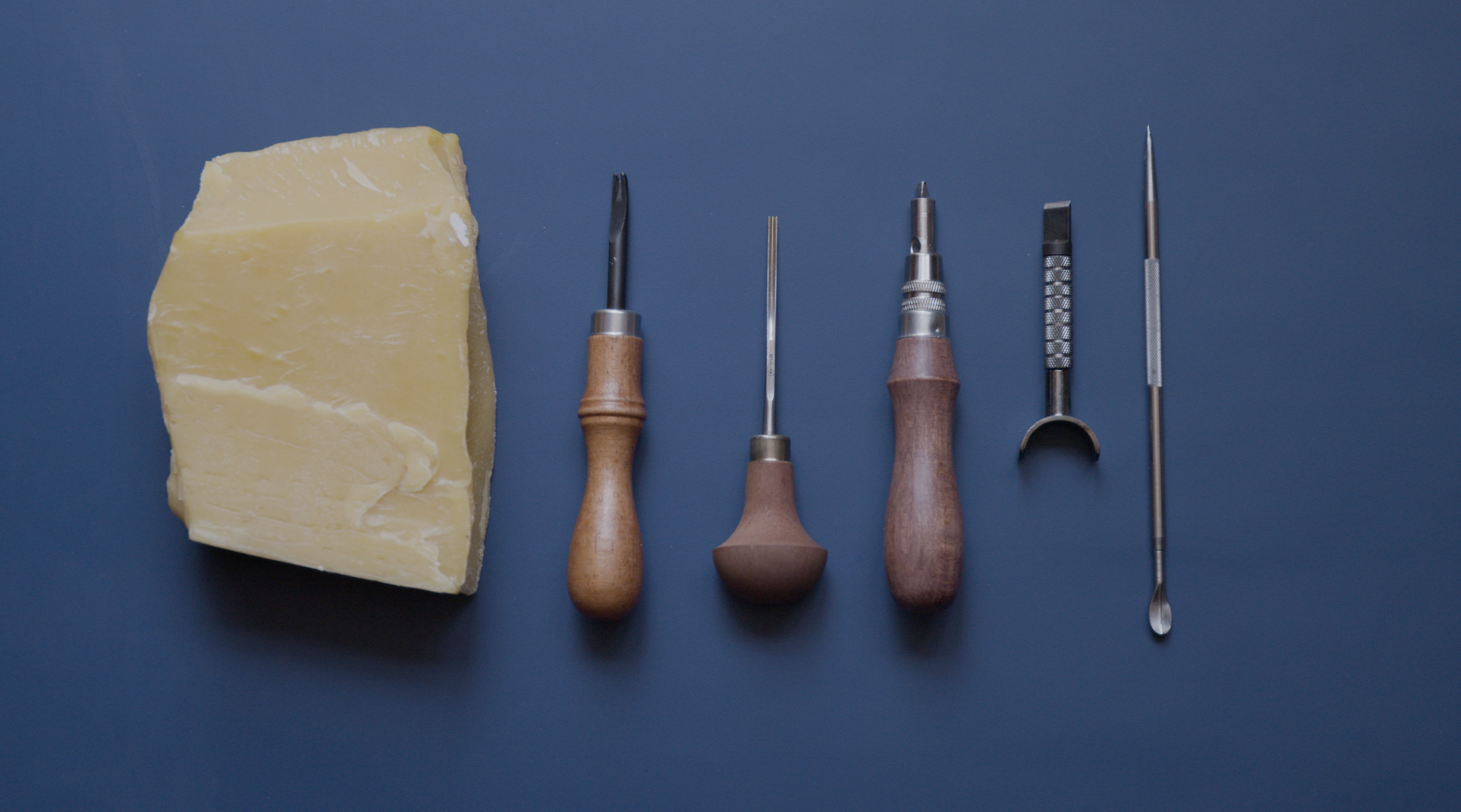
Candela’s connection to leather began over a decade ago at the Piel Design Master’s Programme at the Loewe Foundation in Ubrique, one of Spain’s renowned centres for leather craftsmanship. There, he learnt ahormado, a meticulous technique that involves wetting and shaping leather until it hardens into its final form.
This process depends on vegetable-tanned leather, made using natural tannins sourced from trees such as mimosa, chestnut or quebracho. Unlike industrial chrome tanning, which relies on heavy metals and speed, this traditional method unfolds slowly, yielding a material that ages gracefully, can be repaired, and — under the right conditions — biodegrades. Though it still requires resources such as water and energy, its impact depends on the ethics of the tannery. Candela collaborates with a small workshop in Catalonia, where time-honoured knowledge meets careful resource management and traceable sourcing.
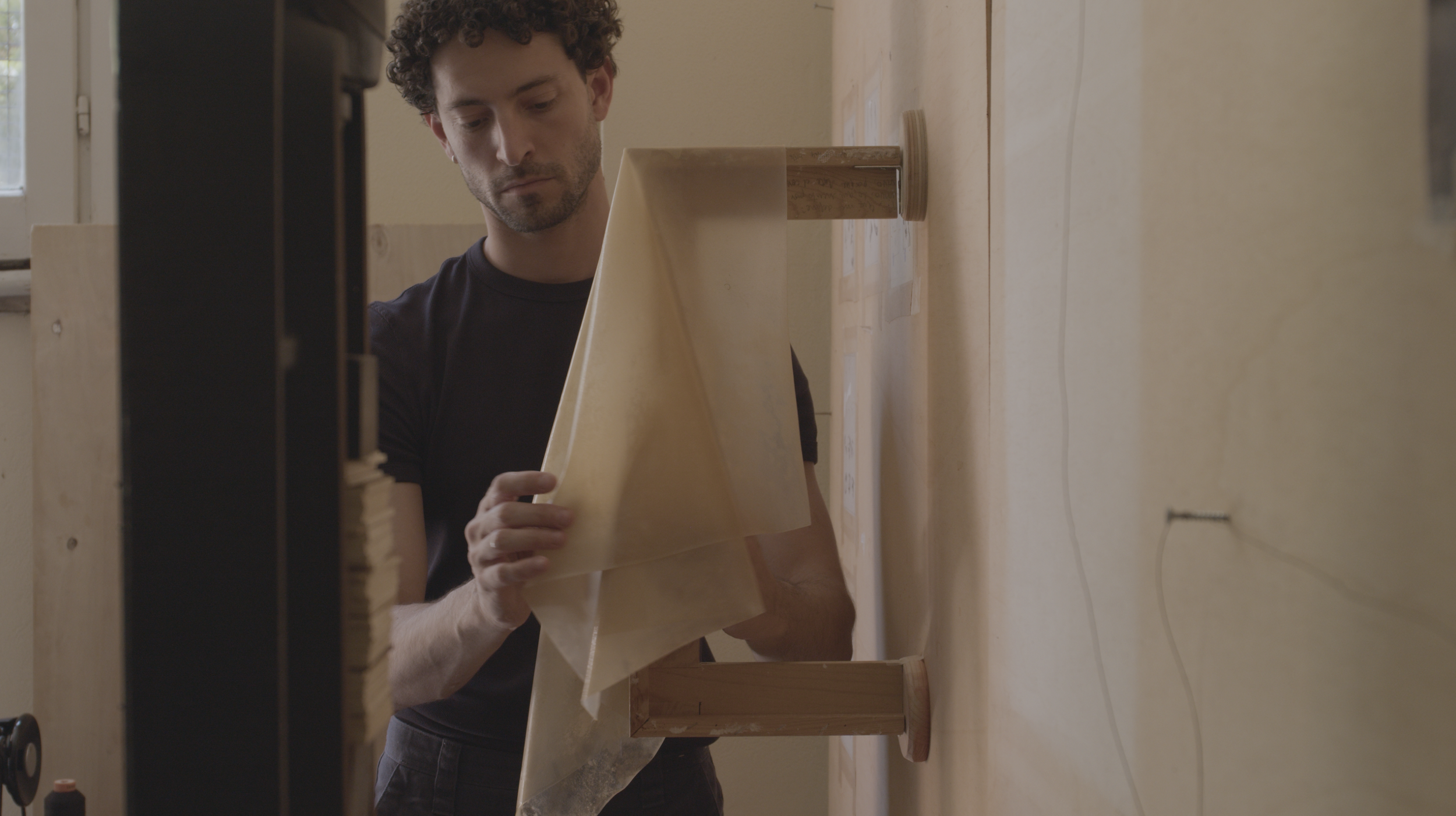
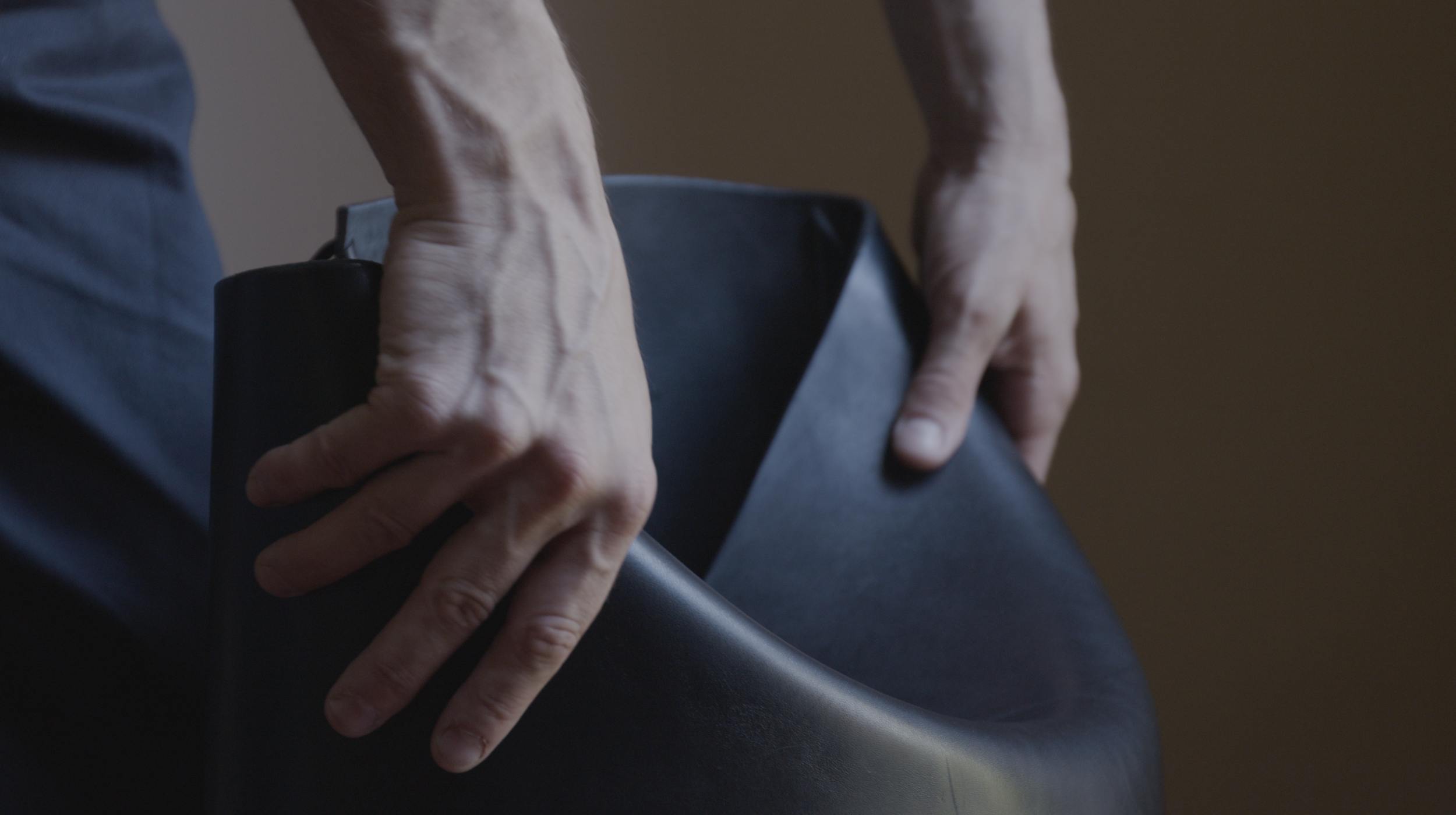
In his studio, making becomes a dialogue between hand, material and time. He moistens, stretches and shapes the leather, letting it dry naturally so the material can find its own form. Sometimes he adds ingredients such as corn starch to alter its rigidity. Each piece bears the traces of its creation — the impressions of the hand, the folds of the gesture, the quiet resistance of the leather itself.
For Candela, craft is about presence, not perfection. “Leather remembers,” he says. “It retains the trace of the hand, the gesture, the time we spent together.” To him, craftsmanship is an act of preservation — keeping alive ways of making that encourage us to slow down and engage mindfully. In an age dominated by industrial efficiency and digital immediacy, craft becomes a philosophy that values care over speed, touch over distance, and continuity over replacement.
During his time in Rome, surrounded by layers of history and architecture, Candela deepened this understanding. He began to see materials as carriers of time and meaning that never truly disappear. His epiphytic objects reflect this — new forms that live in harmony with what already exists, rather than overshadowing it.
This belief forms what he calls the ethics of permanence — creating objects that endure, evolve and hold the traces of care. In this sense, craftsmanship becomes an act of quiet resistance against a culture that prizes speed over thoughtfulness and disposability over continuity.
Looking ahead, Candela sees the role of leather shifting. As meat consumption declines, hides may become rarer — transforming leather into a precious, symbolic material, used with intention. He also follows with interest the development of biomaterials made from mycelium, cactus fibres or plant waste. Though many still depend on synthetic components or lack the tactile depth of natural leather, they share a common aim: to reconnect us with how materials live and transform — and their potential is undeniably promising.
At the heart of Adrián Salvador Candela’s practice lies a deep sensitivity to the stories that materials hold. Through a slow, deliberate process, he reveals how making can embody memory, emotion and transformation. His work reminds us that every material has its own rhythm — and that care, in design, begins with listening.
Credits
Research and Project
Epiphytic Objects and the Stratified City — by Adrián Salvador Candela
Royal Academy of Spain in Rome (Residency Project)
www.estudiosavage.es
Instagram: @adriansalvadorcandela
Photography & Video
Nacho Errando and Adrián Salvador Candela
Text
Written by Lea Marin