
Fashion Regeneration: Beyond Trends
Dutch Design Week 2024

Exhibition Regeneration: From the Source by the New Order of Fashion (NOOF), Art Piece By Filippa Geslin | Photography Anwyn Howarth
Regenerative fashion is often viewed as a hopeful vision for the industry—a promise that fashion can evolve beyond just harm reduction to actively restore ecological and social systems. However, this promise brings forth challenging questions. Can an industry primarily driven by speed, volume, and endless growth genuinely shift its values towards care, reciprocity, and long-term thinking? Furthermore, if "regeneration" becomes nothing more than a marketing label, does it risk undermining the very transformation it claims to offer?
To truly engage with regeneration, one must examine the entire life cycle of a garment—from the soil that nurtures fibers, to the labor and knowledge involved in making, wearing, and maintaining clothing, and finally to its return to natural cycles. It challenges us to consider whether we are ready to create and consume within ecological limits and to slow down enough to view fashion as part of a living system rather than a disposable commodity. This perspective emphasizes cultural heritage, environmental stewardship, and social equity, all of which have been systematically eroded by the dominant fast-fashion model.
In this context, regeneration is not merely a material choice or production strategy; it represents a fundamental rethinking of value. Rather than just minimizing harm, regenerative practices aim to support biodiversity, rebuild soil health, and cultivate resilience between ecosystems and communities. Utilizing natural fibers that sequester carbon or regenerate landscapes is one approach, but it also requires addressing deep-rooted issues such as extractivism, labor injustice, and unequal global power dynamics.

BLUE JEANS: Regenerative materials from the Sea by Kelly Konings - commissioned for NOOF’s Regeneration Research Programme. Transmuted Beach Wrack by Katarina Kruus | Photography Anwyn Howarth

BLUE JEANS: Regenerative materials from the Sea by Kelly Konings - commissioned for NOOF’s Regeneration Research Programme Transmuted Beach Wrack by Katarina Kruus | Photography Anwyn Howarth
During Dutch Design Week 2024, the exhibition Regeneration: From the Source, curated by New Order of Fashion, invited visitors to reconsider fashion as a living, cyclical process. Designers, researchers, and artists presented works that extend far beyond wearability. These pieces function as material narratives — stories rooted in soil, sea, plants, and inherited knowledge systems.
Garments and textiles made from seaweed fibres, pigments extracted from roots, and materials cultivated rather than manufactured point back to the “source”: the biological and cultural origins that underpin all making. Here, nature is not treated as a resource to be exploited, but as a collaborator — offering lessons in patience, adaptation, and restraint. The exhibition frames fashion as a potential agent of repair, capable of participating in processes of renewal rather than depletion.

Jessie Curry’s PLANTSPEAK - project draws on her research into Saccharina Japonica kelp. | Photography Jessie Curry

Jessie Curry’s PLANTSPEAK | Photography Jessie Curry

Jessie Curry’s PLANTSPEAK | Photography Antonia Penia
Multidisciplinary designer Jessie Curry explores regeneration through an intimate relationship with the plant world. Her project PLANTSPEAK draws on research into Saccharina japonica kelp and abaca fibre to create performative costumes that embody interspecies dialogue. Rather than treating materials as inert, Curry positions them as active participants with agency, memory, and intelligence.
Kelp — often described as an “ancestor of all plants” — becomes central to her practice due to its regenerative qualities: its rapid growth, ability to absorb carbon, and role in supporting marine ecosystems. Through PLANTSPEAK, Curry proposes a fashion future grounded in coexistence rather than extraction, challenging the industry’s accelerated rhythms and reasserting fashion’s connection to planetary cycles.

Textile Reserach by Azul Espirito Santo | Photography by Aaryan Sinha

Textile Reserach by Azul Espirito Santo | Photography by Aaryan Sinha

Azul Espirito Santo, a designer with Peruvian and Portuguese roots, crafts textiles that embody the transient cycles of nature. Drawing from the Indigenous philosophies of Peru, her early attempts to connect with her urban environment in The Hague, where she studied at the Royal Academy of Art, felt remote. However, her practice evolved as she embraced her local surroundings, discovering inspiration in the often-overlooked subtleties of everyday life. Working with silk, wool, and hemp, she employs needle felting and sublimation techniques to create textiles that respond to natural rhythms, allowing each piece to transform over time.
Her work is shaped by a sense of introspection and dialogue between materials and their environment, a conversation that has unfolded across The Hague and Portugal. This interplay is rooted in an organic connection, informed by Indigenous perspectives that view materials as part of a larger ecological system.

Textile Detail by Filippa Gesli | Image by Jules Lè Van Nhuong
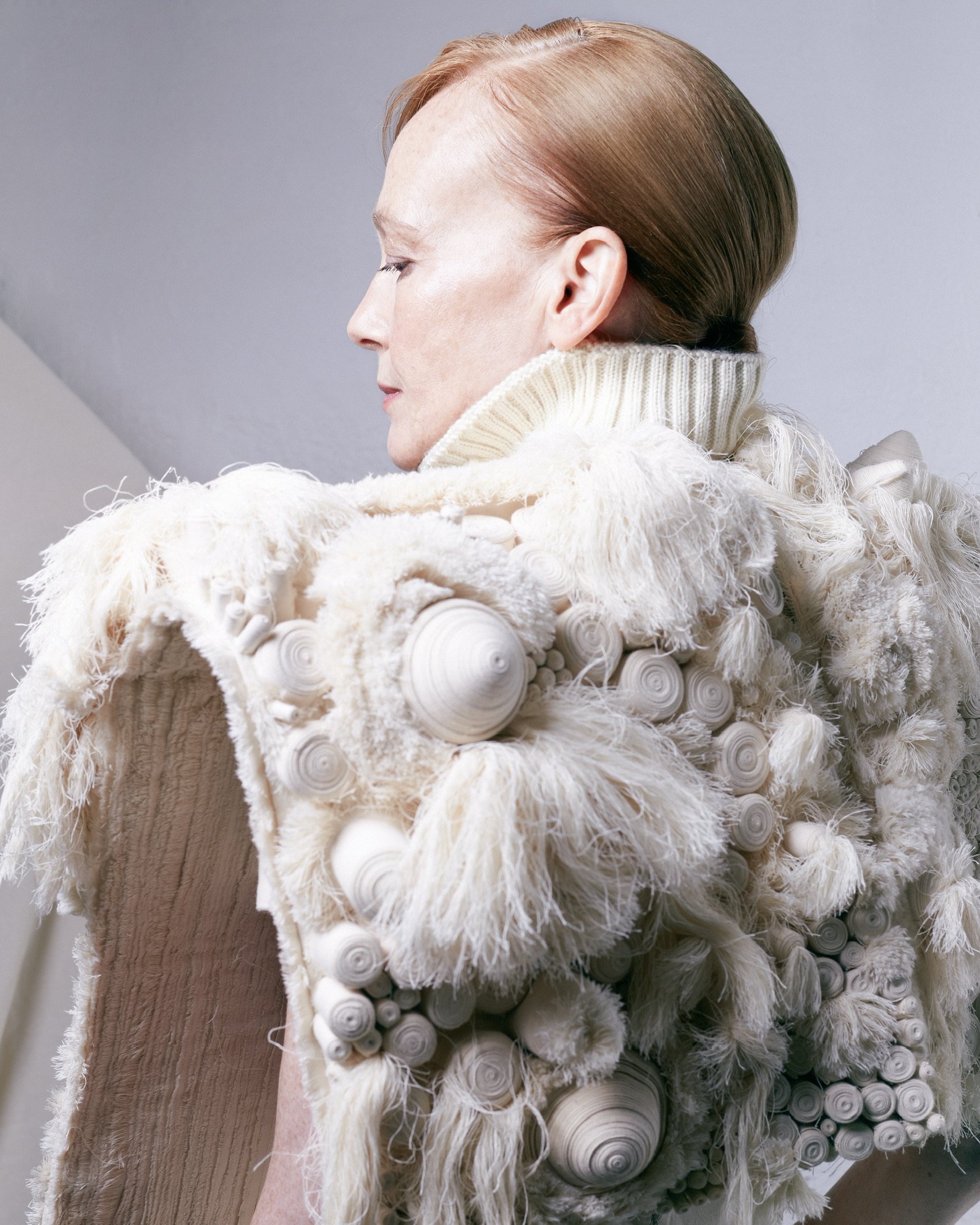
Filippa Gesli’s Art Piece | Photography by Basil Perot
French-Danish designer Filippa Geslin, reclaims cotton calico — a material typically used for temporary mock-ups — and elevates it through meticulous handwork. By reshaping discarded scraps into soft, abstract forms, Geslin foregrounds care, labour, and material sensitivity.
Her practice draws on traditions of craftsmanship and slowness, celebrating femininity, resilience, and attention. Rather than introducing new materials, Geslin focuses on revaluing what already exists, minimising waste while transforming the provisional into something lasting. In doing so, her work quietly challenges fashion’s obsession with novelty.

Project and Photography Belinda Gredig
In a different vein, German designer Belinda Gredig brings attention to nettle — a plant historically associated with healing but largely abandoned by contemporary fashion. Combining textile techniques with glass, Gredig explores nettle’s dual identity as both medicinal plant and unwanted “weed.”
Her work reframes regeneration as an act of recovery: returning to neglected fibres, overlooked knowledge systems, and non-industrial traditions. By embracing imperfection and hybridity, Gredig’s practice questions dominant ideas of refinement and progress, suggesting that fashion’s future may lie in what it has previously dismissed.

Project and Photography Belinda Gredig
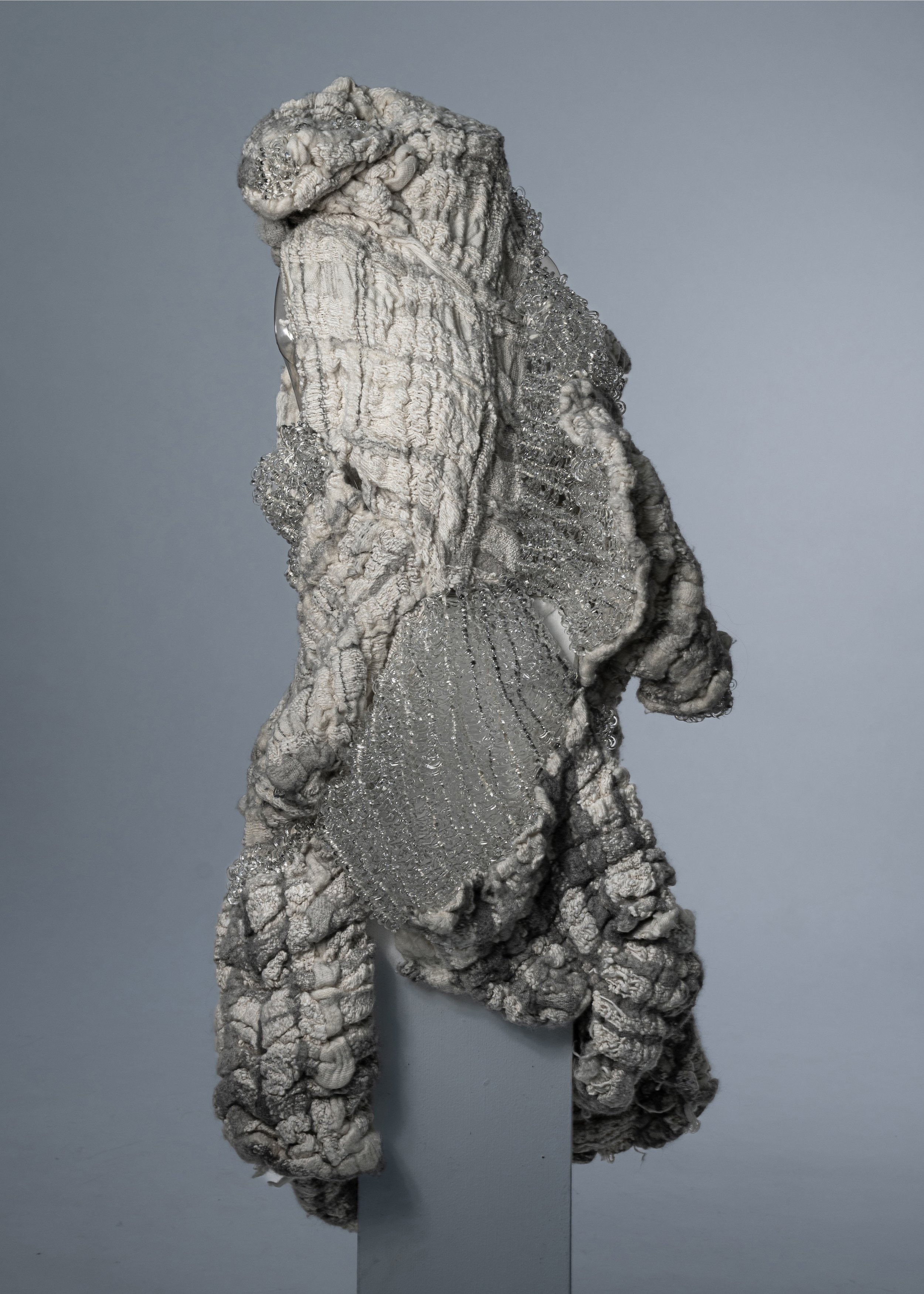
Project and Photography Belinda Gredig
Beyond Labels, Towards Structural Change
By foregrounding regenerative practices, New Order of Fashion challenges the industry to confront its own limitations. Regeneration cannot be achieved through isolated projects or aesthetic gestures alone. It requires systemic alignment — across production, consumption, cultural values, and economic structures.
Through the work of designers such as Jessie Curry, Azul Espirito Santo, Filippa Geslin, and Belinda Gredig, the exhibition illustrates how fashion might move beyond sustainability as damage control towards restoration as a shared responsibility. Yet the central question remains unresolved: is the industry prepared to give back as much as it takes, to protect biodiversity, honour cultural integrity, and dismantle exploitative systems?
Regeneration: From the Source does not offer easy answers. Instead, it invites a deeper reckoning — and suggests that meaningful change begins not with scale or speed, but with attention, humility, and care.
New Order of Fashion
https://www.neworderoffashion.com/
Researchers & Fashion Designers
Jessie Von Curry
Azul Espirito Santo
Filippa Geslin
Belinda Gredig
Photography
Anwyn Howarth
Jessie Von Curry
Antonia Penia
Aaryan Sinha
Basil Perot
Belinda Gredig
Words
Nina Zulian