
Brazilian Art, Design and Craftsmanship


“I’m a mix of artist, designer, and craftsman.”
Domingos Tótora
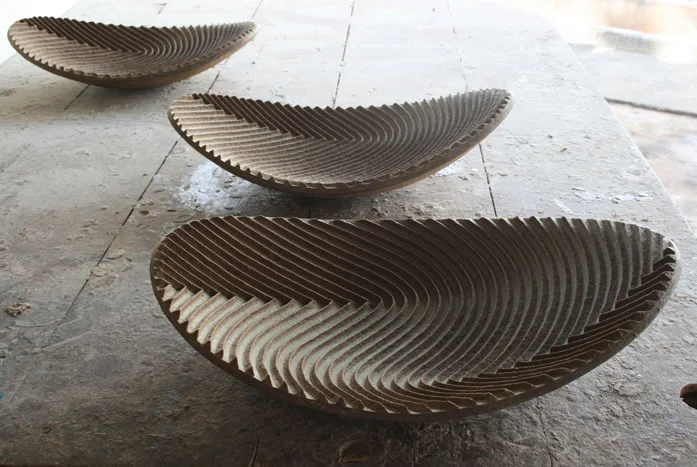
The Brazilian designer creates artistic furniture and decorative objects produced from recycled cardboard.
Born in Minas Gerais, Domingos Tótora studied design in São Paulo.
Noticing the sheer amount of cardboard discarded in the streets, Tótora was dedicated to creating a new way of using waste paper and, from his researches and experiments, developed a cellulose plaster. With the use of water, glue and natural pigments, it can be molded into new shapes. Through this sustainable process, he turns the waste cardboards into a wood-like material.
“In a certified sustainable process, recycled cardboard is broken up into small pieces and turned into a pulp that serves as the base material for furniture, objects and sculptural pieces that are molded by hand, dried in the sun and finished to perfection. In this beautiful and labor-intensive process, the cardboard which originated as wood essentially is brought back full cycle by taking on a wood-like quality again. We believe sustainability happens through actions and not words” explains the designer.



Rodrigo Ambrósio
Rodrigo Ambrósio, from Alagoas, managed to combine all the technical knowledge of his education as an architect and urbanist with northeastern Brazilian thinking. His inspiration is based on a strong influence of local culture and craftsmanship and, according to him, "my land is where I recharge my energies and references."
He brought from memory, images, experiences and threw new lights on them, using the local materials available and creating a unique aesthetic, modern, contemporary and timeless design.
Chair Engenho
The versatility of the designer proves that it is possible to create a design with any material as is the case of the chair named Engenho.
Rapadura is unrefined cane sugar that preserves the natural caramel taste of the sugar. It is typical of the northeast of Brazil; the Rapadura is manufactured in small sugar mills named Engenho.
The concept of your piece is to transform the energetic food made from sugarcane into a chair design.
Like the process of producing Rapadura the sugarcane is processed at high temperatures until it becomes a broth, cooks until it boils and evaporates. Finally, it comes to the right point to become resistant. During his exhibition the chair could be tasted and eaten by visitors.


INFO
Words:
Sueli Zulian and Nina Zulian
Domingos Tótora
https://www.domingostotora.com.br/
https://www.instagram.com/domingostotora/
Photos:
Domingos Tótora
Rodrigo Ambrósio
http://www.rodrigoambrosio.com/
https://www.instagram.com/ambrosio/
Photos:
Rodrigo Ambrósio